
HSE Legislation and Standards
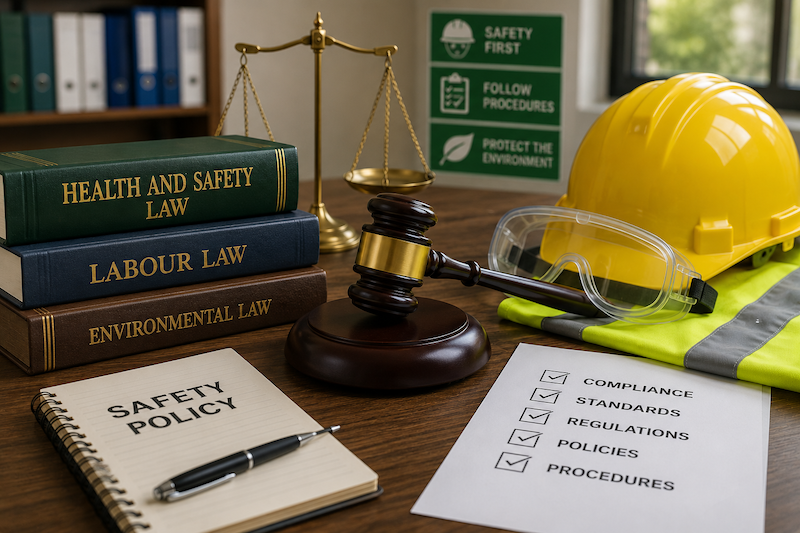
HSE legislation and standards provide the rules, duties, and expectations that guide safe work practices in organisations. They help employers, employees, contractors, and visitors understand what must be done to prevent injuries, illness, accidents, environmental damage, and legal violations.
Every workplace has a legal and moral responsibility to protect people and the environment. HSE laws explain the minimum safety requirements that organisations must follow, while HSE standards provide structured guidelines and best practices for managing health, safety, and environmental risks.
This module introduces learners to the basic meaning of HSE legislation, workplace safety regulations, employee rights and responsibilities, international HSE standards, and the importance of safety policies and procedures.
Meaning of HSE Legislation
HSE legislation refers to laws, regulations, and legal requirements created by government authorities to protect workers, the public, property, and the environment.
These laws define what employers and employees must do to maintain safe and healthy workplaces. They also give regulatory bodies the authority to inspect workplaces, investigate incidents, enforce safety requirements, and apply penalties where necessary.
In simple terms, HSE legislation is the legal framework that tells organisations and workers what they must do to prevent harm at work.
Meaning of HSE Standards
HSE standards are recognised guidelines, systems, and best practices used to manage workplace health, safety, and environmental responsibilities.
Unlike laws, standards may not always be compulsory unless required by law, contract, client requirements, industry rules, or company policy. However, they help organisations improve safety performance and maintain professional systems.
Examples of HSE standards include:
- ISO 45001 for Occupational Health and Safety Management Systems.
- ISO 14001 for Environmental Management Systems.
- Industry-specific standards for construction, oil and gas, manufacturing, healthcare, aviation, mining, marine, energy, and other sectors.
- Company safety standards and operating procedures.
- Client or contractor HSE requirements.
ISO 45001 provides an internationally recognised framework for managing occupational health and safety risks and improving safety performance. ISO 14001 provides a recognised framework for organisations to manage environmental responsibilities and improve environmental performance.
Difference Between HSE Laws and HSE Standards
HSE laws and HSE standards work together, but they are not exactly the same.
HSE Laws
HSE laws are legal requirements set by government authorities. They are compulsory and failure to comply may lead to sanctions, fines, prosecution, shutdown, compensation claims, or other legal consequences.
Examples include laws on factory safety, labour protection, workers’ compensation, environmental protection, waste disposal, fire safety, and public health.
HSE Standards
HSE standards are structured guidelines that help organisations meet legal requirements and improve safety performance. Some standards are voluntary, but they may become mandatory when required by clients, regulators, contracts, industry practice, or company policy.
For example, a company may not be legally forced in every case to be ISO 45001 certified, but a client may require contractors to follow ISO 45001 principles before working on a project.
Why HSE Legislation and Standards Are Important
HSE legislation and standards are important because they provide a clear system for preventing harm and managing workplace risks.
They help organisations to:
- Protect workers from injuries, illness, and death.
- Prevent accidents, fires, explosions, spills, and dangerous occurrences.
- Reduce environmental pollution and waste.
- Define employer and employee responsibilities.
- Establish safe work procedures.
- Provide training and supervision.
- Ensure proper use of equipment and PPE.
- Promote emergency preparedness.
- Encourage incident reporting and investigation.
- Improve workplace discipline and accountability.
- Avoid legal penalties and reputational damage.
- Build trust with workers, clients, regulators, and the public.
A safe and healthy working environment is recognised internationally as a fundamental principle and right at work. This means safety should not be treated as optional or secondary; it is a core responsibility in every decent workplace.
Overview of HSE Laws and Regulations
Different countries have different HSE laws, but most workplace safety laws are built around similar principles. These principles require employers to provide a safe workplace and require employees to work responsibly.
Common areas covered by HSE laws include:
- Workplace safety and health.
- Fire prevention and emergency preparedness.
- Safe use of machines and equipment.
- Electrical safety.
- Working at height.
- Manual handling.
- Chemical handling and hazardous substances.
- Occupational health and hygiene.
- First aid and medical response.
- Incident reporting and investigation.
- Compensation for workplace injuries.
- Environmental protection.
- Waste management and pollution control.
- Contractor safety management.
- Training and competence.
- Workplace inspections and audits.
In Nigeria, workplace safety enforcement includes the Factories Act and related regulations, with the Federal Ministry of Labour and Employment responsible for areas such as occupational safety and health inspections, workplace audits, accident investigation, dangerous occurrence investigation, and enforcement actions.
Common Types of HSE Legal Requirements
HSE legal requirements may differ depending on country, industry, type of work, and level of risk. However, most workplaces are expected to comply with the following basic requirements.
Safe Workplace
Employers are expected to provide a workplace that is reasonably safe and free from uncontrolled hazards. This includes safe floors, walkways, access routes, lighting, ventilation, workstations, welfare facilities, and emergency exits.
Safe Equipment
Tools, machines, vehicles, ladders, lifting equipment, electrical systems, pressure vessels, and other work equipment must be suitable, inspected, maintained, and used correctly.
Risk Assessment
Employers must identify hazards, assess risks, and implement control measures before workers are exposed to danger. Risk assessment helps organisations understand what can go wrong and what must be done to prevent harm.
Training and Competence
Workers should receive proper information, instruction, training, and supervision before performing tasks. High-risk activities should only be carried out by competent persons.
Personal Protective Equipment
Where hazards cannot be fully eliminated, appropriate PPE must be provided and used correctly. PPE should be suitable for the task, properly maintained, and replaced when damaged.
Emergency Preparedness
Workplaces must have emergency plans for fire, medical emergencies, chemical spills, evacuations, security threats, explosions, natural disasters, and other serious events.
Incident Reporting
Accidents, injuries, dangerous occurrences, near misses, spills, fires, equipment failures, and unsafe conditions should be reported, recorded, and investigated.
Environmental Protection
Organisations must prevent pollution, manage waste properly, control emissions, prevent spills, and reduce harmful impact on land, air, water, and surrounding communities.
Employer Responsibilities Under HSE
Employers have a duty to protect employees, contractors, visitors, customers, and others who may be affected by workplace activities.
Employer responsibilities include:
- Providing a safe and healthy work environment.
- Identifying hazards and controlling risks.
- Developing and enforcing safety policies and procedures.
- Providing suitable tools, equipment, and PPE.
- Ensuring equipment is inspected and maintained.
- Providing training, supervision, and safety information.
- Ensuring workers are competent for assigned tasks.
- Providing first aid facilities and emergency arrangements.
- Reporting and investigating incidents.
- Consulting workers on safety matters.
- Preventing pollution and environmental damage.
- Complying with applicable laws, standards, and permits.
- Keeping proper HSE records.
- Correcting unsafe conditions promptly.
- Encouraging workers to report hazards without fear.
An employer should not only create safety rules; the employer must also provide the resources, leadership, training, and supervision needed to make those rules work in practice.
Employee Rights in HSE
Employees have rights that help protect them from unsafe work conditions. These rights may vary by country and organisation, but the basic principles are widely recognised.
Right to a Safe Workplace
Employees have the right to work in an environment where hazards are identified and risks are properly controlled.
Right to Safety Information
Employees have the right to receive information about workplace hazards, safety rules, emergency procedures, chemicals, equipment, and job-related risks.
Right to Training
Employees have the right to receive proper training before carrying out tasks, especially where the work involves hazards such as machinery, chemicals, electricity, lifting, confined spaces, working at height, or fire risk.
Right to PPE
Where PPE is required, employees have the right to receive suitable protective equipment and instruction on how to use it correctly.
Right to Report Hazards
Employees have the right to report unsafe conditions, unsafe acts, near misses, injuries, and environmental concerns.
Right to Stop Unsafe Work
Where there is serious and immediate danger, employees should be able to stop work and report the unsafe condition. Stop Work Authority is a key part of a strong safety culture.
Right to Participate in Safety
Employees should be involved in safety discussions, toolbox talks, risk assessments, inspections, safety meetings, and improvement actions where appropriate.
Employee Responsibilities in HSE
Employee rights come with responsibilities. Workers must play their part in keeping the workplace safe.
Employee responsibilities include:
- Following safety rules and procedures.
- Using equipment correctly.
- Wearing PPE where required.
- Reporting hazards, incidents, and near misses.
- Avoiding unsafe shortcuts.
- Keeping the workplace clean and organised.
- Attending safety training and briefings.
- Asking questions when instructions are unclear.
- Avoiding horseplay and careless behaviour.
- Not misusing safety equipment.
- Cooperating with supervisors and safety officers.
- Taking reasonable care of their own safety and the safety of others.
- Reporting damaged tools, machines, PPE, or unsafe conditions.
- Avoiding work under the influence of alcohol, drugs, or extreme fatigue.
A worker who ignores safety rules can endanger not only themselves but also coworkers, visitors, customers, the organisation, and the environment.
Shared Responsibility for Safety
Workplace safety is a shared responsibility. Employers must provide safe systems, while employees must follow those systems.
Employers are responsible for creating the structure for safety. Employees are responsible for applying safety in daily work.
For example:
- The employer provides PPE; the employee wears it correctly.
- The employer provides training; the employee applies the training.
- The employer provides procedures; the employee follows them.
- The employer provides reporting channels; the employee reports hazards.
- The employer maintains equipment; the employee uses equipment safely and reports defects.
When both parties perform their roles, accidents reduce and safety culture improves.
International HSE Standards
International HSE standards help organisations manage safety and environmental risks in a structured and professional way. They are especially useful for organisations that work with clients, contractors, regulators, donors, international partners, or high-risk industries.
ISO 45001: Occupational Health and Safety Management System
ISO 45001 is an international standard for occupational health and safety management systems. It helps organisations provide safe and healthy workplaces by preventing work-related injury and ill health, managing risks, and continually improving occupational health and safety performance.
ISO 45001 focuses on:
- Leadership commitment to safety.
- Worker participation and consultation.
- Hazard identification.
- Risk assessment and control.
- Legal and regulatory compliance.
- Emergency preparedness.
- Incident investigation.
- Performance monitoring.
- Continual improvement.
The aim is not just to react after accidents happen, but to create a system that prevents accidents before they occur.
ISO 14001: Environmental Management System
ISO 14001 is an international standard for environmental management systems. It provides a framework for organisations to manage environmental responsibilities, reduce environmental impact, improve compliance, and continually improve environmental performance.
ISO 14001 focuses on:
- Identifying environmental aspects and impacts.
- Managing waste and pollution.
- Complying with environmental laws and permits.
- Setting environmental objectives.
- Reducing resource consumption.
- Improving energy and water efficiency.
- Preventing spills and contamination.
- Monitoring environmental performance.
- Continual improvement.
The goal is to ensure that organisations do not only focus on profit and productivity but also protect the environment and surrounding communities.
Other Common HSE Standards and Guidelines
Apart from ISO standards, organisations may also follow other national, international, or industry-specific HSE guidelines. These may include:
- Fire safety codes.
- Electrical safety standards.
- Construction safety regulations.
- Oil and gas safety requirements.
- Environmental protection regulations.
- Waste management guidelines.
- Food safety standards.
- Laboratory safety guidelines.
- Road transport safety standards.
- Contractor management standards.
- Emergency response standards.
- Industry-specific safe operating procedures.
The exact standards required will depend on the type of work, industry, client requirements, regulatory requirements, and level of risk.
HSE Policy
An HSE policy is a formal statement from an organisation that explains its commitment to health, safety, and environmental protection.
A good HSE policy usually includes:
- Commitment to preventing injuries and illness.
- Commitment to environmental protection.
- Commitment to obeying laws and regulations.
- Commitment to risk assessment and control.
- Commitment to training and worker involvement.
- Commitment to incident reporting and investigation.
- Commitment to continual improvement.
- Responsibilities of management, supervisors, employees, and contractors.
An HSE policy should not just be a document on the wall. It should guide daily decisions, work practices, supervision, training, and behaviour.
Safety Procedures
Safety procedures are step-by-step instructions that explain how to perform tasks safely.
They are important because they help workers understand:
- What to do before starting work.
- What tools and equipment are required.
- What hazards are involved.
- What PPE should be worn.
- What control measures must be followed.
- What to do if something goes wrong.
- Who to report to when there is a problem.
Examples of safety procedures include:
- Fire evacuation procedure.
- Permit-to-work procedure.
- Lockout/tagout procedure.
- Manual handling procedure.
- Chemical handling procedure.
- Working at height procedure.
- Electrical safety procedure.
- Incident reporting procedure.
- Waste disposal procedure.
- Emergency response procedure.
- PPE use and maintenance procedure.
- Safe use of hand tools procedure.
Procedures help reduce confusion, prevent shortcuts, and ensure that work is performed consistently and safely.
Safe Work Method Statements and Job Safety Analysis
Some tasks require a more detailed safety plan before work begins. Two common tools are Safe Work Method Statements and Job Safety Analysis.
Safe Work Method Statement
A Safe Work Method Statement explains how a high-risk task will be carried out safely. It identifies the task steps, hazards, risks, and control measures.
It is commonly used for jobs such as:
- Working at height.
- Excavation.
- Hot work.
- Confined space entry.
- Heavy lifting.
- Electrical work.
- Demolition.
- Work near moving equipment.
- Chemical handling.
Job Safety Analysis
Job Safety Analysis, also known as Job Hazard Analysis, breaks a task into steps, identifies hazards in each step, and states the control measures required.
For example, before using a grinding machine, the worker should consider:
- Is the machine in good condition?
- Is the guard in place?
- Is the correct disc installed?
- Is the area clear of flammable materials?
- Are goggles, gloves, hearing protection, and face shield required?
- Are bystanders protected from sparks?
- Is there a fire extinguisher nearby if hot work is involved?
These tools help workers think before acting.
Permits to Work
A Permit to Work is a formal written approval that allows certain high-risk jobs to be carried out under controlled conditions.
A permit confirms that hazards have been identified, controls are in place, responsible persons are aware, and the work is authorised.
Common types of permits include:
- Hot work permit.
- Confined space entry permit.
- Working at height permit.
- Electrical work permit.
- Excavation permit.
- Lifting operation permit.
- Cold work permit.
- Isolation permit.
A permit does not make a job safe by itself. It only supports safety when the controls listed on the permit are actually followed.
HSE Compliance
HSE compliance means following all applicable health, safety, and environmental requirements.
This includes compliance with:
- Government laws and regulations.
- Company policies.
- Client requirements.
- Industry standards.
- Permit conditions.
- Safe work procedures.
- Environmental rules.
- Emergency plans.
- PPE requirements.
- Training requirements.
- Reporting requirements.
Compliance is not only about avoiding punishment. It is about protecting lives, preventing loss, and doing work professionally.
Consequences of Non-Compliance
Failure to comply with HSE laws, standards, policies, and procedures can lead to serious consequences.
Possible consequences include:
- Injury or death.
- Work-related illness.
- Fire or explosion.
- Environmental pollution.
- Equipment damage.
- Production delays.
- Legal penalties.
- Fines or prosecution.
- Shutdown of operations.
- Loss of contracts.
- Increased insurance costs.
- Poor reputation.
- Loss of employee confidence.
- Compensation claims.
- Damage to surrounding communities.
For individuals, non-compliance can also lead to disciplinary action, suspension, removal from site, or loss of job depending on the seriousness of the violation.
Common Examples of HSE Non-Compliance
Examples of non-compliance include:
- Working without required PPE.
- Operating equipment without training.
- Ignoring safety signs.
- Blocking emergency exits.
- Failing to report an incident.
- Hiding a near miss.
- Using damaged tools.
- Removing machine guards.
- Pouring chemicals into drains.
- Mixing waste incorrectly.
- Performing hot work without approval.
- Entering a confined space without permit.
- Working at height without fall protection.
- Using electrical equipment with exposed wires.
- Ignoring lockout/tagout requirements.
- Disabling alarms or safety devices.
- Failing to attend mandatory safety training.
Small acts of non-compliance can lead to major accidents.
Safety Signs and Legal Notices
Safety signs are part of workplace communication. They warn workers and visitors about hazards and tell them what actions to take.
Common types of safety signs include:
Prohibition Signs
These signs tell people what they must not do.
Examples:
- No smoking.
- No entry.
- Do not operate.
- No open flames.
Mandatory Signs
These signs tell people what they must do.
Examples:
- Wear safety helmet.
- Wear eye protection.
- Wear hearing protection.
- Use handrail.
Warning Signs
These signs warn about hazards.
Examples:
- High voltage.
- Slippery floor.
- Flammable material.
- Forklift operating area.
Emergency Signs
These signs show emergency routes, exits, or equipment.
Examples:
- Fire exit.
- First aid station.
- Assembly point.
- Emergency shower.
- Eyewash station.
Fire Safety Signs
These signs identify fire equipment or fire instructions.
Examples:
- Fire extinguisher.
- Fire hose reel.
- Fire alarm call point.
- Fire exit route.
Safety signs must be visible, understood, and obeyed.
HSE Documentation and Records
HSE documentation helps prove that safety systems are in place and being followed. It also helps organisations track performance, identify gaps, and improve safety management.
Common HSE records include:
- HSE policy.
- Risk assessments.
- Training records.
- Attendance records for toolbox talks.
- Inspection checklists.
- Equipment maintenance records.
- PPE issue records.
- Incident reports.
- Near-miss reports.
- Emergency drill records.
- Fire extinguisher inspection records.
- Waste disposal records.
- Permit-to-work records.
- Audit reports.
- Corrective action records.
- Medical or occupational health records where applicable.
Good documentation supports accountability and continuous improvement.
Workplace Inspections and Audits
Inspections and audits are used to check whether safety requirements are being followed.
Workplace Inspection
A workplace inspection is a physical check of the work environment to identify hazards and unsafe conditions.
It may include checking:
- Floors and walkways.
- Housekeeping.
- Fire exits.
- Fire extinguishers.
- Electrical cables.
- Tools and equipment.
- PPE use.
- Waste disposal.
- Chemical storage.
- Machine guards.
- Emergency facilities.
HSE Audit
An HSE audit is a more detailed review of safety systems, records, procedures, compliance, and performance. Audits help organisations know whether their HSE management system is effective.
Inspections focus mainly on workplace conditions, while audits focus on both workplace conditions and management systems.
Role of Regulatory Authorities
Regulatory authorities are government bodies responsible for enforcing laws and protecting public interest.
Their roles may include:
- Creating regulations and guidelines.
- Registering workplaces where required.
- Inspecting workplaces.
- Investigating accidents and dangerous occurrences.
- Enforcing compliance.
- Issuing notices or sanctions.
- Reviewing safety documents.
- Monitoring environmental impact.
- Prosecuting serious violations.
- Promoting workplace safety awareness.
Regulatory inspections should not be seen only as punishment. They help ensure that organisations maintain minimum safety and environmental standards.
Contractor and Visitor Compliance
HSE responsibilities also apply to contractors, subcontractors, suppliers, and visitors.
Contractors must:
- Follow site safety rules.
- Provide competent workers.
- Use required PPE.
- Submit required safety documents where necessary.
- Report hazards and incidents.
- Follow permit-to-work requirements.
- Attend safety induction before starting work.
- Control risks created by their activities.
- Protect the environment.
Visitors must:
- Follow instructions given during site entry.
- Stay within approved areas.
- Wear required PPE.
- Avoid touching equipment unless authorised.
- Report emergencies or unsafe conditions.
- Follow evacuation instructions.
A workplace remains safe when everyone on site follows the same safety expectations.
Safety Induction
Safety induction is an introductory safety briefing given to workers, contractors, or visitors before they enter or begin work in a workplace.
A good safety induction explains:
- Site rules.
- Key hazards.
- Emergency procedures.
- Assembly points.
- PPE requirements.
- Restricted areas.
- Incident reporting process.
- Fire safety arrangements.
- First aid arrangements.
- Environmental rules.
- Contact persons.
- Permit requirements where applicable.
No worker or contractor should begin work in an unfamiliar environment without understanding the basic safety rules of that workplace.
Environmental Legal Responsibilities
Environmental laws require organisations and individuals to prevent harm to the environment.
Workplaces must take steps to:
- Prevent pollution.
- Control emissions.
- Manage waste properly.
- Prevent chemical and oil spills.
- Avoid contamination of water, land, and air.
- Store hazardous substances safely.
- Dispose of waste through approved methods.
- Reduce unnecessary resource consumption.
- Protect surrounding communities.
- Respond quickly to spills and environmental incidents.
- Comply with environmental permits and regulations.
Environmental responsibility is part of HSE because unsafe work can harm not only people but also the land, water, air, animals, plants, and communities around the workplace.
Practical Understanding of Compliance
Compliance should be part of everyday behaviour, not something workers remember only during inspections.
A compliant worker:
- Uses PPE correctly.
- Follows procedures.
- Reports hazards early.
- Stops unsafe work.
- Keeps the work area clean.
- Uses equipment properly.
- Respects safety signs.
- Attends required training.
- Handles waste correctly.
- Reports incidents honestly.
- Asks questions when unsure.
A compliant organisation:
- Provides safety leadership.
- Trains workers.
- Maintains equipment.
- Keeps records.
- Investigates incidents.
- Controls workplace risks.
- Provides emergency systems.
- Protects the environment.
- Reviews and improves safety performance.
Key HSE Terms
Legislation
A law or set of laws made by government authorities.
Regulation
A detailed rule made under a law to explain how the law should be applied.
Compliance
Following laws, standards, policies, procedures, and other requirements.
Standard
A recognised guideline or requirement used to achieve quality, safety, environmental, or operational performance.
Policy
A formal statement of an organisation’s commitment, direction, and expectations.
Procedure
A step-by-step instruction for carrying out a task safely and correctly.
Code of Practice
A practical guide that explains acceptable ways to meet legal or industry requirements.
Permit to Work
A formal written authorisation for high-risk work under controlled conditions.
Regulatory Authority
A government body responsible for monitoring and enforcing laws.
Due Diligence
Taking reasonable steps to prevent harm and comply with legal responsibilities.
Competent Person
A person with the required training, knowledge, skill, and experience to perform a task safely.
Summary
HSE legislation and standards are essential for protecting people, property, communities, and the environment. Laws provide minimum legal requirements, while standards provide structured systems and best practices for managing risks.
Employers have a responsibility to provide a safe workplace, safe equipment, training, supervision, PPE, emergency systems, and proper risk controls. Employees have the right to a safe workplace, safety information, training, PPE, and the ability to report hazards. Employees also have the responsibility to follow safety rules, use equipment correctly, wear PPE, report hazards, and avoid unsafe behaviour.
International standards such as ISO 45001 and ISO 14001 help organisations manage occupational health, safety, and environmental responsibilities in a systematic way. Safety policies, procedures, permits, inspections, audits, and proper documentation all support compliance and continual improvement.
HSE compliance is not only about obeying rules. It is about protecting life, preventing loss, preserving the environment, and building a professional workplace where everyone understands and respects safety.