First Aid Awareness
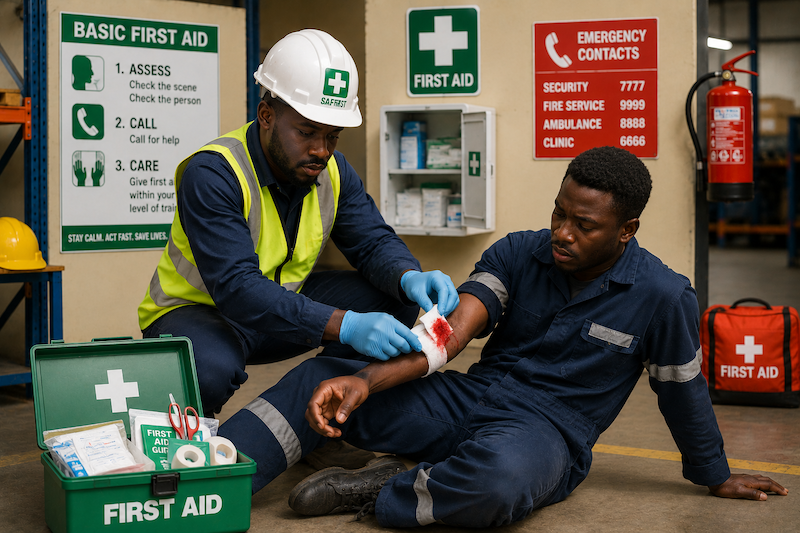
First aid is the immediate care given to a person who is injured or suddenly becomes ill before professional medical help arrives. It is an important part of workplace safety because quick and correct action can save lives, reduce pain, prevent a condition from becoming worse, and support recovery.
First aid awareness does not make a person a medical doctor, nurse, or paramedic. It gives workers basic knowledge of how to recognise emergencies, raise the alarm, protect themselves, assist the casualty within their level of training, and call for professional help when needed.
In the workplace, first aid may be needed for cuts, bleeding, burns, fractures, fainting, electric shock, chemical exposure, choking, breathing difficulty, shock, collapse, or other sudden health problems. Every worker should know the basic principles of first aid, the location of the first aid box, how to contact a first aider, and what to do during a medical emergency.
First aid should always be provided safely. The first aider must avoid becoming another casualty. The first step is always to check for danger, call for help, and give care only within the level of training and available resources. The American Red Cross summarises first aid action as checking the scene and person, calling for help, and giving care based on the condition found and the rescuer’s level of training.
Meaning of First Aid
First aid is the immediate assistance given to an injured or ill person before professional medical care is available.
First aid may include:
- Checking the scene for danger.
- Calling for help.
- Reassuring the casualty.
- Controlling bleeding.
- Cooling a burn.
- Supporting a suspected fracture.
- Placing an unresponsive breathing person in the recovery position.
- Starting CPR when a person is unresponsive and not breathing normally, where trained.
- Preventing shock.
- Keeping the casualty safe and comfortable.
- Monitoring the casualty until help arrives.
First aid does not replace medical treatment. It helps preserve life and reduce harm until proper care is available.
Importance of First Aid in the Workplace
First aid is important because accidents and sudden illnesses can happen at any time.
First aid helps to:
- Save lives.
- Prevent minor injuries from becoming worse.
- Reduce pain and distress.
- Control bleeding.
- Reduce the impact of burns.
- Support injured body parts.
- Improve response before medical help arrives.
- Reduce panic during emergencies.
- Support emergency preparedness.
- Improve workplace confidence.
- Promote a caring safety culture.
- Reduce the severity of workplace incidents.
A workplace with good first aid awareness is better prepared to respond quickly and responsibly.
Limits of First Aid Awareness
First aid awareness provides basic understanding. It does not replace formal first aid certification or professional medical care.
A person providing first aid should:
- Act only within their level of training.
- Call for professional help when needed.
- Avoid giving medication unless authorised and trained.
- Avoid moving a seriously injured person unless there is immediate danger.
- Avoid performing procedures they are not trained to do.
- Avoid touching blood or body fluids without protection.
- Avoid putting themselves in danger.
- Follow workplace emergency procedures.
When in doubt, call for medical help immediately.
Basic Principles of First Aid
The basic principles of first aid guide safe and effective response.
The main principles are:
- Preserve life.
- Prevent the condition from getting worse.
- Promote recovery.
- Protect yourself and others.
- Call for help early.
- Give care within your level of training.
- Monitor the casualty until help arrives.
These principles help workers respond calmly and correctly during medical emergencies.
Preserve Life
The first priority of first aid is to preserve life.
This means focusing first on life-threatening conditions such as:
- Unresponsiveness.
- Not breathing normally.
- Severe bleeding.
- Blocked airway.
- Major burns.
- Shock.
- Serious injury.
- Electric shock.
- Chemical exposure.
- Chest pain or suspected heart attack.
- Stroke symptoms.
- Severe allergic reaction.
Life-threatening conditions require urgent action and immediate medical help.
Prevent the Condition from Getting Worse
First aid should help prevent further harm.
This may include:
- Moving the casualty away from danger only if safe.
- Stopping work around the incident area.
- Controlling bleeding.
- Cooling burns.
- Keeping the casualty still if fracture is suspected.
- Preventing exposure to chemicals.
- Keeping the casualty warm.
- Preventing crowding.
- Avoiding unnecessary movement.
- Monitoring breathing and responsiveness.
Poor handling can make an injury worse, especially in cases of suspected fractures, spinal injuries, burns, or electric shock.
Promote Recovery
First aid can support recovery by reducing pain, calming the casualty, preventing complications, and helping professional responders continue care.
This may include:
- Reassuring the casualty.
- Keeping the casualty comfortable.
- Protecting wounds from contamination.
- Supporting injured limbs.
- Providing clear information to responders.
- Monitoring changes in condition.
- Keeping the casualty at rest.
A calm and supportive response can reduce fear and distress.
Protect Yourself First
A rescuer must protect themselves before helping others.
Before giving first aid, check for:
- Fire.
- Smoke.
- Electricity.
- Chemicals.
- Gas leak.
- Moving vehicles.
- Falling objects.
- Violence.
- Sharp objects.
- Blood or body fluids.
- Unstable structures.
- Slippery floors.
- Confined space hazards.
- Dangerous machinery.
If the scene is unsafe, do not enter. Raise the alarm and wait for trained emergency responders.
The First Aid Action Plan
A simple first aid action plan helps workers respond correctly.
The action plan can be remembered as:
- Assess the scene.
- Call for help.
- Care for the casualty.
- Monitor until help arrives.
This approach helps prevent panic and keeps the response organised.
Assess the Scene
Before approaching the casualty, check the environment for danger.
Look for:
- What happened.
- Whether the scene is safe.
- Number of casualties.
- Possible hazards.
- Need for emergency services.
- Need for PPE.
- Whether other people are at risk.
Do not rush into a dangerous area. A rescuer who becomes injured may make the emergency worse.
Call for Help
Call for help as soon as possible.
Help may include:
- Workplace first aider.
- Supervisor.
- Emergency response team.
- Ambulance.
- Fire service.
- Security team.
- Nearby trained workers.
- Medical clinic.
- Emergency services.
When calling for help, provide:
- Exact location.
- Type of incident.
- Number of casualties.
- Condition of the casualty.
- Hazards present.
- Assistance needed.
- Your name and contact details if required.
Clear information helps responders arrive prepared.
Care for the Casualty
Give care based on the casualty’s condition and your level of training.
Care may include:
- Reassuring the casualty.
- Checking responsiveness.
- Opening the airway if trained.
- Checking breathing.
- Controlling bleeding.
- Cooling burns.
- Supporting an injured limb.
- Placing a breathing unresponsive casualty in the recovery position.
- Starting CPR if trained and required.
- Keeping the casualty comfortable.
- Preventing shock.
- Waiting for professional help.
Do not perform actions you are not trained to perform.
Monitor Until Help Arrives
After giving initial care, continue monitoring the casualty.
Check:
- Responsiveness.
- Breathing.
- Bleeding.
- Pain level.
- Skin colour.
- Signs of shock.
- Changes in condition.
If the casualty’s condition worsens, update emergency responders immediately.
Personal Safety and Infection Prevention
First aid may involve contact with blood, vomit, saliva, sweat, wounds, or other body fluids.
To reduce infection risk:
- Wear disposable gloves where available.
- Use a face shield or CPR barrier if available.
- Avoid direct contact with blood and body fluids.
- Cover cuts on your own hands before helping.
- Wash hands after giving first aid.
- Dispose of contaminated materials safely.
- Avoid touching your face while providing care.
- Clean contaminated surfaces according to workplace procedure.
- Report exposure to blood or body fluids.
Personal protection is part of safe first aid.
Consent Before Giving First Aid
If the casualty is conscious, explain who you are and ask for permission before helping.
For example:
“I am trained in basic first aid. Can I help you?”
If the person refuses help, do not force care unless there is a serious legal or workplace emergency requirement. Stay nearby, call for professional help, and continue to monitor from a safe distance.
If the person is unconscious, confused, unable to respond, or in a life-threatening condition, emergency care may be given according to workplace procedure and local laws.
Checking Responsiveness
Responsiveness means whether a person can respond to voice, touch, or pain.
To check responsiveness:
- Approach safely.
- Speak clearly to the person.
- Ask if they can hear you.
- Gently tap the shoulder if safe.
- Look for movement, speech, eye opening, or response.
If the person responds, keep them calm and assess the problem.
If the person does not respond, call for help immediately and check breathing.
Airway and Breathing Awareness
The airway is the passage through which air enters the lungs.
A person who is unconscious may have a blocked airway because the tongue, vomit, blood, or foreign material can obstruct breathing.
Signs of breathing difficulty may include:
- Noisy breathing.
- Gasping.
- Slow or irregular breathing.
- Blue or pale skin.
- Chest not rising normally.
- Inability to speak.
- Severe anxiety.
- Loss of consciousness.
If a person is unresponsive and not breathing normally, call emergency help immediately and start CPR if trained.
CPR Awareness
CPR means Cardiopulmonary Resuscitation.
It is an emergency procedure used when a person is unresponsive and not breathing normally. CPR helps keep blood and oxygen moving through the body until professional help or an AED is available.
CPR is a life-saving skill and should be learned through proper hands-on training. Awareness training helps workers recognise when CPR may be needed and why quick action is important.
The American Heart Association states that Hands-Only CPR can be effective for teens and adults who suddenly collapse, and it involves calling emergency services and pushing hard and fast in the centre of the chest.
When CPR May Be Needed
CPR may be needed when a person:
- Is unresponsive.
- Is not breathing normally.
- Is gasping or only making occasional abnormal breaths.
- Collapses suddenly.
- Has no signs of normal breathing.
CPR should not be delayed when a person is unresponsive and not breathing normally. Emergency services should be called immediately.
Basic CPR Awareness Steps
For a person who is unresponsive and not breathing normally:
- Make sure the scene is safe.
- Call for emergency help immediately.
- Ask someone to get an AED if available.
- Place the person on their back on a firm surface.
- Start chest compressions if trained.
- Push hard and fast in the centre of the chest.
- Continue until professional help arrives, the person shows signs of life, an AED is ready for use, or you are too exhausted to continue safely.
Workers should receive practical CPR training to perform CPR confidently and correctly.
AED Awareness
AED means Automated External Defibrillator.
An AED is a device that can analyse the heart rhythm and deliver an electric shock if needed. It is used for some cases of sudden cardiac arrest.
AEDs are designed to give voice or visual instructions. If an AED is available, it should be brought to the casualty as soon as possible.
Basic AED awareness includes:
- Know where AEDs are located in the workplace.
- Call for help before or while getting the AED.
- Turn on the AED.
- Follow the device instructions.
- Do not touch the person while the AED is analysing or delivering a shock.
- Continue CPR as instructed.
AED training improves confidence and response speed.
Recovery Position Awareness
The recovery position is used for a person who is unresponsive but breathing normally.
The purpose is to help keep the airway open and allow fluids such as saliva or vomit to drain from the mouth.
A casualty may be placed in the recovery position when:
- They are unresponsive.
- They are breathing normally.
- There is no suspected major spinal injury requiring special handling.
- It is safe to move them.
While in the recovery position:
- Keep the airway open.
- Monitor breathing.
- Call for medical help.
- Keep the person warm.
- Do not leave them alone unless necessary to get help.
If breathing stops or becomes abnormal, CPR may be required.
Choking Awareness
Choking happens when the airway is partly or fully blocked by food, liquid, or another object.
Signs of choking may include:
- Difficulty breathing.
- Coughing.
- Clutching the throat.
- Inability to speak.
- Wheezing.
- Panic.
- Blue lips or skin.
- Loss of consciousness in severe cases.
If the person can cough strongly, encourage them to keep coughing.
If the person cannot breathe, speak, or cough effectively, call for emergency help and provide choking first aid if trained.
Fainting Awareness
Fainting is a temporary loss of consciousness caused by reduced blood flow to the brain.
A person may faint because of:
- Heat.
- Dehydration.
- Standing for long periods.
- Stress.
- Pain.
- Hunger.
- Sudden fear.
- Medical conditions.
Signs before fainting may include:
- Dizziness.
- Weakness.
- Sweating.
- Pale skin.
- Nausea.
- Blurred vision.
- Feeling lightheaded.
If someone feels faint:
- Help them sit or lie down.
- Keep them safe from falling.
- Loosen tight clothing if necessary.
- Keep the area ventilated.
- Do not crowd them.
- Seek medical help if they do not recover quickly or if there are other serious symptoms.
Bleeding
Bleeding occurs when blood escapes from damaged blood vessels.
Bleeding may be:
- External, where blood leaves the body through a wound.
- Internal, where bleeding occurs inside the body.
Severe bleeding can be life-threatening and should be treated urgently.
The British Red Cross and St John Ambulance both provide first aid guidance for bleeding, burns, fractures, shock, and other emergencies, emphasising early care and medical help where needed.
Types of External Bleeding
External bleeding may appear as:
- Small cuts.
- Scrapes.
- Deep wounds.
- Puncture wounds.
- Amputation injuries.
- Crush injuries.
- Bleeding from the nose.
- Bleeding from the mouth.
- Bleeding from an open fracture.
The seriousness depends on the amount of blood loss, location of injury, depth of wound, and whether bleeding stops.
Signs of Severe Bleeding
Signs of severe bleeding include:
- Blood flowing heavily.
- Blood soaking clothing or bandages.
- Blood pooling on the ground.
- Bleeding that does not stop with pressure.
- Weakness.
- Dizziness.
- Pale or cold skin.
- Fast breathing.
- Confusion.
- Signs of shock.
- Loss of consciousness.
Severe bleeding requires immediate pressure and urgent medical help.
First Aid for Bleeding
For external bleeding:
- Make sure the scene is safe.
- Wear gloves if available.
- Apply firm direct pressure to the wound using a clean dressing or cloth.
- Help the casualty sit or lie down.
- Raise the injured part if appropriate and if no fracture is suspected.
- Keep pressure on the wound.
- Add more dressings if blood soaks through; do not remove the first dressing.
- Secure the dressing with a bandage if available.
- Call for medical help if bleeding is severe or does not stop.
- Monitor for signs of shock.
Do not apply harmful substances such as sand, herbs, powder, engine oil, or chemicals to a wound. These can cause infection and complications.
Embedded Objects in Wounds
An embedded object is an item stuck in a wound, such as glass, metal, wood, or a tool.
Do not remove an embedded object because it may be helping to block bleeding. Removing it may worsen bleeding and tissue damage.
First aid includes:
- Keep the object in place.
- Apply pressure around the object, not directly on it.
- Use padding to support the object.
- Call for medical help.
- Keep the casualty still.
Nosebleed Awareness
A nosebleed may occur from injury, heat, dry air, high blood pressure, nose picking, or other medical causes.
Basic first aid may include:
- Sit the person upright.
- Lean them slightly forward.
- Pinch the soft part of the nose.
- Encourage breathing through the mouth.
- Keep pinching for several minutes.
- Avoid tilting the head backward.
- Seek medical help if bleeding is heavy, follows a head injury, or does not stop.
Tilting the head backward can cause blood to run into the throat.
Minor Wounds
Minor wounds include small cuts, scratches, and grazes.
Basic care includes:
- Wash hands or wear gloves.
- Rinse the wound with clean water where appropriate.
- Remove small surface dirt if possible.
- Cover with a clean dressing.
- Keep the wound clean and dry.
- Watch for signs of infection.
Signs of infection may include redness, swelling, pus, increasing pain, warmth, fever, or red lines spreading from the wound.
Burns and Scalds
A burn is damage to the skin or deeper tissues caused by heat, chemicals, electricity, radiation, or friction.
A scald is a burn caused by hot liquid or steam.
Burns may be caused by:
- Flames.
- Hot surfaces.
- Hot liquids.
- Steam.
- Chemicals.
- Electricity.
- Sun exposure.
- Welding arc.
- Hot oil.
- Explosions.
Burns can be serious depending on size, depth, location, cause, and the age or health of the casualty.
Types of Burns
Burns may be classified by depth.
Superficial Burns
These affect the outer layer of the skin.
Signs may include:
- Redness.
- Pain.
- Mild swelling.
- Dry skin.
Partial Thickness Burns
These affect deeper layers of the skin.
Signs may include:
- Blisters.
- Severe pain.
- Red or wet-looking skin.
- Swelling.
Full Thickness Burns
These affect all layers of the skin and may damage deeper tissues.
Signs may include:
- White, brown, black, or charred skin.
- Leathery appearance.
- Less pain in the centre because nerves may be damaged.
- Serious tissue damage.
Full thickness burns require urgent medical care.
First Aid for Burns
For thermal burns:
- Move the casualty away from the heat source if safe.
- Cool the burn under cool running water for at least 20 minutes where possible.
- Remove jewellery or tight clothing near the burn before swelling occurs, if not stuck to the skin.
- Do not remove clothing stuck to the burn.
- Cover the burn with a sterile dressing, clean cloth, or plastic film where appropriate.
- Do not apply butter, oil, toothpaste, herbs, or creams unless directed by medical personnel.
- Do not burst blisters.
- Seek medical help for serious burns.
Cooling reduces pain, swelling, and tissue damage.
When Burns Need Urgent Medical Help
Seek urgent medical help for:
- Large burns.
- Deep burns.
- Burns to the face, hands, feet, genitals, major joints, or airway.
- Chemical burns.
- Electrical burns.
- Burns in children or elderly persons.
- Burns with breathing difficulty.
- Burns caused by explosion.
- Burns with signs of shock.
- Burns that go around a limb or chest.
- Burns with clothing stuck to the skin.
- Burns showing white, black, or charred tissue.
Electrical burns may appear small on the skin but can cause serious internal injury.
Chemical Burns
Chemical burns happen when harmful chemicals contact the skin or eyes.
First aid may include:
- Move away from the chemical source.
- Avoid contaminating yourself.
- Wear PPE if available.
- Remove contaminated clothing carefully.
- Rinse the affected area with plenty of clean running water.
- Continue rinsing for an extended period according to workplace procedure or Safety Data Sheet.
- Seek urgent medical help.
- Identify the chemical if safe.
Do not try to neutralise chemicals unless specifically instructed by the Safety Data Sheet or trained personnel.
Eye Injuries and Chemical Splash
Eye injuries can be serious and may cause permanent damage.
Common causes include:
- Dust.
- Metal particles.
- Chemical splashes.
- Smoke.
- Heat.
- Sharp objects.
- Flying fragments.
For chemical splash to the eye:
- Rinse the eye immediately with clean running water or eyewash.
- Keep the eye open while rinsing if possible.
- Avoid rubbing the eye.
- Remove contact lenses if easy to do and not delaying irrigation.
- Continue rinsing while arranging medical help.
- Seek urgent medical attention.
Eye injuries should be treated seriously.
Fractures and Broken Bones
A fracture is a break or crack in a bone. It may be closed, where the skin remains intact, or open, where there is a wound near the broken bone. St John Ambulance notes that broken bones may be unstable and may cause internal bleeding or shock.
Fractures may result from:
- Falls.
- Impact.
- Crushing.
- Vehicle accidents.
- Sports injuries.
- Falling objects.
- Machinery accidents.
- Twisting injuries.
- Workplace violence.
Fractures require careful handling.
Signs of Fracture
Signs may include:
- Pain.
- Swelling.
- Bruising.
- Deformity.
- Difficulty moving the limb.
- Inability to use the limb.
- Limb appearing shorter, bent, or twisted.
- Tenderness.
- Open wound with bone visible.
- Grating feeling or sound.
- Signs of shock.
Do not force the injured part to move.
First Aid for Suspected Fracture
For suspected fracture:
- Keep the casualty still.
- Support the injured part in the position found.
- Do not try to straighten the limb.
- Do not push exposed bone back in.
- Control bleeding around an open fracture without pressing directly on exposed bone.
- Cover open wounds with a sterile dressing if available.
- Immobilise the area if trained.
- Apply cold pack wrapped in cloth to reduce swelling where appropriate.
- Call for medical help.
- Monitor for shock.
Moving a fractured limb carelessly can worsen injury.
Sprains and Strains
A sprain is an injury to ligaments around a joint.
A strain is an injury to muscles or tendons.
They may occur from:
- Twisting.
- Overstretching.
- Lifting.
- Slipping.
- Falling.
- Sudden movement.
- Repetitive stress.
Signs may include:
- Pain.
- Swelling.
- Bruising.
- Difficulty moving.
- Weakness.
- Tenderness.
Basic care may include rest, support, cold application, elevation where appropriate, and medical assessment if severe.
Shock
Shock is a life-threatening condition that occurs when the body’s organs do not receive enough oxygen-rich blood. It can happen after severe bleeding, burns, major injury, allergic reaction, infection, heart problems, or severe fluid loss.
Shock requires urgent medical help. St John Ambulance identifies shock as a serious condition that needs immediate first aid and emergency support.
Signs of Shock
Signs may include:
- Pale, cold, or clammy skin.
- Weakness.
- Dizziness.
- Fast breathing.
- Rapid pulse.
- Confusion.
- Anxiety.
- Nausea.
- Thirst.
- Restlessness.
- Collapse.
- Loss of consciousness.
Shock can worsen quickly if not treated.
First Aid for Shock
For suspected shock:
- Call for emergency medical help.
- Help the casualty lie down if possible.
- Keep them still and calm.
- Control any serious bleeding.
- Keep them warm with a blanket or clothing.
- Do not give food or drink.
- Monitor breathing and responsiveness.
- Be ready to begin CPR if trained and if breathing stops.
- Do not move the casualty unnecessarily.
Shock is a medical emergency.
Electric Shock
Electric shock occurs when electricity passes through the body.
It may cause:
- Burns.
- Heart rhythm problems.
- Muscle spasms.
- Breathing difficulty.
- Loss of consciousness.
- Falls.
- Death.
Before helping, make sure the electrical source is isolated. Do not touch the casualty if they are still in contact with electricity.
First aid includes:
- Switch off power only if safe and authorised.
- Call for emergency help.
- Keep others away.
- Check responsiveness and breathing after the source is controlled.
- Start CPR if trained and needed.
- Treat burns if present.
- Seek medical care even if the person appears to recover.
Electrical injuries can have hidden internal effects.
Heat Exhaustion and Heat Stroke Awareness
Heat-related illness may occur when the body overheats.
Heat exhaustion may happen due to hot weather, heavy work, poor hydration, or poor ventilation.
Signs may include:
- Heavy sweating.
- Weakness.
- Dizziness.
- Headache.
- Nausea.
- Muscle cramps.
- Fast pulse.
- Thirst.
- Tiredness.
First aid may include:
- Move the person to a cool place.
- Loosen tight clothing.
- Give cool water if fully conscious.
- Cool the body with wet cloths or fanning.
- Allow rest.
- Seek medical help if symptoms do not improve.
Heat stroke is more serious and can be life-threatening.
Signs may include:
- Very high body temperature.
- Confusion.
- Collapse.
- Seizure.
- Hot skin.
- Reduced sweating or abnormal sweating.
- Loss of consciousness.
Heat stroke requires urgent emergency medical help and rapid cooling.
Chemical Exposure
Chemical exposure can occur through inhalation, skin contact, eye contact, swallowing, or injection.
Signs may include:
- Skin burns.
- Eye irritation.
- Coughing.
- Breathing difficulty.
- Dizziness.
- Headache.
- Nausea.
- Vomiting.
- Confusion.
- Unconsciousness.
First aid depends on the chemical and route of exposure.
Basic actions include:
- Move away from exposure if safe.
- Avoid contaminating yourself.
- Call for help.
- Use the Safety Data Sheet.
- Remove contaminated clothing if safe.
- Rinse affected skin or eyes with clean water where appropriate.
- Move the person to fresh air if fumes are involved and it is safe.
- Do not induce vomiting unless instructed by medical professionals.
- Seek medical help.
Chemical incidents should always be reported.
Poisoning Awareness
Poisoning occurs when a harmful substance enters the body.
Possible sources include:
- Chemicals.
- Cleaning products.
- Pesticides.
- Contaminated food.
- Drugs or medication.
- Toxic gases.
- Plants.
- Fuel or solvents.
Signs may include:
- Vomiting.
- Abdominal pain.
- Dizziness.
- Confusion.
- Burns around the mouth.
- Breathing difficulty.
- Seizure.
- Unconsciousness.
First aid includes:
- Call emergency help.
- Identify the substance if safe.
- Do not give food or drink unless advised.
- Do not induce vomiting unless instructed by medical professionals.
- Keep the container or label for responders.
- Monitor breathing and responsiveness.
Asthma and Breathing Difficulty Awareness
Asthma and other breathing emergencies can become serious quickly.
Signs may include:
- Wheezing.
- Coughing.
- Shortness of breath.
- Tight chest.
- Difficulty speaking.
- Anxiety.
- Blue lips or skin in severe cases.
- Exhaustion.
First aid may include:
- Help the person sit upright.
- Keep them calm.
- Assist them to use their prescribed inhaler if they have one and can use it.
- Call for medical help if symptoms are severe or do not improve.
- Monitor breathing.
Do not force the person to lie down if it worsens breathing.
Seizure Awareness
A seizure is caused by abnormal electrical activity in the brain.
During a seizure:
- Keep the person safe from injury.
- Move dangerous objects away.
- Protect the head with something soft if possible.
- Do not restrain the person.
- Do not put anything in the mouth.
- Time the seizure if possible.
- After the seizure, check breathing.
- Place the person in the recovery position if unresponsive but breathing.
- Call for medical help if the seizure is prolonged, repeated, caused by injury, occurs in water, or if the person does not recover normally.
Putting objects in the mouth during a seizure is dangerous and should not be done.
Stroke Awareness
A stroke happens when blood supply to part of the brain is interrupted.
A simple way to recognise stroke symptoms is FAST:
- Face: facial drooping.
- Arms: weakness in one arm.
- Speech: slurred or strange speech.
- Time: call emergency help immediately.
Other symptoms may include:
- Sudden confusion.
- Sudden severe headache.
- Sudden vision problem.
- Sudden dizziness.
- Sudden loss of balance.
- Numbness on one side of the body.
Stroke is a medical emergency. Fast action can reduce damage.
Heart Attack Awareness
A heart attack happens when blood flow to part of the heart is blocked.
Signs may include:
- Chest pain or pressure.
- Pain spreading to arm, jaw, neck, back, or stomach.
- Shortness of breath.
- Sweating.
- Nausea.
- Weakness.
- Dizziness.
- Anxiety.
- Collapse.
First aid includes:
- Call emergency medical help immediately.
- Help the person rest in a comfortable position.
- Loosen tight clothing.
- Keep them calm.
- Monitor breathing and responsiveness.
- Be ready to start CPR if trained and if the person becomes unresponsive and stops breathing normally.
Do not allow the person to continue working or walking around.
Minor Injuries
Minor injuries are common in many workplaces.
They may include:
- Small cuts.
- Scrapes.
- Minor burns.
- Bruises.
- Mild sprains.
- Small splinters.
- Minor nosebleeds.
- Small blisters.
Even minor injuries should be cleaned, protected, and reported according to workplace procedure.
Minor injuries can become serious if they become infected or are ignored.
Managing Minor Cuts and Grazes
For minor cuts and grazes:
- Wash hands or wear gloves.
- Clean the wound with clean water.
- Remove small dirt if possible.
- Dry gently with clean material.
- Apply a clean dressing or plaster.
- Dispose of contaminated materials safely.
- Report the injury if required.
- Watch for signs of infection.
Do not use dirty cloths or unsafe substances on wounds.
Managing Bruises
Bruises happen when small blood vessels under the skin are damaged.
Basic care may include:
- Resting the injured area.
- Applying a cold pack wrapped in cloth.
- Elevating the area where appropriate.
- Avoiding massage immediately after injury.
- Seeking medical help if pain is severe, swelling is large, movement is difficult, or the injury follows major impact.
First Aid Box
A first aid box contains basic supplies used to provide immediate care for minor injuries and support emergency response.
Every workplace should have a first aid box appropriate for the type of work, number of workers, and risks present.
A first aid box should be:
- Easy to access.
- Clearly marked.
- Protected from dirt and moisture.
- Regularly checked.
- Restocked after use.
- Kept in a known location.
- Used only for first aid purposes.
Workers should know where the first aid box is located.
Common Contents of a First Aid Box
A workplace first aid box may contain:
- Disposable gloves.
- Sterile gauze pads.
- Adhesive plasters.
- Roller bandages.
- Triangular bandages.
- Sterile wound dressings.
- Eye pads.
- Medical tape.
- Antiseptic wipes.
- Burn dressings.
- Scissors.
- Tweezers.
- Safety pins.
- CPR face shield or barrier.
- Instant cold pack.
- Hand sanitiser.
- Emergency blanket.
- First aid instruction leaflet.
- Waste disposal bags.
- Notepad and pen for recording.
The exact contents may vary based on workplace risk and local requirements.
Items That Should Not Be Misused in a First Aid Box
First aid supplies should be used correctly.
Workers should not:
- Use expired dressings.
- Return contaminated items to the box.
- Remove items for personal non-emergency use.
- Store food or personal items in the box.
- Use medication from the box unless authorised.
- Leave the box unlocked in areas where misuse is likely.
- Use dirty or damaged supplies.
- Ignore missing items.
A first aid box must be ready for emergencies at all times.
First Aid Records
Workplace injuries and first aid treatment should be recorded according to company procedure.
Records may include:
- Name of casualty.
- Date and time.
- Location.
- Type of injury or illness.
- First aid given.
- Name of person who gave first aid.
- Whether medical referral was needed.
- Possible cause of injury.
- Corrective action required.
Records help identify repeated hazards and improve workplace safety.
When to Seek Medical Help
Medical help should be sought when:
- The person is unconscious.
- Breathing is abnormal.
- Severe bleeding occurs.
- Chest pain is present.
- Stroke symptoms are present.
- Severe burn occurs.
- Electric shock occurs.
- Chemical exposure occurs.
- Serious fracture is suspected.
- Head, neck, or spinal injury is suspected.
- The person has seizure for the first time or prolonged seizure.
- The person shows signs of shock.
- Pain is severe.
- Condition is worsening.
- The injury involves eyes.
- A wound is deep, dirty, or caused by a bite.
- The casualty is confused, very weak, or not recovering.
It is better to call for help early than to wait until the condition becomes worse.
What Not to Do in First Aid
Unsafe first aid can make injuries worse.
Avoid the following:
- Do not enter an unsafe scene.
- Do not move a seriously injured person unless there is immediate danger.
- Do not give food or drink to a seriously injured or unconscious person.
- Do not apply harmful substances to wounds or burns.
- Do not burst blisters.
- Do not remove embedded objects.
- Do not straighten a suspected fracture.
- Do not touch electrical casualties before power is isolated.
- Do not clean chemical spills without training and PPE.
- Do not give medication unless authorised.
- Do not delay calling for help.
- Do not crowd the casualty.
- Do not spread panic or rumours.
- Do not exceed your level of training.
Safe first aid means knowing what to do and what not to do.
Communicating with the Casualty
Good communication helps calm the casualty and improves cooperation.
When speaking to a casualty:
- Introduce yourself.
- Speak calmly.
- Explain what you are doing.
- Ask what happened.
- Ask where they feel pain.
- Reassure them.
- Encourage them to stay still where necessary.
- Avoid blaming or frightening them.
- Tell them help is coming.
- Keep them informed.
Calm communication can reduce fear and panic.
Supporting the Casualty Emotionally
Injured or ill persons may feel scared, confused, embarrassed, or helpless.
Support may include:
- Staying with them.
- Speaking gently.
- Keeping crowds away.
- Respecting privacy.
- Keeping them warm.
- Avoiding unnecessary movement.
- Listening to them.
- Reassuring them without making false promises.
- Explaining that help has been called.
Emotional support is part of good first aid.
Workplace First Aid Responsibilities
First aid responsibilities should be clear in every workplace.
Employer Responsibilities
Employers should provide appropriate first aid arrangements based on workplace risk.
This may include:
- First aid boxes.
- Trained first aiders.
- Emergency contact numbers.
- First aid rooms where required.
- First aid signage.
- Incident reporting procedures.
- Training and awareness.
- Regular inspection of first aid supplies.
- Emergency transport arrangements where needed.
Worker Responsibilities
Workers should support workplace first aid by:
- Knowing how to call for help.
- Knowing where the first aid box is located.
- Reporting injuries immediately.
- Not misusing first aid supplies.
- Keeping access to first aid equipment clear.
- Following emergency procedures.
- Avoiding unsafe first aid practices.
- Cooperating with first aiders.
- Reporting hazards that may cause injury.
- Participating in first aid awareness training.
First aid works best when everyone understands their role.
First Aid in Different Workplace Settings
Office Environment
Common first aid situations in offices include:
- Minor cuts.
- Fainting.
- Slips and falls.
- Electric shock from faulty equipment.
- Stress-related illness.
- Chest pain.
- Stroke symptoms.
- Burns from hot drinks.
- Trips on cables.
- Eye strain or headache.
Office workers should know emergency contacts, first aid box location, evacuation procedures, and how to call for help.
Workshop Environment
Common first aid situations in workshops include:
- Cuts.
- Burns.
- Eye injuries.
- Crushing injuries.
- Fractures.
- Electric shock.
- Chemical exposure.
- Bleeding.
- Noise-related issues.
- Manual handling injuries.
Workshop workers should use PPE, report hazards early, and call for trained help during serious incidents.
Construction Environment
Common first aid situations in construction include:
- Falls.
- Fractures.
- Head injuries.
- Cuts.
- Crush injuries.
- Heat stress.
- Electric shock.
- Eye injuries.
- Burns.
- Severe bleeding.
Construction workers should know site emergency procedures, assembly points, first aid stations, and how to contact emergency response personnel.
Laboratory Environment
Common first aid situations in laboratories include:
- Chemical burns.
- Eye splashes.
- Cuts from broken glass.
- Inhalation of fumes.
- Fire-related burns.
- Biological exposure.
- Poisoning.
- Slips and falls.
Laboratory workers should know the location of eyewash stations, safety showers, Safety Data Sheets, spill kits, and first aid supplies.
Healthcare and Care Environment
Common first aid concerns include:
- Biological exposure.
- Needle-stick injuries.
- Patient handling injuries.
- Slips and falls.
- Bleeding.
- Fainting.
- Infection exposure.
- Stress-related incidents.
Workers should follow infection prevention procedures and report exposures immediately.
Key HSE Terms
First Aid
Immediate care given to an injured or ill person before professional medical help arrives.
Casualty
A person who is injured or suddenly ill.
CPR
Cardiopulmonary Resuscitation, an emergency procedure used when a person is unresponsive and not breathing normally.
AED
Automated External Defibrillator, a device that can analyse heart rhythm and deliver a shock if needed.
Recovery Position
A safe side-lying position used for an unresponsive person who is breathing normally.
Bleeding
Loss of blood from damaged blood vessels.
Severe Bleeding
Heavy blood loss that may become life-threatening.
Burn
Injury to skin or deeper tissues caused by heat, chemicals, electricity, radiation, or friction.
Scald
A burn caused by hot liquid or steam.
Fracture
A break or crack in a bone.
Sprain
An injury to ligaments around a joint.
Strain
An injury to muscles or tendons.
Shock
A life-threatening condition where the body’s organs do not receive enough oxygen-rich blood.
Choking
A blockage of the airway that affects breathing.
Consent
Permission given by a conscious casualty before first aid is provided.
First Aid Box
A container holding basic supplies used for first aid care.
Summary
First aid is the immediate care given to a person who is injured or suddenly ill before professional medical help arrives. It is an important workplace safety skill because it can save lives, reduce pain, prevent injuries from becoming worse, and support recovery.
The basic principles of first aid are to preserve life, prevent the condition from worsening, promote recovery, protect yourself, call for help early, and give care only within your level of training. The first step is always to assess the scene for danger. A rescuer should not enter an unsafe area or expose themselves to hazards such as fire, electricity, chemicals, gas, violence, or moving equipment.
Workers should understand how to respond to common first aid situations such as bleeding, burns, fractures, shock, minor injuries, fainting, choking, electric shock, chemical exposure, heat illness, seizures, stroke symptoms, and heart attack symptoms. Serious conditions require urgent medical help.
CPR is used when a person is unresponsive and not breathing normally. Workers should receive practical CPR training to perform it correctly. AED awareness is also important because early defibrillation can help in some cardiac emergencies.
A workplace first aid box should be accessible, clearly marked, regularly checked, and stocked with suitable supplies such as gloves, dressings, bandages, plasters, eye pads, burn dressings, scissors, CPR barrier, and other basic first aid items. First aid supplies should not be misused or allowed to expire.
First aid awareness is not a replacement for professional medical care or certified first aid training. It gives workers the confidence to recognise emergencies, call for help, protect themselves, provide basic support, and assist casualties safely until trained help arrives.