
Environmental Safety
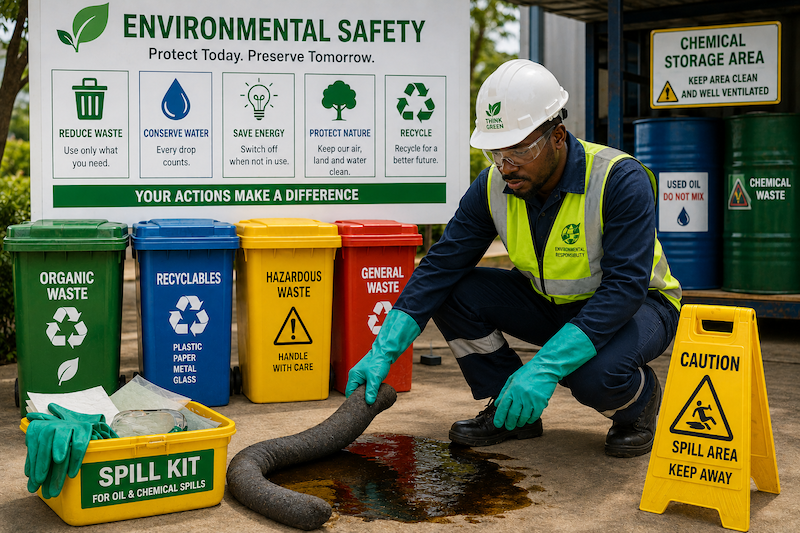
Environmental safety is an important part of Health, Safety, and Environment because workplace activities can affect not only workers, but also the land, water, air, animals, plants, communities, and future generations. A safe workplace should not only prevent injuries and accidents; it should also prevent pollution, reduce waste, conserve resources, and protect the surrounding environment.
Every organisation has a responsibility to carry out its activities in a way that reduces environmental harm. This applies to offices, workshops, construction sites, factories, warehouses, laboratories, farms, hospitals, schools, markets, oil and gas facilities, transport operations, and field work locations.
Environmental safety involves identifying workplace activities that may harm the environment and putting controls in place to prevent or reduce that harm. These activities may include waste generation, chemical handling, oil storage, fuel use, water discharge, air emissions, noise, energy use, and disposal of hazardous materials.
This module explains environmental protection principles, waste segregation and disposal, pollution prevention, spill response awareness, and sustainable workplace practices.
Meaning of Environmental Safety
Environmental safety means taking action to prevent workplace activities from causing harm to the natural environment and surrounding communities.
It involves controlling hazards that may affect:
- Air.
- Water.
- Land.
- Soil.
- Plants.
- Animals.
- Human communities.
- Drainage systems.
- Natural resources.
- Public health.
In simple terms, environmental safety means doing work in a way that protects the environment from pollution, damage, and unnecessary waste.
Why Environmental Safety is Important
Environmental safety is important because damage to the environment can affect people, businesses, communities, and future generations.
Good environmental safety helps to:
- Prevent pollution.
- Protect public health.
- Keep workplaces and communities clean.
- Prevent contamination of land and water.
- Reduce waste.
- Reduce fire and chemical risks.
- Conserve natural resources.
- Protect animals and plants.
- Improve company reputation.
- Support legal and regulatory compliance.
- Reduce cleanup costs.
- Improve sustainability.
- Prevent conflict with communities.
- Support responsible business operations.
A workplace that protects the environment also protects people.
Environmental Responsibility in HSE
Environmental responsibility means understanding that every worker’s actions can affect the environment.
For example:
- Pouring oil into a drain can contaminate water.
- Burning waste can pollute the air.
- Leaving lights and equipment on wastes energy.
- Mixing hazardous waste with general waste can create health and environmental risks.
- Poor chemical storage can cause spills.
- Leaking vehicles can pollute soil.
- Poor housekeeping can attract pests and create blocked drains.
Environmental protection is not only the responsibility of environmental officers or management. Every worker has a role to play.
Environmental Aspects and Impacts
An environmental aspect is an activity, product, or service that can interact with the environment.
An environmental impact is the effect that the aspect has on the environment.
Examples:
- Aspect: Fuel storage.
Impact: Soil or water contamination if fuel leaks. - Aspect: Use of generators.
Impact: Air emissions, noise, and fuel consumption. - Aspect: Waste disposal.
Impact: Land pollution if waste is dumped wrongly. - Aspect: Chemical use.
Impact: Pollution, poisoning, fire, or harm to water bodies if spilled. - Aspect: Water use.
Impact: Wastage of water resources. - Aspect: Printing documents.
Impact: Paper consumption and waste generation.
Understanding aspects and impacts helps workers see how daily activities affect the environment.
Common Environmental Hazards in the Workplace
Environmental hazards are workplace conditions, substances, or activities that may harm the environment.
Common examples include:
- Oil spills.
- Fuel leaks.
- Chemical spills.
- Poor waste disposal.
- Smoke emissions.
- Dust emissions.
- Noise pollution.
- Contaminated wastewater.
- Improper storage of hazardous materials.
- Open burning of waste.
- Blocked drains.
- Leaking vehicles.
- Poor sewage management.
- Excessive use of water.
- Excessive use of electricity.
- Improper disposal of batteries.
- Improper disposal of electronic waste.
- Poor housekeeping.
- Mixing hazardous waste with general waste.
These hazards should be identified, reported, and controlled before they cause environmental damage.
Environmental Protection Principles
Environmental protection is guided by basic principles that help organisations and workers reduce harm.
Key principles include:
- Prevent pollution before it happens.
- Reduce waste at the source.
- Reuse materials where safe and practical.
- Recycle suitable materials.
- Dispose of waste responsibly.
- Conserve energy and water.
- Store chemicals safely.
- Prevent spills and leaks.
- Report environmental hazards early.
- Follow environmental procedures.
- Protect drains and waterways.
- Keep the workplace clean.
- Respond quickly to environmental incidents.
- Use resources responsibly.
Environmental protection should be part of everyday work, not something done only during inspections.
Pollution Prevention
Pollution prevention means taking action to stop pollution from happening in the first place.
Pollution may affect:
- Air.
- Water.
- Soil.
- Workplace surroundings.
- Communities.
- Plants and animals.
Pollution prevention is better and cheaper than cleanup. Once pollution occurs, it may be difficult, expensive, or impossible to completely reverse the damage.
Types of Pollution
Workplace activities can cause different types of pollution.
Air Pollution
Air pollution occurs when harmful substances are released into the air.
Examples include:
- Smoke.
- Dust.
- Fumes.
- Vapours.
- Exhaust gases.
- Chemical emissions.
- Open burning.
- Welding fumes.
- Generator emissions.
- Spray painting mist.
Air pollution can affect workers, nearby communities, animals, plants, and the atmosphere.
Controls include:
- Proper ventilation.
- Dust suppression.
- Avoiding open burning.
- Maintaining engines and generators.
- Using cleaner fuels where possible.
- Controlling chemical vapours.
- Using extraction systems.
- Reducing unnecessary emissions.
- Wearing respiratory PPE where required.
Water Pollution
Water pollution occurs when harmful substances enter water bodies, drains, streams, rivers, groundwater, or wastewater systems.
Examples include:
- Oil entering drains.
- Chemical discharge.
- Dirty wastewater.
- Sewage leakage.
- Paint washed into drains.
- Fuel spill runoff.
- Contaminated firefighting water.
- Cleaning chemicals discharged wrongly.
- Waste dumped near water.
Water pollution can harm people, fish, animals, crops, and communities.
Controls include:
- Never pour chemicals or oil into drains.
- Use proper waste disposal methods.
- Protect drains during spill response.
- Store chemicals away from drainage channels.
- Use spill trays and bunds.
- Treat wastewater where required.
- Report leaks immediately.
- Keep waste away from water bodies.
Land and Soil Pollution
Land and soil pollution occurs when harmful substances contaminate the ground.
Examples include:
- Oil leaks from vehicles.
- Dumping waste on bare ground.
- Chemical spills.
- Battery acid leaks.
- Poor storage of hazardous waste.
- Fuel tank leakage.
- Improper disposal of contaminated soil.
- Open dumping of plastics and metals.
Soil pollution can affect farming, groundwater, plants, animals, and community health.
Controls include:
- Use designated storage areas.
- Clean spills quickly.
- Store hazardous materials on sealed surfaces.
- Use bunds or containment trays.
- Dispose of waste through approved methods.
- Inspect vehicles and tanks for leaks.
- Report contamination immediately.
Noise Pollution
Noise pollution occurs when sound becomes excessive, disturbing, or harmful to people, animals, or surrounding communities.
Sources include:
- Generators.
- Compressors.
- Heavy equipment.
- Vehicles.
- Construction activities.
- Grinding and cutting.
- Loud machinery.
- Workshops.
- Sirens or alarms used unnecessarily.
Noise pollution can cause hearing damage, stress, sleep disturbance, communication problems, and community complaints.
Controls include:
- Maintain noisy equipment.
- Use noise barriers where possible.
- Limit noisy work to approved times.
- Use quieter equipment where possible.
- Keep generators away from sensitive areas.
- Wear hearing protection where required.
- Avoid unnecessary horn use.
- Monitor noise levels where needed.
Light Pollution
Light pollution occurs when artificial lighting is excessive, poorly directed, or disturbing to people, animals, or surrounding areas.
Examples include:
- Bright lights facing homes.
- Security lights left on unnecessarily.
- Poorly positioned floodlights.
- Excessive night lighting.
Controls include:
- Use lights only where needed.
- Direct lights downward or toward work areas.
- Switch off unnecessary lighting.
- Use energy-efficient lighting.
- Avoid disturbing nearby residents.
Waste Management
Waste management is the proper handling, storage, segregation, transport, treatment, recycling, and disposal of waste.
Waste may be produced from:
- Office work.
- Cleaning.
- Construction.
- Maintenance.
- Production.
- Packaging.
- Food consumption.
- Healthcare activities.
- Chemical handling.
- Vehicle maintenance.
- Electrical and electronic equipment.
Poor waste management can cause pollution, fire, injury, disease, pest infestation, bad odour, blocked drains, and legal problems.
Types of Workplace Waste
Workplace waste can be grouped into different categories.
General Waste
General waste is ordinary waste that is not hazardous and cannot always be recycled.
Examples include:
- Food wrappers.
- Tissue paper.
- Non-recyclable packaging.
- Sweeping waste.
- Some office waste.
- General cleaning waste.
General waste should be placed in designated general waste bins.
Recyclable Waste
Recyclable waste is waste that can be processed and used again.
Examples include:
- Paper.
- Cardboard.
- Plastic bottles.
- Metal cans.
- Glass bottles.
- Some packaging materials.
- Some scrap metals.
Recycling helps reduce landfill waste and conserve resources.
Organic Waste
Organic waste comes from plants, food, or biodegradable materials.
Examples include:
- Food leftovers.
- Fruit peels.
- Vegetable waste.
- Grass cuttings.
- Leaves.
- Garden waste.
Organic waste may be composted where a safe and approved system exists.
Hazardous Waste
Hazardous waste is waste that can harm people, property, or the environment because it is toxic, flammable, corrosive, reactive, infectious, or otherwise dangerous.
Examples include:
- Used oil.
- Chemical waste.
- Solvents.
- Paint waste.
- Acid waste.
- Contaminated rags.
- Used filters.
- Batteries.
- Pesticide containers.
- Fluorescent tubes.
- Medical waste.
- Contaminated PPE.
- Laboratory waste.
- Oil-contaminated soil.
- Chemical containers.
Hazardous waste must not be mixed with general waste. It must be handled, labelled, stored, and disposed of properly.
Electronic Waste
Electronic waste, also called e-waste, includes discarded electrical or electronic equipment.
Examples include:
- Computers.
- Phones.
- Printers.
- Cables.
- Batteries.
- Chargers.
- Monitors.
- Keyboards.
- Circuit boards.
- Electrical tools.
- Lamps.
- Small appliances.
E-waste may contain harmful materials and should be disposed of through approved recycling or disposal channels.
Medical and Biological Waste
Medical and biological waste may contain infectious materials.
Examples include:
- Used gloves.
- Used dressings.
- Blood-contaminated materials.
- Sharps.
- Syringes.
- Laboratory biological waste.
- Swabs.
- Specimen containers.
- Contaminated PPE.
Medical and biological waste requires special handling, segregation, and disposal.
Sharp Waste
Sharp waste includes items that can cut or puncture skin.
Examples include:
- Needles.
- Blades.
- Broken glass.
- Sharp metal pieces.
- Lancets.
- Syringes.
- Broken laboratory glassware.
Sharps should be placed in puncture-resistant containers. They should never be thrown loosely into general waste bags.
Waste Segregation
Waste segregation means separating waste into different categories before disposal.
Segregation helps ensure that each type of waste is handled properly.
Waste should be separated based on:
- General waste.
- Recyclable waste.
- Organic waste.
- Hazardous waste.
- Medical waste.
- Sharp waste.
- E-waste.
- Chemical waste.
- Oil-contaminated waste.
Segregation prevents contamination and makes recycling and safe disposal easier.
Why Waste Segregation is Important
Waste segregation is important because it helps to:
- Prevent pollution.
- Reduce health risks.
- Improve recycling.
- Reduce disposal costs.
- Prevent fires.
- Prevent chemical reactions.
- Protect waste handlers.
- Prevent contamination of general waste.
- Support legal compliance.
- Improve workplace cleanliness.
- Reduce environmental damage.
Mixing waste can make safe disposal more difficult and dangerous.
Waste Containers and Labelling
Waste containers should be suitable for the type of waste they hold.
Good waste containers should be:
- Clearly labelled.
- Strong enough for the waste.
- Covered where necessary.
- Leak-proof where required.
- Easy to identify.
- Located in suitable areas.
- Not overfilled.
- Protected from rain where needed.
- Emptied regularly.
- Kept clean.
- Safe for handlers.
Labels help workers know where to place each type of waste.
Colour Coding of Waste Bins
Some workplaces use colour-coded bins for different types of waste.
Colour coding may vary by country, company, or industry. Workers should follow the colour-coding system used in their own workplace.
For example, a workplace may use different colours for:
- General waste.
- Recyclables.
- Food waste.
- Hazardous waste.
- Medical waste.
- Sharps.
- E-waste.
Workers should never assume the meaning of a bin colour without checking workplace instructions.
Safe Waste Disposal
Safe waste disposal means getting rid of waste in a way that does not harm people or the environment.
Safe disposal practices include:
- Use designated waste bins.
- Segregate waste properly.
- Do not burn waste unless authorised by law and procedure.
- Do not dump waste in open areas.
- Do not pour chemicals into drains.
- Do not mix unknown chemicals.
- Do not overfill bins.
- Close waste containers where required.
- Dispose of sharps in proper containers.
- Use approved waste contractors where required.
- Keep records for hazardous waste disposal where applicable.
- Report illegal dumping or unsafe disposal.
Waste should only be disposed of through approved methods.
Unsafe Waste Disposal Practices
Unsafe disposal practices include:
- Throwing oil into drains.
- Burning plastics in open areas.
- Dumping waste behind buildings.
- Mixing chemicals with general waste.
- Throwing batteries into ordinary bins.
- Leaving food waste uncovered.
- Disposing of sharps loosely.
- Pouring paint into drainage systems.
- Leaving waste in walkways.
- Overfilling bins.
- Dumping construction waste on bare land.
- Washing contaminated water into streams.
These practices can cause pollution, fire, injury, disease, and legal consequences.
Hazardous Waste Handling
Hazardous waste must be handled carefully.
Safe handling practices include:
- Identify the waste type.
- Use suitable PPE.
- Keep containers closed.
- Label containers clearly.
- Store waste in designated areas.
- Keep incompatible waste separate.
- Do not mix unknown waste.
- Prevent leaks and spills.
- Use secondary containment where required.
- Keep waste away from drains.
- Report damaged containers.
- Arrange disposal through approved methods.
- Keep records where required.
Workers should not handle hazardous waste unless trained and authorised.
Chemical Waste
Chemical waste can be dangerous because it may be toxic, corrosive, flammable, reactive, or harmful to the environment.
Examples include:
- Used solvents.
- Acids.
- Alkalis.
- Paint residues.
- Cleaning chemical waste.
- Laboratory chemicals.
- Chemical containers.
- Contaminated absorbents.
- Expired chemicals.
Chemical waste should be labelled, stored safely, and disposed of according to the Safety Data Sheet and workplace procedure.
Oil and Fuel Waste
Oil and fuel waste can pollute soil and water.
Examples include:
- Used engine oil.
- Fuel residues.
- Oil filters.
- Oil-contaminated rags.
- Grease.
- Contaminated absorbent pads.
- Fuel-contaminated soil.
Oil and fuel waste should be stored in suitable containers and disposed of through approved methods. It should never be poured into drains, soil, or water bodies.
Battery Waste
Batteries may contain harmful chemicals and metals.
Examples include:
- Vehicle batteries.
- Rechargeable batteries.
- Phone batteries.
- Laptop batteries.
- Generator batteries.
- Small dry cell batteries.
Battery waste should be collected separately and sent for approved recycling or disposal. Damaged batteries should be handled carefully because they may leak, burn, or explode.
Spill Prevention
Spill prevention means taking steps to stop oils, chemicals, fuels, or other substances from escaping into the workplace or environment.
Spill prevention is better than spill cleanup.
Spill prevention practices include:
- Store chemicals properly.
- Keep containers closed.
- Inspect containers regularly.
- Use drip trays.
- Use bunded storage.
- Do not overfill containers.
- Handle containers carefully.
- Use funnels when transferring liquids.
- Keep storage areas away from drains.
- Maintain vehicles and machines.
- Repair leaks quickly.
- Train workers in safe handling.
- Keep spill kits available.
- Label containers clearly.
Most spills can be prevented through good planning and good housekeeping.
Spill Response Awareness
Spill response means actions taken when a substance is accidentally released.
A spill may involve:
- Oil.
- Fuel.
- Chemical.
- Paint.
- Solvent.
- Sewage.
- Wastewater.
- Powder.
- Unknown liquid.
- Hazardous material.
The response depends on the type of substance, quantity, location, and risk to people and the environment.
Basic Spill Response Steps
When a spill occurs:
- Stop work if necessary.
- Assess the situation from a safe distance.
- Do not touch or walk through the spill.
- Warn people nearby.
- Raise the alarm.
- Identify the substance if safe.
- Check the Safety Data Sheet where available.
- Wear suitable PPE before any response.
- Stop the source only if trained and safe.
- Prevent the spill from spreading if safe.
- Protect drains where safe.
- Use a spill kit only if trained.
- Report the spill immediately.
- Dispose of contaminated materials properly.
- Record the incident according to workplace procedure.
Unknown spills should be treated as hazardous until confirmed otherwise.
When Not to Clean a Spill
Workers should not attempt to clean a spill when:
- The substance is unknown.
- The spill is large.
- The spill is spreading quickly.
- Fumes are present.
- The substance is flammable.
- The substance is highly toxic or corrosive.
- There is risk of fire or explosion.
- The spill has entered a drain or water body.
- Required PPE is not available.
- The worker is not trained.
- The area is unsafe.
- People are feeling dizzy, irritated, or unwell.
In these situations, evacuate or isolate the area and call trained responders.
Spill Kits
A spill kit contains materials used to control and clean spills safely.
A typical spill kit may include:
- Absorbent pads.
- Absorbent socks.
- Absorbent granules.
- Drain covers.
- Disposal bags.
- Gloves.
- Goggles.
- Warning signs.
- Temporary barriers.
- Instructions.
Different spill kits may be used for different substances, such as oil-only spills, chemical spills, or general maintenance spills.
Workers should know where spill kits are located, but should use them only if trained and safe.
Protecting Drains and Waterways
Drains are important because spills can travel through them and pollute water systems.
Workers should:
- Keep chemicals away from drains.
- Avoid washing oil or chemicals into drains.
- Use drain covers during spill response where safe.
- Report spills near drains immediately.
- Keep waste away from drainage channels.
- Avoid disposing of dirty water into storm drains.
- Know where drains lead where relevant.
- Protect drains during refuelling or chemical transfer.
A small spill can become a major environmental incident if it reaches a drain.
Bunds and Secondary Containment
A bund is a containment structure used to hold spills or leaks from tanks, drums, or chemical storage areas.
Secondary containment means having an additional protective barrier to prevent a spill from spreading.
Examples include:
- Bunded storage areas.
- Spill pallets.
- Drip trays.
- Double-walled tanks.
- Containment trays.
- Raised edges around storage areas.
Secondary containment helps prevent chemicals and oils from reaching soil, drains, or water bodies.
Safe Chemical Storage
Safe chemical storage helps prevent spills, leaks, fire, exposure, and pollution.
Good chemical storage practices include:
- Store chemicals in designated areas.
- Keep containers closed.
- Label containers clearly.
- Store incompatible chemicals separately.
- Keep chemicals away from heat and ignition sources.
- Use bunds or spill trays where required.
- Keep chemicals away from drains.
- Do not store chemicals in food or drink containers.
- Inspect containers for leaks.
- Store only required quantities.
- Keep Safety Data Sheets accessible.
- Keep storage areas ventilated.
- Secure containers to prevent falling.
Poor chemical storage can lead to serious safety and environmental incidents.
Safe Fuel Storage and Refuelling
Fuel can cause fire, explosion, soil contamination, water pollution, and air pollution.
Safe practices include:
- Store fuel in approved containers.
- Keep fuel containers closed.
- Store away from ignition sources.
- Keep fuel away from drains.
- Use drip trays where needed.
- Do not overfill tanks or containers.
- Clean small spills immediately if trained and safe.
- Keep fire extinguishers nearby where required.
- Do not smoke during refuelling.
- Switch off engines before refuelling.
- Report leaks immediately.
- Store empty fuel containers safely.
Fuel spills should never be ignored because fuel vapours can ignite and liquids can contaminate soil and water.
Environmental Housekeeping
Environmental housekeeping means keeping the workplace clean in a way that prevents pollution and environmental harm.
Good environmental housekeeping includes:
- Keeping waste areas tidy.
- Preventing litter.
- Cleaning spills quickly.
- Keeping drains clear.
- Storing materials properly.
- Removing scrap materials.
- Preventing dust buildup.
- Keeping chemical containers closed.
- Keeping outdoor areas clean.
- Avoiding unnecessary water discharge.
- Reporting leaks.
- Maintaining vehicles and equipment.
- Preventing waste from being blown by wind.
Good housekeeping reduces pollution and improves workplace safety.
Dust Control
Dust can affect air quality, worker health, equipment, and surrounding communities.
Dust may come from:
- Construction.
- Cutting.
- Grinding.
- Sanding.
- Road movement.
- Material handling.
- Cement work.
- Demolition.
- Woodwork.
- Soil disturbance.
Dust control methods include:
- Wetting dusty surfaces where appropriate.
- Using extraction systems.
- Covering dusty materials.
- Reducing vehicle speed.
- Using enclosed containers.
- Cleaning regularly.
- Using proper ventilation.
- Wearing respiratory protection where required.
- Avoiding dry sweeping where it creates airborne dust.
Dust should be controlled at the source where possible.
Emissions Control
Emissions are substances released into the air.
Sources include:
- Generators.
- Vehicles.
- Boilers.
- Industrial processes.
- Burning materials.
- Chemical vapours.
- Welding fumes.
- Spray painting.
- Exhaust systems.
Emission control practices include:
- Maintain engines and equipment.
- Avoid unnecessary idling.
- Use cleaner fuels where possible.
- Use ventilation and extraction.
- Avoid open burning.
- Use approved processes.
- Monitor emissions where required.
- Report unusual smoke or odour.
Uncontrolled emissions can affect workers and nearby communities.
Water Conservation
Water conservation means using water responsibly and avoiding waste.
Water can be wasted through:
- Leaking taps.
- Running hoses unnecessarily.
- Overwashing.
- Poor cleaning methods.
- Broken pipes.
- Uncontrolled process water use.
- Leaving taps open.
- Inefficient toilets or fixtures.
Water conservation practices include:
- Turn off taps after use.
- Report leaks quickly.
- Use water-efficient cleaning methods.
- Avoid unnecessary washing.
- Reuse water where safe and approved.
- Use buckets instead of running hoses where practical.
- Monitor high water use areas.
- Repair damaged pipes.
Saving water reduces cost and protects natural resources.
Energy Conservation
Energy conservation means using electricity, fuel, and other energy sources responsibly.
Energy can be wasted through:
- Lights left on.
- Computers left running.
- Machines left idle.
- Air conditioners used unnecessarily.
- Poorly maintained equipment.
- Leaking compressed air systems.
- Inefficient generators.
- Unnecessary vehicle idling.
Energy conservation practices include:
- Switch off lights when not needed.
- Turn off equipment after use.
- Use energy-efficient lighting.
- Maintain machines and generators.
- Reduce unnecessary idling.
- Use natural light and ventilation where practical.
- Report faulty equipment.
- Avoid leaving chargers plugged in unnecessarily.
- Use power-saving settings.
Saving energy reduces cost, emissions, and environmental impact.
Sustainable Workplace Practices
Sustainability means meeting current needs without damaging the ability of future generations to meet their own needs.
Sustainable workplace practices include:
- Reduce waste.
- Reuse materials where safe.
- Recycle suitable items.
- Conserve water.
- Conserve energy.
- Use resources responsibly.
- Avoid pollution.
- Choose safer materials where possible.
- Maintain equipment properly.
- Reduce unnecessary printing.
- Use digital documents where practical.
- Avoid single-use items where possible.
- Buy only what is needed.
- Repair rather than discard where safe.
- Encourage environmental awareness.
Small daily actions can create major long-term impact.
The 5Rs of Waste Management
The 5Rs are useful principles for reducing waste.
They are:
- Refuse.
- Reduce.
- Reuse.
- Recycle.
- Recover.
Refuse
Refuse means avoiding materials or products that are unnecessary, wasteful, or harmful.
Examples:
- Refuse unnecessary single-use plastics.
- Avoid unnecessary packaging.
- Avoid accepting materials that cannot be safely used or disposed of.
Reduce
Reduce means using less and preventing waste at the source.
Examples:
- Print only when necessary.
- Use materials carefully.
- Avoid over-ordering supplies.
- Reduce packaging waste.
- Use water and energy efficiently.
Reuse
Reuse means using an item again instead of throwing it away.
Examples:
- Reuse containers where safe.
- Reuse packaging materials.
- Reuse office folders.
- Reuse scrap materials where approved.
- Repair equipment instead of replacing it where safe.
Recycle
Recycle means processing waste materials into new materials or products.
Examples:
- Recycle paper.
- Recycle plastic bottles.
- Recycle metal cans.
- Recycle cardboard.
- Recycle e-waste through approved channels.
Recover
Recover means extracting value from waste where possible, such as energy recovery or material recovery through approved systems.
Recovery should only be done through safe and approved methods.
Environmental Safety in Offices
Office activities can affect the environment.
Common office environmental issues include:
- Paper waste.
- Plastic waste.
- E-waste.
- Energy waste.
- Water waste.
- Printer cartridge waste.
- Poor waste segregation.
- Air conditioning energy use.
- Disposable cups and packaging.
Good practices include:
- Print only when necessary.
- Use both sides of paper where appropriate.
- Use digital records.
- Switch off lights and equipment.
- Segregate waste.
- Recycle paper and plastics.
- Dispose of e-waste properly.
- Report water leaks.
- Avoid unnecessary disposable items.
Environmental Safety in Workshops
Workshops may create significant environmental risks.
Common risks include:
- Oil spills.
- Chemical spills.
- Metal waste.
- Dust.
- Noise.
- Used oil.
- Used filters.
- Paint waste.
- Solvents.
- Welding fumes.
- Damaged batteries.
- Wastewater.
Good practices include:
- Store oils and chemicals properly.
- Use drip trays.
- Keep spill kits available.
- Segregate scrap metal.
- Dispose of used oil properly.
- Maintain equipment.
- Control dust and fumes.
- Keep drains protected.
- Avoid open burning.
- Report leaks and spills immediately.
Environmental Safety in Construction
Construction sites can create environmental impacts.
Common risks include:
- Dust.
- Noise.
- Waste materials.
- Cement washout.
- Fuel spills.
- Soil erosion.
- Blocked drains.
- Poor waste disposal.
- Disturbance to nearby communities.
- Damage to vegetation.
- Water runoff contamination.
Good practices include:
- Control dust.
- Segregate waste.
- Store fuel safely.
- Protect drains.
- Manage cement washout properly.
- Keep site clean.
- Avoid unnecessary noise.
- Prevent soil erosion.
- Dispose of waste through approved methods.
- Keep materials secure.
- Report spills quickly.
Environmental Safety in Laboratories
Laboratories may handle chemicals, biological materials, and hazardous waste.
Common risks include:
- Chemical spills.
- Chemical waste.
- Broken glass.
- Contaminated materials.
- Fumes.
- Biological waste.
- Improper disposal of reagents.
- Incorrect mixing of chemicals.
- Drain disposal of hazardous substances.
Good practices include:
- Label chemicals clearly.
- Store chemicals correctly.
- Follow Safety Data Sheets.
- Use fume cupboards where required.
- Segregate chemical waste.
- Dispose of sharps properly.
- Do not pour hazardous chemicals into drains.
- Report spills immediately.
- Keep spill kits available.
- Use proper PPE.
Environmental Safety in Healthcare Settings
Healthcare activities may generate infectious and hazardous waste.
Common risks include:
- Medical waste.
- Sharps.
- Blood-contaminated materials.
- Chemical disinfectants.
- Pharmaceutical waste.
- Biological waste.
- Wastewater contamination.
Good practices include:
- Segregate medical waste.
- Use sharps containers.
- Wear suitable PPE.
- Dispose of contaminated waste properly.
- Avoid overfilling waste containers.
- Label hazardous waste.
- Follow infection prevention procedures.
- Report spills and exposures.
- Use approved disposal channels.
Environmental Safety in Transport and Vehicle Operations
Vehicles and transport operations can affect the environment.
Common risks include:
- Fuel spills.
- Oil leaks.
- Exhaust emissions.
- Noise.
- Tyre waste.
- Battery waste.
- Vehicle wash water.
- Poor maintenance.
- Unnecessary idling.
Good practices include:
- Maintain vehicles regularly.
- Repair leaks quickly.
- Avoid unnecessary engine idling.
- Refuel safely.
- Dispose of used oil and filters properly.
- Manage batteries responsibly.
- Use designated vehicle washing areas.
- Report unusual smoke or leaks.
- Drive efficiently.
Environmental Incident Reporting
Environmental incidents should be reported immediately.
Report:
- Oil spills.
- Chemical spills.
- Fuel leaks.
- Waste dumped wrongly.
- Smoke release.
- Dust release.
- Wastewater discharge.
- Spill entering a drain.
- Damaged chemical container.
- Sewage leak.
- Dead fish or affected animals near a discharge.
- Strong chemical odour.
- Illegal burning.
- Blocked drains due to workplace waste.
Early reporting allows quick response and reduces environmental damage.
Worker Responsibilities in Environmental Safety
Workers are responsible for protecting the environment during daily work.
Workers should:
- Follow environmental procedures.
- Dispose of waste properly.
- Segregate waste correctly.
- Report spills and leaks.
- Use resources responsibly.
- Keep work areas clean.
- Avoid pouring substances into drains.
- Store chemicals correctly.
- Keep containers closed.
- Use spill kits only when trained.
- Report unsafe environmental practices.
- Avoid unnecessary energy and water use.
- Follow instructions for hazardous waste.
- Participate in environmental awareness activities.
Every worker’s actions matter.
Supervisor Responsibilities in Environmental Safety
Supervisors help ensure that environmental controls are followed.
Supervisors should:
- Monitor waste disposal practices.
- Ensure workers understand procedures.
- Correct unsafe environmental behaviour.
- Ensure spills are reported and managed.
- Check storage areas.
- Ensure hazardous waste is controlled.
- Keep drains and access routes clear.
- Support environmental inspections.
- Ensure workers have necessary PPE and equipment.
- Encourage good housekeeping.
- Report environmental concerns to management.
Supervisors help turn environmental policy into daily practice.
Management Responsibilities in Environmental Safety
Management is responsible for providing systems, resources, and leadership for environmental protection.
Management should:
- Provide environmental policies and procedures.
- Ensure legal compliance.
- Provide waste management systems.
- Provide spill response equipment.
- Train workers.
- Provide safe chemical storage.
- Use approved waste contractors.
- Maintain equipment to prevent leaks and emissions.
- Monitor environmental performance.
- Investigate environmental incidents.
- Set environmental objectives.
- Promote sustainable practices.
- Provide resources for pollution prevention.
Environmental safety requires leadership and commitment.
Common Unsafe Environmental Practices
Unsafe environmental practices include:
- Pouring oil into drains.
- Burning waste openly.
- Mixing hazardous waste with general waste.
- Leaving chemical containers open.
- Dumping waste on bare ground.
- Washing paint or chemicals into drains.
- Ignoring leaks.
- Overfilling waste bins.
- Leaving spills unattended.
- Storing chemicals without labels.
- Throwing batteries into general waste.
- Disposing of sharp waste loosely.
- Leaving engines running unnecessarily.
- Wasting water.
- Leaving lights and machines on unnecessarily.
- Using damaged containers for chemicals.
These practices should be avoided and reported.
Environmental Safety Signs and Labels
Signs and labels help communicate environmental risks and instructions.
Examples include:
- Hazardous waste area.
- Recyclable waste.
- General waste.
- No dumping.
- Spill kit location.
- Keep drains clear.
- Chemical storage area.
- Flammable material.
- Corrosive substance.
- Toxic substance.
- Environmental protection area.
- Do not pour into drain.
Workers should read and follow environmental signs and labels.
Safety Data Sheets and Environmental Information
Safety Data Sheets provide important information about chemicals, including environmental hazards.
An SDS may include information on:
- Chemical hazards.
- Spill response.
- Safe storage.
- Required PPE.
- Firefighting measures.
- Environmental precautions.
- Disposal considerations.
- First aid measures.
- Handling requirements.
Workers who handle chemicals should understand the relevant environmental information in the SDS.
Environmental Inspections
Environmental inspections help identify unsafe practices and pollution risks.
An inspection may check:
- Waste segregation.
- Chemical storage.
- Spill kits.
- Drain protection.
- Fuel storage.
- Housekeeping.
- Waste containers.
- Hazardous waste areas.
- Leaks from vehicles or machines.
- Dust control.
- Noise controls.
- Emergency response readiness.
- Environmental signs.
- Waste disposal records.
Inspection findings should be corrected promptly.
Environmental Emergency Preparedness
Workplaces should be prepared for environmental emergencies.
Preparedness includes:
- Spill response plans.
- Spill kits.
- Trained workers.
- Emergency contacts.
- Drain covers.
- Proper storage areas.
- Fire response planning.
- Waste disposal procedures.
- Chemical information.
- Communication systems.
- PPE availability.
- Incident reporting process.
Preparedness helps reduce the impact of environmental incidents.
Community Impact
Workplace environmental problems can affect nearby communities.
Possible community impacts include:
- Bad odour.
- Smoke.
- Noise.
- Dust.
- Contaminated water.
- Traffic pollution.
- Waste dumping.
- Drain blockage.
- Fire risk.
- Health complaints.
- Damage to farms or property.
A responsible workplace considers how its activities affect neighbours and the public.
Environmental Safety and Health
Environmental safety is closely linked to human health.
Pollution can cause:
- Breathing problems.
- Skin irritation.
- Eye irritation.
- Waterborne diseases.
- Poisoning.
- Stress.
- Noise-related health issues.
- Food contamination.
- Long-term illness.
Protecting the environment helps protect people’s health.
Building an Environmental Safety Culture
An environmental safety culture exists when workers and management care about preventing pollution and using resources responsibly.
A strong environmental safety culture includes:
- Reporting spills immediately.
- Segregating waste correctly.
- Keeping the workplace clean.
- Conserving water and energy.
- Avoiding unsafe disposal.
- Following environmental procedures.
- Learning from environmental incidents.
- Respecting surrounding communities.
- Reducing waste.
- Taking responsibility for daily actions.
- Encouraging others to protect the environment.
Environmental culture grows when good practices become normal habits.
Key HSE Terms
Environment
The surroundings in which people, animals, plants, air, water, and land exist.
Environmental Safety
The practice of preventing workplace activities from harming the environment.
Pollution
The introduction of harmful substances or conditions into air, water, or land.
Waste
Any unwanted material, substance, or item that is discarded after use.
Waste Segregation
The separation of waste into different categories for safe handling and disposal.
Hazardous Waste
Waste that can harm people or the environment because it is toxic, flammable, corrosive, reactive, infectious, or dangerous.
Recyclable Waste
Waste that can be processed and used again.
E-Waste
Discarded electrical or electronic equipment.
Spill
An accidental release of liquid, powder, chemical, oil, fuel, or other substance.
Spill Kit
A set of materials used to control and clean spills safely.
Bund
A containment structure used to hold spills or leaks from tanks, drums, or storage areas.
Secondary Containment
An additional barrier used to prevent spilled materials from spreading.
Sustainability
Using resources responsibly so that present needs are met without damaging future needs.
Environmental Aspect
An activity, product, or service that can interact with the environment.
Environmental Impact
The effect that an activity, product, or service has on the environment.
Conservation
The careful and responsible use of natural resources.
Summary
Environmental safety is a key part of HSE. It focuses on preventing workplace activities from harming air, water, land, people, animals, plants, and surrounding communities. Every workplace has environmental responsibilities, whether it is an office, workshop, construction site, laboratory, factory, warehouse, healthcare facility, or field location.
Environmental hazards include oil spills, chemical spills, poor waste disposal, smoke, dust, noise, contaminated water, fuel leaks, open burning, and improper disposal of hazardous materials. These hazards should be identified, reported, and controlled before they cause harm.
Waste management is one of the most important parts of environmental safety. Waste should be segregated into appropriate categories such as general waste, recyclable waste, organic waste, hazardous waste, medical waste, sharp waste, chemical waste, and e-waste. Hazardous waste must be handled carefully and disposed of through approved methods.
Pollution prevention is better than cleanup. Workers should prevent spills, store chemicals safely, protect drains, keep containers closed, use spill kits only when trained, and report leaks immediately. Oil, fuel, chemicals, paint, and contaminated water should never be poured into drains or dumped on the ground.
Sustainable workplace practices help reduce environmental impact. These include conserving water and energy, reducing waste, reusing materials where safe, recycling, avoiding unnecessary printing, switching off unused equipment, and maintaining vehicles and machines properly.
Environmental safety is everyone’s responsibility. Workers, supervisors, and management all have roles to play. A strong environmental safety culture is built when people follow procedures, report hazards, prevent pollution, manage waste properly, and use resources responsibly.