Introduction to First Aid
What Is First Aid?
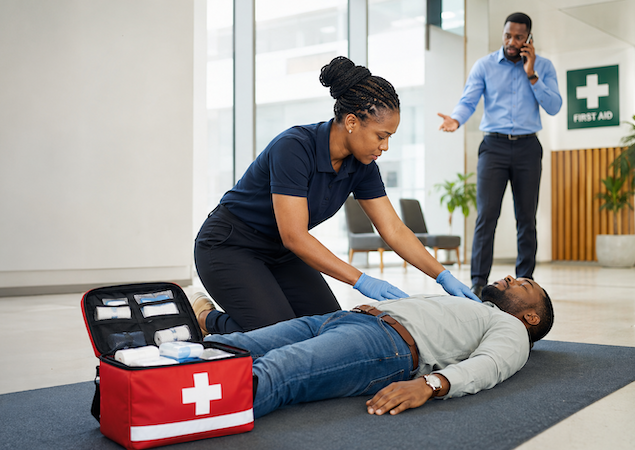
First aid is the immediate care given to a sick or injured person before professional medical help arrives. It is usually provided at the scene of an accident, illness, or emergency.
First aid does not replace medical treatment. Its main purpose is to preserve life, prevent the condition from getting worse, and promote recovery.
Principles of First Aid
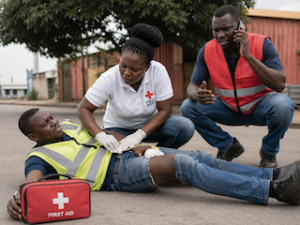
The basic principles of first aid are often remembered as the 3 Ps:
Preserve Life
The first priority is to keep the person alive. This may include checking if they are breathing, stopping severe bleeding, or calling emergency services immediately.
Prevent the Condition from Worsening
A first aider should help reduce further harm. This may include keeping the person still, protecting them from danger, controlling bleeding, or preventing shock.
Promote Recovery
First aid also helps the person recover faster by giving reassurance, keeping them comfortable, and ensuring they receive proper medical care.
Roles and Responsibilities of a First Aider
A first aider is not expected to act like a doctor. The role of a first aider is to provide safe, immediate, and practical help until professional help arrives.
Key Responsibilities
A first aider should:
- Stay calm and assess the situation carefully.
- Make sure the area is safe before helping.
- Protect themselves and the injured person from further danger.
- Call emergency services or ask someone nearby to call.
- Give appropriate first aid based on their level of training.
- Reassure the injured or sick person.
- Avoid causing further harm.
- Stay with the person until help arrives, where possible.
- Give clear information to medical responders when they arrive.
Importance of Emergency Response
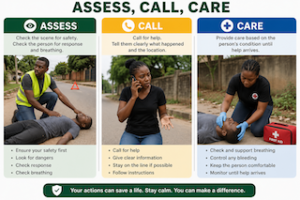
Emergencies can happen anywhere: at home, school, church, workplace, road, market, farm, or public gathering. A quick and correct response can save lives.
Why Emergency Response Matters
A good emergency response can:
- Save a person’s life.
- Reduce pain and suffering.
- Prevent injuries from becoming worse.
- Improve the chances of recovery.
- Reduce panic during emergencies.
- Help professional responders act faster when they arrive.
Real-Life Example
If someone collapses and stops breathing, every minute without help reduces their chance of survival. A trained person who can call for help, start CPR, and use an AED where available can make a major difference before medical help arrives.
Legal and Ethical Considerations
First aiders should act responsibly, respectfully, and within the limits of their training.
Consent
Before giving first aid to a conscious adult, introduce yourself and ask for permission.
Example:
“Hello, my name is Ada. I’m a first aider. Can I help you?”
If the person refuses help, do not force them. Stay nearby, call emergency services if needed, and continue to offer support.
Implied Consent
If a person is unconscious, confused, seriously injured, or unable to respond, consent is usually assumed because the person needs urgent help.
Do Not Exceed Your Training
A first aider should only provide care they have been trained to give. Do not perform medical procedures, give prescription medication, or make a medical diagnosis unless qualified to do so.
Confidentiality
Respect the person’s privacy. Do not share their medical condition, injury details, photos, or personal information unnecessarily.
Respect and Dignity
Treat every person with care, patience, and respect regardless of age, gender, tribe, religion, disability, or social status.
Do No Harm
The first aider must avoid actions that may worsen the person’s condition. When unsure, focus on calling emergency help, keeping the person safe, and monitoring them.
Contents of a First Aid Kit
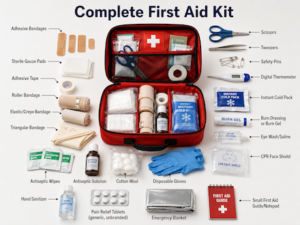
A first aid kit contains basic supplies used to manage common injuries and emergencies. Every home, school, workplace, vehicle, and training centre should have one.
Essential First Aid Kit Items
A standard first aid kit may include:
| Item | Use |
|---|---|
| Disposable gloves | Protects the first aider and casualty from infection |
| Sterile gauze pads | Covers wounds and controls bleeding |
| Roller bandages | Holds dressings in place |
| Adhesive plasters | Covers small cuts and wounds |
| Triangular bandage | Supports injured arms or shoulders |
| Antiseptic wipes | Cleans minor wounds |
| Medical tape | Secures dressings and bandages |
| Scissors | Cuts bandages, clothing, or tape when needed |
| Tweezers | Removes small splinters or debris |
| Safety pins | Secures bandages |
| Digital thermometer | Checks body temperature |
| CPR face shield or pocket mask | Provides safer rescue breaths during CPR |
| Instant cold pack | Reduces swelling from sprains or bruises |
| Burn dressing or sterile non-stick dressing | Covers minor burns |
| Elastic bandage | Supports sprains and strains |
| Hand sanitizer | Helps reduce infection risk |
| Emergency contact card | Provides important emergency numbers |
| First aid manual | Gives quick guidance during emergencies |
First Aid Kit Safety Tips
To keep a first aid kit useful and safe:
- Store it in a clean, dry, and easy-to-access place.
- Keep it out of reach of small children.
- Check expiry dates regularly.
- Replace used or expired items immediately.
- Make sure people know where the kit is kept.
- Do not keep loose tablets or unidentified medicines inside the kit.
- Keep emergency contact numbers inside or beside the kit.
What a First Aider Should NOT Do
A first aider should not:
- Panic or rush without checking for danger.
- Move an injured person unnecessarily.
- Give food or drink to someone seriously injured or unconscious.
- Give medication unless trained, permitted, and appropriate.
- Touch blood or body fluids without protection where possible.
- Try to “fix” fractures or dislocations.
- Delay calling emergency services in serious cases.
- Take photos or videos of the injured person for social media.
When to Seek Emergency Help
Call emergency services or arrange urgent medical help if the person:
- Is unconscious or not responding.
- Is not breathing normally.
- Has severe bleeding.
- Has chest pain or difficulty breathing.
- Has signs of stroke.
- Has a serious burn.
- Has a suspected broken bone.
- Has a head, neck, or spinal injury.
- Has a seizure that lasts more than a few minutes.
- Has been involved in a serious road accident.
- Shows signs of shock, such as pale skin, weakness, confusion, or cold sweating.
Quick Recap
First aid is the immediate help given before professional medical care arrives. A first aider’s role is to stay calm, check for danger, call for help, give safe care, and protect the dignity of the injured person. A well-stocked first aid kit and quick emergency response can save lives.