
Workplace Safety
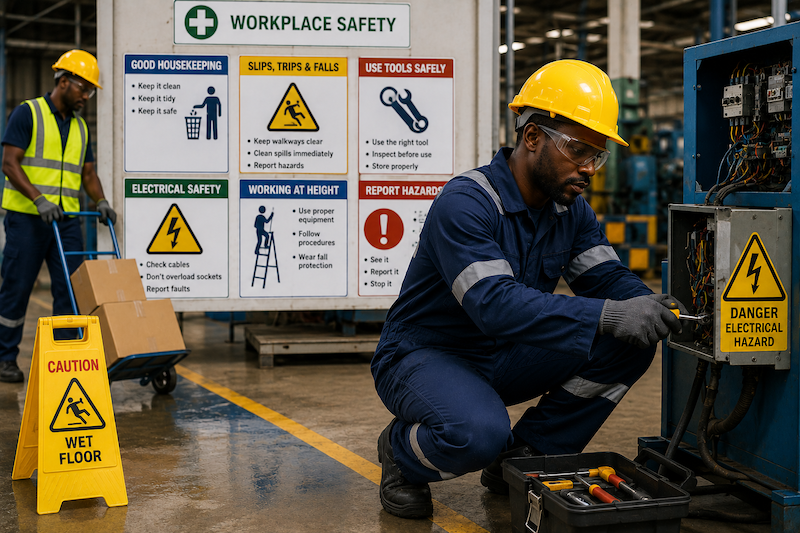
Workplace safety is the practice of creating and maintaining a work environment where people can perform their duties without unnecessary risk of injury, illness, damage, or loss. It involves safe behaviour, good housekeeping, proper use of tools, control of hazards, awareness of electrical risks, prevention of slips and falls, and safe practices around work areas.
Every workplace has hazards. Some hazards are obvious, such as exposed wires, sharp tools, slippery floors, falling objects, or damaged ladders. Others may be less obvious, such as poor lighting, unsafe work pressure, blocked exits, poor storage, fatigue, or lack of supervision.
Workplace safety is not only the responsibility of management or safety officers. Every worker has a role in identifying hazards, following procedures, reporting unsafe conditions, using tools correctly, and protecting themselves and others.
This module covers key workplace safety practices, including housekeeping, slip, trip and fall prevention, safe use of hand tools, electrical safety basics, and working at height awareness.
Meaning of Workplace Safety
Workplace safety means taking practical steps to prevent accidents, injuries, illness, damage to property, and harm to the environment during work activities.
It includes:
- Keeping work areas clean and organised.
- Using tools and equipment safely.
- Preventing slips, trips, and falls.
- Controlling electrical hazards.
- Following safety signs and procedures.
- Wearing required PPE.
- Reporting hazards and near misses.
- Avoiding unsafe shortcuts.
- Protecting coworkers and visitors.
- Preparing for emergencies.
A safe workplace allows people to work confidently, productively, and responsibly.
Why Workplace Safety is Important
Workplace safety is important because accidents can happen quickly and may cause serious consequences.
Good workplace safety helps to:
- Prevent injuries and fatalities.
- Reduce damage to tools, equipment, and property.
- Improve productivity.
- Reduce downtime.
- Improve worker morale.
- Reduce medical costs and compensation claims.
- Improve compliance with HSE requirements.
- Protect visitors, contractors, and the public.
- Promote a positive safety culture.
- Prevent fire, electrical shock, falls, cuts, burns, and other incidents.
Safety should be part of daily work, not something remembered only after an accident.
Common Workplace Hazards
Common workplace hazards include:
- Slippery floors.
- Loose cables.
- Poor lighting.
- Blocked walkways.
- Falling objects.
- Sharp tools.
- Damaged equipment.
- Exposed electrical wires.
- Poor housekeeping.
- Unsafe ladders.
- Overloaded sockets.
- Fire hazards.
- Poor storage of materials.
- Moving vehicles.
- Noise.
- Dust.
- Chemicals.
- Working at height.
- Manual handling risks.
- Unsafe behaviour.
Hazards should be identified early and controlled before they cause harm.
Unsafe Acts
Unsafe acts are dangerous behaviours that can lead to accidents.
Examples include:
- Running in the workplace.
- Ignoring safety signs.
- Using tools incorrectly.
- Removing machine guards.
- Not wearing PPE.
- Using damaged equipment.
- Taking shortcuts.
- Horseplay at work.
- Blocking emergency exits.
- Overloading sockets.
- Working without training.
- Carrying loads that block vision.
- Using a ladder carelessly.
- Standing on chairs instead of proper access equipment.
- Operating equipment while distracted.
Unsafe acts can turn a normal task into a dangerous situation.
Unsafe Conditions
Unsafe conditions are dangerous physical situations in the workplace.
Examples include:
- Wet or oily floors.
- Poor lighting.
- Exposed wires.
- Damaged ladders.
- Cluttered walkways.
- Faulty tools.
- Missing machine guards.
- Poor ventilation.
- Blocked fire exits.
- Unstable stacked materials.
- Open holes or edges.
- Broken flooring.
- Poor signage.
- Leaking containers.
- Damaged sockets.
- Overloaded shelves.
Unsafe conditions should be reported and corrected immediately.
Good Housekeeping
Housekeeping means keeping the workplace clean, organised, and free from unnecessary hazards.
Good housekeeping is one of the simplest and most effective ways to prevent accidents. Poor housekeeping can lead to slips, trips, falls, fire outbreaks, blocked exits, falling objects, pest infestation, contamination, and poor work performance.
Good housekeeping is not only about cleaning. It also includes proper storage, proper waste disposal, clear walkways, organised tools, safe stacking, and prompt removal of hazards.
Importance of Housekeeping
Good housekeeping helps to:
- Prevent slips, trips, and falls.
- Reduce fire risks.
- Improve access and movement.
- Prevent falling objects.
- Reduce tool and equipment damage.
- Improve work efficiency.
- Improve emergency access.
- Reduce pest and hygiene problems.
- Improve workplace appearance.
- Reduce stress and confusion.
- Support safe waste management.
- Improve safety culture.
A clean and organised workplace is usually a safer workplace.
Housekeeping Practices
Good housekeeping practices include:
- Keep walkways clear.
- Clean spills immediately.
- Store tools properly after use.
- Dispose of waste in the correct bins.
- Keep emergency exits clear.
- Keep fire extinguishers accessible.
- Arrange materials neatly.
- Avoid overloading shelves.
- Keep cables away from walkways.
- Remove unused materials from the work area.
- Keep work surfaces tidy.
- Store chemicals in designated areas.
- Label containers clearly.
- Keep floors dry and free from oil.
- Report damaged flooring.
- Return equipment to its proper place.
- Avoid stacking materials too high.
- Keep sharp objects safely covered or stored.
- Keep lighting adequate.
- Maintain clean toilets, wash areas, and welfare facilities.
Housekeeping should be done continuously, not only at the end of the day.
Clean As You Go
Clean as you go means keeping the work area tidy while work is ongoing.
This helps prevent hazards from building up during the task.
Clean as you go includes:
- Removing waste as it is produced.
- Returning tools after use.
- Cleaning spills immediately.
- Keeping materials arranged.
- Keeping walkways open.
- Removing trip hazards.
- Closing containers after use.
- Keeping workbenches organised.
This habit reduces accidents and makes work easier.
Waste Management in Housekeeping
Waste should be handled properly to prevent injury, fire, pollution, and contamination.
Safe waste practices include:
- Use the correct waste bin.
- Separate general waste, recyclable waste, hazardous waste, and sharp waste where required.
- Do not leave waste on floors or walkways.
- Do not overfill bins.
- Dispose of oily rags safely.
- Do not mix chemicals unless approved.
- Keep waste areas clean.
- Report waste spills.
- Dispose of broken glass, blades, and sharp objects safely.
- Keep waste away from heat and ignition sources.
Poor waste management can create fire, health, safety, and environmental risks.
Safe Storage of Materials
Materials should be stored safely to prevent falling objects, blocked access, fire, contamination, and manual handling injuries.
Safe storage practices include:
- Store heavy items at lower levels.
- Store frequently used items within easy reach.
- Do not overload shelves.
- Keep storage areas organised.
- Use racks, shelves, and pallets properly.
- Stack materials securely.
- Keep chemicals away from incompatible substances.
- Store flammable materials away from heat.
- Keep access routes clear.
- Do not store materials in front of exits.
- Label storage areas clearly.
- Keep sharp materials protected.
- Secure gas cylinders upright.
- Keep items away from electrical panels.
Poor storage can cause serious accidents, especially when materials fall or block emergency access.
Slips, Trips, and Falls
Slips, trips, and falls are among the most common causes of workplace injuries.
A slip happens when there is not enough grip between the foot and the walking surface.
A trip happens when the foot strikes or catches on an object, causing loss of balance.
A fall happens when a person loses balance and drops to the ground or a lower level.
Slips, trips, and falls can cause:
- Sprains.
- Strains.
- Bruises.
- Cuts.
- Fractures.
- Head injuries.
- Back injuries.
- Disability.
- Death in severe cases.
Many slips, trips, and falls can be prevented through good housekeeping and awareness.
Causes of Slips
Common causes of slips include:
- Wet floors.
- Oily surfaces.
- Loose rugs or mats.
- Smooth floors.
- Spilled liquids.
- Dusty surfaces.
- Mud.
- Poor footwear.
- Rainwater at entrances.
- Poor floor cleaning methods.
- Polished floors without warning signs.
Slippery floors should be cleaned, dried, marked, or isolated immediately.
Causes of Trips
Common causes of trips include:
- Loose cables.
- Tools left on the floor.
- Uneven flooring.
- Open drawers.
- Cluttered walkways.
- Poor lighting.
- Low obstacles.
- Damaged carpets.
- Unmarked steps.
- Materials stored in walkways.
- Loose packaging.
- Hoses across access paths.
Trip hazards are often caused by poor housekeeping and poor planning.
Causes of Falls
Falls may happen on the same level or from height.
Common causes include:
- Slipping on wet floors.
- Tripping over objects.
- Using damaged ladders.
- Standing on chairs or boxes.
- Working near open edges.
- Missing guardrails.
- Poor scaffolding.
- Poor lighting.
- Rushing.
- Carrying loads that block vision.
- Unsafe stairs.
- Poor footwear.
- Lack of fall protection.
Falls from height are especially dangerous and can cause serious injury or death.
Preventing Slips
Slip prevention measures include:
- Clean spills immediately.
- Use warning signs on wet floors.
- Keep floors dry.
- Use slip-resistant flooring where needed.
- Wear suitable footwear.
- Use mats at entrances.
- Repair leaking pipes or containers.
- Avoid running.
- Keep cleaning schedules effective.
- Remove oil and grease promptly.
- Improve drainage where needed.
- Report slippery surfaces.
Workers should not walk through spills or assume someone else will handle them.
Preventing Trips
Trip prevention measures include:
- Keep walkways clear.
- Route cables away from walking areas.
- Use cable covers where necessary.
- Store tools properly.
- Keep drawers and cabinets closed.
- Repair uneven floors.
- Remove clutter.
- Improve lighting.
- Mark changes in floor level.
- Keep hoses and pipes away from walkways.
- Avoid leaving materials on stairs.
- Report trip hazards immediately.
A small object in a walkway can cause a serious fall.
Preventing Falls
Fall prevention measures include:
- Use proper access equipment.
- Do not stand on chairs, boxes, or unstable surfaces.
- Keep stairs clear.
- Use handrails.
- Maintain three points of contact on ladders.
- Avoid carrying loads that block vision.
- Use guardrails where required.
- Use fall protection when necessary.
- Keep work platforms stable.
- Avoid rushing.
- Keep floors clean and dry.
- Report damaged stairs, ladders, or platforms.
- Follow working-at-height procedures.
Preventing falls requires both safe equipment and safe behaviour.
Safe Use of Stairs
Stairs can become hazardous when they are wet, poorly lit, damaged, or obstructed.
Safe stair use includes:
- Use handrails.
- Walk, do not run.
- Keep to one side where required.
- Do not carry loads that block vision.
- Keep stairs clear of objects.
- Report damaged steps.
- Avoid using phones while on stairs.
- Ensure footwear has good grip.
- Pay attention to step edges.
- Do not jump steps.
Many stair accidents happen because people rush or become distracted.
Safe Use of Walkways
Walkways are designed for safe movement of people.
Safe walkway practices include:
- Keep walkways clear.
- Do not store materials in walkways.
- Keep cables away from walkways.
- Use marked pedestrian routes.
- Follow site traffic rules.
- Avoid walking through restricted areas.
- Report damaged floors.
- Watch for moving vehicles.
- Do not block emergency paths.
- Keep floors clean and dry.
Walkways should always remain safe and accessible.
Hand Tool Safety
Hand tools are tools powered by hand rather than electricity, fuel, or compressed air.
Examples include:
- Hammers.
- Screwdrivers.
- Spanners.
- Wrenches.
- Pliers.
- Chisels.
- Files.
- Hand saws.
- Knives.
- Cutters.
- Measuring tapes.
- Clamps.
- Shovels.
- Crowbars.
- Allen keys.
Hand tools may appear simple, but they can cause serious injuries if used incorrectly.
Common Hand Tool Injuries
Hand tool injuries may include:
- Cuts.
- Puncture wounds.
- Bruises.
- Eye injuries.
- Crushed fingers.
- Strains.
- Broken bones.
- Amputations in severe cases.
- Flying particle injuries.
- Slips and impact injuries.
Many hand tool injuries are caused by wrong tool selection, poor maintenance, careless use, or lack of PPE.
Causes of Hand Tool Accidents
Common causes include:
- Using the wrong tool for the job.
- Using damaged tools.
- Using tools without training.
- Carrying sharp tools carelessly.
- Leaving tools on edges or floors.
- Using tools with loose handles.
- Using oily or slippery tools.
- Applying excessive force.
- Cutting toward the body.
- Using screwdrivers as chisels.
- Using spanners as hammers.
- Using makeshift tools.
- Poor storage.
- Poor lighting.
- Lack of eye protection.
- Distraction or rushing.
Tools should be respected, inspected, and used properly.
Selecting the Right Tool
The right tool should be used for the right task.
Examples:
- Use a screwdriver for screws, not as a chisel.
- Use the correct size spanner for a nut.
- Use a proper cutter instead of a knife where possible.
- Use a hammer with a secure handle.
- Use insulated tools for approved electrical tasks.
- Use clamps to hold workpieces instead of holding them by hand.
- Use the right blade for the material being cut.
Using the wrong tool increases the risk of injury and damage.
Inspecting Hand Tools
Hand tools should be inspected before use.
Check for:
- Cracked handles.
- Loose heads.
- Worn jaws.
- Damaged blades.
- Mushroomed chisel heads.
- Bent shafts.
- Rust.
- Slippery handles.
- Missing guards.
- Dull cutting edges.
- Splinters on wooden handles.
- Damaged insulation on electrical tools.
- Poor grip.
Damaged tools should not be used. They should be repaired properly or removed from service.
Safe Use of Cutting Tools
Cutting tools include knives, blades, cutters, saws, and scissors.
Safe practices include:
- Use the correct cutting tool.
- Keep blades sharp enough to work safely.
- Cut away from the body.
- Keep hands away from the cutting path.
- Use a stable cutting surface.
- Do not use excessive force.
- Store blades safely.
- Use blade guards where available.
- Dispose of used blades properly.
- Do not leave open blades on benches or floors.
- Wear cut-resistant gloves where required.
- Avoid carrying exposed blades in pockets.
A dull blade can be dangerous because it requires more force and may slip.
Safe Use of Hammers
Hammers can cause impact injuries and flying particles.
Safe practices include:
- Use the correct hammer for the task.
- Check the handle is secure.
- Do not use a hammer with a cracked handle.
- Strike squarely.
- Keep fingers away from impact points.
- Wear eye protection where flying particles may occur.
- Do not use the side of the hammer head unless designed for it.
- Keep the workpiece stable.
- Do not use excessive force.
- Store hammers safely after use.
Safe Use of Screwdrivers
Screwdrivers can cause puncture wounds, slips, and hand injuries.
Safe practices include:
- Use the correct screwdriver size and type.
- Do not use a screwdriver as a chisel or pry bar.
- Keep the tip in good condition.
- Do not hold small workpieces in the hand while applying force.
- Use insulated screwdrivers only for approved electrical tasks.
- Keep handles clean and dry.
- Apply steady pressure.
- Store screwdrivers safely.
Safe Use of Spanners and Wrenches
Spanners and wrenches can slip and cause hand injuries.
Safe practices include:
- Use the correct size.
- Ensure the tool fits properly.
- Pull rather than push where possible.
- Do not extend handles with pipes unless designed for it.
- Do not use damaged or worn spanners.
- Keep tools clean and dry.
- Avoid sudden force.
- Keep balance while applying pressure.
- Use the correct tool for tight or stuck fasteners.
Tool Storage
Good tool storage prevents injury and damage.
Safe tool storage includes:
- Store tools in toolboxes, racks, or cabinets.
- Do not leave tools on floors.
- Do not leave tools on ladders or elevated platforms.
- Keep sharp tools covered.
- Keep heavy tools on lower shelves.
- Return tools after use.
- Separate damaged tools.
- Keep tools clean and dry.
- Keep tools away from children or unauthorised persons.
- Use tool belts or bags where appropriate.
Poor tool storage can cause cuts, trips, falling objects, and tool damage.
Carrying Hand Tools Safely
Tools should be carried in a way that prevents injury.
Safe practices include:
- Use a toolbox or tool bag.
- Carry sharp tools with the point or blade protected.
- Do not carry sharp tools in pockets.
- Keep hands free when climbing ladders.
- Use tool belts where suitable.
- Do not throw tools to another person.
- Pass tools handle-first.
- Secure tools when working at height.
Tools dropped from height can seriously injure people below.
Electrical Safety Basics
Electricity is useful but dangerous when not properly controlled. Electrical hazards can cause electric shock, burns, fire, explosion, equipment damage, and death.
Electrical safety involves using electrical systems and equipment correctly, reporting faults, avoiding unsafe practices, and ensuring that electrical work is performed only by competent and authorised persons.
Common Electrical Hazards
Common electrical hazards include:
- Exposed wires.
- Damaged cables.
- Broken plugs.
- Overloaded sockets.
- Wet electrical equipment.
- Poor earthing.
- Faulty extension leads.
- Open electrical panels.
- Loose connections.
- Unauthorised repairs.
- Working near overhead power lines.
- Electrical equipment near flammable materials.
- Use of wrong voltage.
- Damaged switches.
- Sparks or burning smells.
Electrical hazards should never be ignored.
Electric Shock
Electric shock happens when electric current passes through the body.
Effects may include:
- Tingling sensation.
- Muscle contraction.
- Burns.
- Breathing difficulty.
- Heart problems.
- Loss of consciousness.
- Falls caused by shock.
- Death.
The seriousness of electric shock depends on the voltage, current path through the body, duration of contact, body condition, and environment.
Wet conditions increase the risk because water can improve electrical conductivity.
Electrical Burns
Electrical burns may occur when current passes through the body or when an arc flash occurs.
Electrical burns can be severe because damage may occur under the skin and may not be immediately visible.
Any electrical injury should be treated seriously and reported immediately.
Electrical Fire
Electrical fires may start from:
- Overloaded sockets.
- Faulty wiring.
- Damaged equipment.
- Poor connections.
- Overheating appliances.
- Short circuits.
- Poor maintenance.
- Use of wrong fuses.
- Extension cable misuse.
Water should not be used on live electrical fires. The correct extinguisher should be used, and the power supply should be isolated where safe and authorised.
Safe Use of Electrical Equipment
Safe practices include:
- Inspect equipment before use.
- Do not use damaged plugs or cables.
- Keep electrical equipment dry.
- Do not overload sockets.
- Switch off equipment when not in use.
- Pull plugs by the plug, not the cable.
- Keep cables away from heat, sharp edges, and water.
- Use equipment only for its intended purpose.
- Report sparks, burning smell, or overheating.
- Do not repair electrical equipment unless authorised.
- Use correct voltage equipment.
- Keep electrical panels accessible.
- Avoid running cables across walkways.
- Use cable covers where necessary.
Electrical safety depends on awareness and discipline.
Extension Cable Safety
Extension cables are useful but can become hazardous when misused.
Safe practices include:
- Use only approved extension cables.
- Do not overload extension sockets.
- Do not connect multiple extensions together unnecessarily.
- Keep extension cables away from water.
- Do not run cables under carpets or heavy objects.
- Fully unwind cable reels before heavy use where required.
- Avoid using damaged extension cables.
- Use outdoor-rated cables for outdoor work.
- Keep cables away from walkways where possible.
- Store extension cables properly after use.
Overloaded or damaged extension cables can cause fire and electric shock.
Working Near Electricity
Workers should be careful around electrical installations even if they are not electricians.
Safe practices include:
- Keep away from open electrical panels.
- Do not touch exposed wires.
- Do not enter electrical rooms unless authorised.
- Do not store items near electrical panels.
- Keep liquids away from electrical equipment.
- Do not use metal ladders near live electrical parts.
- Follow warning signs.
- Report electrical defects immediately.
- Keep safe distance from overhead power lines.
- Treat all electrical systems as dangerous unless confirmed safe by a competent person.
Electricity may be invisible, but its effects can be fatal.
Lockout and Tagout Awareness
Lockout and tagout is a safety system used to control hazardous energy before maintenance, repair, cleaning, or adjustment work.
Lockout means isolating energy and locking the isolation point so equipment cannot be started accidentally.
Tagout means placing a warning tag to show that equipment must not be operated.
Lockout and tagout may apply to:
- Electrical energy.
- Mechanical energy.
- Hydraulic energy.
- Pneumatic energy.
- Thermal energy.
- Chemical energy.
- Stored pressure.
- Gravity or suspended loads.
Workers should never remove locks or tags unless authorised. Equipment with a lock or tag should not be operated.
Working at Height Awareness
Working at height means working in any place where a person could fall and be injured if precautions are not taken.
This includes work:
- On ladders.
- On scaffolds.
- On roofs.
- On platforms.
- Near open edges.
- Near floor openings.
- On vehicles.
- On tanks or structures.
- On stairs or elevated walkways.
- In excavations where falls may occur.
A fall from height can cause serious injury or death, even from a relatively low height.
Common Working at Height Hazards
Working at height hazards include:
- Unprotected edges.
- Fragile roofs.
- Unsafe ladders.
- Poor scaffolding.
- Missing guardrails.
- Open floor holes.
- Slippery surfaces.
- Poor weather.
- Falling tools or materials.
- Poor access.
- Overreaching.
- Poor lighting.
- Lack of fall protection.
- Unstable platforms.
- Lack of training.
Working at height should always be planned and controlled.
Basic Working at Height Controls
Controls may include:
- Avoid working at height where possible.
- Use suitable access equipment.
- Use guardrails and toe boards.
- Cover or barricade floor openings.
- Use fall arrest equipment where required.
- Inspect ladders and scaffolds before use.
- Keep work areas tidy.
- Secure tools and materials.
- Avoid working in unsafe weather.
- Use trained workers.
- Keep people away from areas below overhead work.
- Follow permit requirements where applicable.
- Maintain three points of contact on ladders.
The best control is to avoid work at height if the task can be done safely from ground level.
Ladder Safety
Ladders are commonly used, but they are also a common cause of falls.
Ladders should be used only for suitable short-duration tasks and light work where safer equipment is not practical.
Safe ladder use includes:
- Inspect the ladder before use.
- Use the correct ladder for the task.
- Place the ladder on firm, level ground.
- Do not use damaged ladders.
- Maintain three points of contact.
- Do not overreach.
- Keep the body between the side rails.
- Do not stand on the top step unless designed for it.
- Secure the ladder where necessary.
- Keep the area around the ladder clear.
- Do not carry heavy loads while climbing.
- Face the ladder when climbing or descending.
- Avoid using ladders in strong wind or slippery conditions.
- Do not move a ladder while someone is on it.
A ladder should never be used as a bridge, platform, or substitute for proper scaffolding.
Scaffold Safety Awareness
Scaffolds provide temporary work platforms for working at height.
Safe scaffold practices include:
- Use only properly erected scaffolds.
- Do not alter scaffolds unless authorised.
- Check that guardrails and toe boards are in place.
- Ensure platforms are complete and stable.
- Do not overload scaffolds.
- Keep platforms tidy.
- Use proper access ladders or stairs.
- Do not climb scaffold frames unless designed for access.
- Report damaged or unstable scaffolds.
- Do not use scaffolds during unsafe weather conditions.
- Keep people below protected from falling objects.
Scaffolds should be erected and inspected by competent persons.
Falling Objects
Falling objects can injure or kill people below.
Falling objects may include:
- Tools.
- Bolts.
- Materials.
- Bricks.
- Pipes.
- Buckets.
- Equipment parts.
- Waste.
- Debris.
Controls include:
- Use toe boards.
- Use tool lanyards.
- Keep materials away from edges.
- Barricade areas below.
- Wear safety helmets.
- Secure loose materials.
- Do not throw objects from height.
- Use lifting bags or containers.
- Keep work platforms tidy.
Workers below overhead work must stay out of restricted areas.
Safety Signs
Safety signs communicate important safety information.
Common types include:
- Warning signs.
- Mandatory signs.
- Prohibition signs.
- Emergency signs.
- Fire safety signs.
- Directional signs.
- PPE signs.
Workers should understand and obey safety signs. A safety sign is a warning or instruction, not decoration.
Barricades and Restricted Areas
Barricades are used to prevent people from entering hazardous areas.
They may be used around:
- Excavations.
- Wet floors.
- Electrical work.
- Overhead work.
- Chemical spills.
- Moving equipment.
- Construction zones.
- Open holes.
- Hot work areas.
- Emergency scenes.
Workers should not cross barricades unless authorised and it is safe to do so.
Safe Movement Around Vehicles and Equipment
Many workplaces have moving vehicles and equipment.
Examples include:
- Forklifts.
- Trucks.
- Cranes.
- Loaders.
- Vans.
- Excavators.
- Pallet trucks.
- Motorcycles.
- Generators on wheels.
- Mobile equipment.
Safe practices include:
- Use designated pedestrian walkways.
- Wear high-visibility clothing where required.
- Make eye contact with drivers where possible.
- Stay out of blind spots.
- Do not walk under suspended loads.
- Follow traffic signs.
- Avoid using phones while walking in vehicle areas.
- Keep safe distance from moving equipment.
- Do not ride on equipment unless authorised.
- Listen for alarms and horns.
Vehicle movement can create serious struck-by and crush hazards.
Workplace Lighting
Good lighting helps workers see hazards clearly and perform tasks safely.
Poor lighting can cause:
- Trips and falls.
- Poor visibility.
- Eye strain.
- Mistakes.
- Poor tool control.
- Difficulty reading signs.
- Increased security risks.
Workers should report broken lights, dark walkways, poorly lit stairs, and areas where visibility is not adequate.
Workplace Ventilation
Ventilation helps remove heat, dust, fumes, vapours, smoke, and unpleasant odours.
Poor ventilation can cause:
- Breathing difficulties.
- Heat stress.
- Dizziness.
- Chemical exposure.
- Fatigue.
- Poor concentration.
- Build-up of flammable vapours.
- Spread of airborne contaminants.
Ventilation is especially important in workshops, kitchens, laboratories, chemical storage areas, welding areas, confined spaces, and dusty workplaces.
Personal Responsibility in Workplace Safety
Every worker should take responsibility for safety.
This means:
- Follow safety rules.
- Use PPE correctly.
- Keep the workplace tidy.
- Report hazards.
- Use tools properly.
- Avoid horseplay.
- Do not take shortcuts.
- Ask questions when unsure.
- Stop work when unsafe.
- Protect coworkers and visitors.
- Respect safety signs.
- Attend safety briefings.
- Report incidents and near misses.
- Use equipment only when trained and authorised.
A safe workplace is created by daily safe actions.
Reporting Hazards and Unsafe Conditions
Hazards should be reported immediately so that they can be controlled before causing harm.
Report:
- Damaged tools.
- Faulty electrical equipment.
- Wet floors.
- Blocked exits.
- Poor lighting.
- Unsafe ladders.
- Missing guards.
- Chemical spills.
- Broken flooring.
- Poor housekeeping.
- Fire hazards.
- Unsafe behaviour.
- Near misses.
- Incidents and injuries.
Reporting hazards is not complaining. It is a responsible safety action.
Stop Work When Unsafe
Workers should stop work when a task or condition is unsafe.
Work should be stopped when:
- Required PPE is not available.
- Equipment is damaged.
- The worker is not trained.
- The work area is unsafe.
- Electrical danger is present.
- There is fire, spill, or gas leak.
- Weather makes the task unsafe.
- A ladder or platform is unstable.
- A permit is required but not available.
- Controls are missing or not working.
Stopping unsafe work can prevent serious injury or death.
Key HSE Terms
Workplace Safety
The practice of preventing accidents, injuries, illness, damage, and loss in the workplace.
Housekeeping
Keeping the workplace clean, organised, and free from unnecessary hazards.
Slip
Loss of balance caused by poor grip between the foot and the walking surface.
Trip
Loss of balance caused when the foot strikes or catches on an object.
Fall
Dropping from one level to another or losing balance on the same level.
Hand Tool
A tool powered by hand rather than electricity, fuel, or compressed air.
Electrical Hazard
A condition that may cause electric shock, burns, fire, explosion, or equipment damage.
Lockout and Tagout
A safety system used to isolate equipment and prevent accidental start-up during maintenance or repair.
Working at Height
Work in any place where a person could fall and be injured.
Guardrail
A barrier used to prevent people from falling from edges or elevated areas.
Barricade
A physical barrier used to prevent access to a hazardous area.
Unsafe Act
A dangerous behaviour that can lead to an accident.
Unsafe Condition
A dangerous workplace condition that can cause harm.
Stop Work Authority
The right and responsibility to stop work when conditions are unsafe.
Summary
Workplace safety involves practical actions that protect workers, visitors, contractors, property, and the environment. It includes good housekeeping, prevention of slips, trips and falls, safe use of hand tools, electrical safety awareness, and working at height awareness.
Good housekeeping is one of the most effective ways to prevent accidents. Clean and organised work areas reduce fire risks, prevent trips, improve movement, protect emergency access, and support productivity. Workers should clean as they go, store tools properly, dispose of waste correctly, keep walkways clear, and report unsafe conditions.
Slips, trips, and falls are common workplace accidents that can cause serious injuries. They can be prevented by keeping floors dry, removing obstacles, improving lighting, using proper footwear, keeping cables away from walkways, using handrails, and avoiding unsafe access methods.
Hand tools must be selected correctly, inspected before use, used properly, and stored safely. Damaged tools, wrong tool selection, careless handling, and poor storage can cause cuts, punctures, eye injuries, crushed fingers, and other injuries.
Electrical safety is essential because electricity can cause shock, burns, fire, explosion, and death. Workers should avoid damaged equipment, overloaded sockets, wet electrical conditions, exposed wires, and unauthorised repairs. Electrical faults should always be reported.
Working at height requires careful planning because falls can be fatal. Ladders, scaffolds, platforms, guardrails, fall protection, and safe access systems must be used correctly. Workers should avoid overreaching, inspect equipment, keep three points of contact on ladders, and never work at height without proper controls.
A safe workplace depends on everyone. Workers must follow procedures, use PPE, respect signs, report hazards, avoid shortcuts, and stop work when conditions are unsafe.