
Workshop Safety
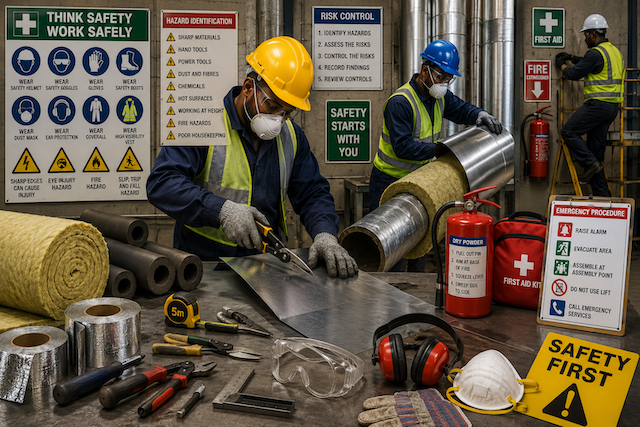
Introduction to Workshop Safety
Workshop safety is the practice of identifying hazards, controlling risks, using tools correctly, wearing suitable PPE, and responding properly to emergencies. In pipe insulation and tinsmith work, safety is very important because workers handle sharp sheet metal, insulation materials, adhesives, mastics, cutting tools, power tools, hot surfaces, ladders, scaffolds, and industrial pipework.
A safe workshop protects workers from cuts, burns, eye injuries, dust exposure, fire, electric shock, slips, falls, and equipment-related injuries. It also improves productivity because workers can focus better when the workplace is clean, organised, and controlled.
Pipe insulation and tinsmith work should never be rushed. A small safety mistake can lead to serious injury, poor workmanship, damaged materials, or project delays.
Occupational Health and Safety: OHS
Occupational Health and Safety, or OHS, refers to the rules, systems, and behaviours used to protect people from injury and illness at work. It covers the worker, the tools, the materials, the environment, and the work method.
OHS in pipe insulation and tinsmith work focuses on:
- Preventing hand and eye injuries.
- Controlling dust and fibre exposure.
- Preventing burns from hot surfaces.
- Preventing fire during cutting, grinding, soldering, or hot work.
- Preventing falls from height.
- Avoiding unsafe use of tools and machines.
- Maintaining good housekeeping.
- Reducing exposure to chemicals, adhesives, and sealants.
- Ensuring emergency readiness.
HSE explains risk management as a step-by-step process that includes identifying hazards, assessing risks, controlling risks, recording findings, and reviewing controls. This approach is useful for workshop and site-based insulation work.
General Workshop Safety Rules
Every learner and worker should follow basic workshop safety rules at all times.
| Safety Rule | Why It Matters |
|---|---|
| Keep the work area clean | Prevents slips, trips, cuts, and poor material handling |
| Wear correct PPE | Reduces injury from sharp edges, dust, sparks, and impact |
| Use the right tool | Prevents tool damage, poor cuts, and personal injury |
| Inspect tools before use | Prevents accidents from damaged tools |
| Secure materials before cutting | Prevents slipping, sudden movement, and inaccurate cuts |
| Control sharp edges | Prevents hand cuts and clothing tears |
| Store materials properly | Prevents falling objects and material damage |
| Report hazards immediately | Allows risks to be corrected early |
| Follow instructions | Prevents unsafe shortcuts |
| Avoid horseplay | Prevents unnecessary injury |
A workshop should be treated as a professional work environment, not a casual space.
Personal Protective Equipment: PPE
Personal Protective Equipment, or PPE, helps protect workers from hazards that cannot be fully removed. PPE is important, but it should not be the first or only safety control. NIOSH explains that hazard controls should follow a hierarchy, with elimination and substitution preferred before engineering controls, administrative controls, and PPE.
PPE must be selected based on the task. Cutting sheet metal, handling insulation, drilling, soldering, applying sealant, or working at height may require different PPE.
Common PPE for Pipe Insulation and Tinsmith Work
| PPE | Purpose |
|---|---|
| Safety helmet | Protects the head from impact and falling objects |
| Safety goggles | Protects eyes from dust, fibres, chips, and flying particles |
| Face shield | Protects the face during grinding, cutting, or high-spark work |
| Cut-resistant gloves | Protects hands from sharp sheet metal and tools |
| Dust mask / respirator | Reduces inhalation of dust, fibres, and fumes |
| Coverall / workwear | Protects the body from dust, dirt, minor cuts, and contact irritation |
| Safety boots | Protects feet from falling materials and sharp objects |
| Hearing protection | Protects against noise from cutting, drilling, grinding, and machines |
| High-visibility vest | Improves visibility on construction and industrial sites |
| Fall protection | Protects workers when working at height |
OSHA states that workers exposed to falling, flying, abrasive, splashing objects, or harmful dusts, fumes, vapours, or gases while using tools should be provided with PPE suitable for the hazard.
PPE Safety Practices
PPE must be worn correctly and kept in good condition.
Good PPE practices include:
- Inspect PPE before use.
- Replace damaged gloves, goggles, helmets, or masks.
- Wear goggles when cutting, drilling, grinding, or handling dusty insulation.
- Use gloves when handling sheet metal, cladding, wires, bands, and sharp materials.
- Use respiratory protection where insulation dust, fibre, fumes, or vapour is present.
- Keep PPE clean and dry.
- Do not share dirty respirators or face masks.
- Do not modify PPE.
- Store PPE away from heat, chemicals, and sharp objects.
Poorly worn PPE gives poor protection. Goggles on the forehead, gloves with holes, or a loose respirator will not protect the worker properly.
Hazard Identification and Risk Assessment
A hazard is anything that can cause harm. Risk is the chance that the hazard will actually cause injury, damage, or illness.
In pipe insulation and tinsmith work, hazards may come from materials, tools, machines, chemicals, workplace layout, weather, poor housekeeping, height, electricity, heat, or other workers.
Common Workshop Hazards
| Hazard | Possible Harm |
|---|---|
| Sharp sheet metal edges | Cuts, lacerations, puncture wounds |
| Cutting tools | Hand injury, eye injury |
| Power tools | Cuts, electric shock, noise, flying particles |
| Insulation fibres and dust | Skin irritation, eye irritation, breathing discomfort |
| Adhesives, sealants, and mastics | Skin irritation, fumes, fire risk |
| Hot pipes or equipment | Burns |
| Poor housekeeping | Slips, trips, falls |
| Manual lifting | Back strain, shoulder injury |
| Working at height | Falls |
| Fire sources | Burns, smoke inhalation, property damage |
| Poor lighting | Wrong cuts, trips, tool accidents |
| Wet floors | Slips and electric shock risk |
| Stored materials | Falling objects or blocked access |
Sheet metal work has a high risk of hand and eye injuries because workers cut, bend, shape, drill, punch, and fasten thin metal with sharp edges. Proper hand and eye protection reduces this risk.
Basic Risk Assessment Process
A simple risk assessment should answer five questions:
| Step | Question |
|---|---|
| Identify hazards | What can cause harm? |
| Assess the risk | Who may be harmed and how serious could it be? |
| Control the risk | What can be done to reduce or remove the risk? |
| Record findings | What controls have been agreed? |
| Review controls | Are the controls working or do they need improvement? |
This process should be used before starting cutting, cladding, insulation removal, hot work, working at height, or any unfamiliar task.
Controlling Workshop Hazards
Hazards should be controlled using the hierarchy of controls.
| Control Level | Example |
|---|---|
| Elimination | Remove unnecessary sharp scrap from the work area |
| Substitution | Use a safer adhesive with lower fumes where possible |
| Engineering control | Use guards, dust extraction, clamps, and proper ventilation |
| Administrative control | Use safe work procedures, training, signs, and restricted areas |
| PPE | Use gloves, goggles, respirators, helmets, and safety boots |
HSE’s PPE guidance also explains that PPE should be the last resort after considering more effective controls such as elimination, substitution, engineering, and administrative controls.
Safe Handling of Sheet Metal
Sheet metal can cut skin easily, especially after cutting, trimming, drilling, or forming.
Safe handling practices include:
- Wear cut-resistant gloves.
- Carry sheets carefully with help when required.
- Do not drag hands along sheet edges.
- Deburr sharp edges after cutting.
- Store sheets flat or upright in a stable rack.
- Do not leave sharp offcuts on the floor.
- Use proper snips or shears for cutting.
- Secure the sheet before cutting or drilling.
- Keep fingers away from cutting lines and rollers.
- Dispose of scrap safely.
Never throw sheet metal offcuts into general walking areas. Small sharp pieces can injure hands, feet, or damage footwear.
Safe Handling of Insulation Materials
Insulation materials may cause dust, skin irritation, or respiratory discomfort if handled carelessly. Some materials may also absorb moisture or become damaged if poorly stored.
Safe handling practices include:
- Wear gloves and long-sleeved workwear.
- Use eye protection when cutting or fitting insulation.
- Use a dust mask or respirator where dust or fibres are present.
- Cut insulation carefully with the correct tool.
- Avoid tearing or crushing insulation unnecessarily.
- Keep insulation dry and clean.
- Store insulation away from water and chemicals.
- Clean dust with suitable methods instead of dry sweeping where possible.
- Wash exposed skin after handling irritating materials.
Material safety data sheets should be followed for adhesives, mastics, sealants, coatings, and special insulation products.
Fire Prevention and Emergency Response
Fire prevention is very important in tinsmith and insulation work because some tasks involve cutting, grinding, soldering, adhesives, sealants, solvents, hot surfaces, and electrical tools.
Fire can start from:
- Sparks from grinding or cutting
- Hot work
- Poor electrical connections
- Flammable adhesives or solvents
- Poor storage of combustible materials
- Smoking in restricted areas
- Overloaded extension cables
- Hot pipes near combustible materials
- Poor housekeeping
Fire Prevention Practices
Good fire prevention includes:
- Keep flammable materials away from hot work.
- Store adhesives, sealants, and solvents properly.
- Read product labels and safety data sheets.
- Keep fire extinguishers accessible.
- Do not block emergency exits.
- Remove scrap, paper, packaging, and waste regularly.
- Inspect electrical tools and extension leads before use.
- Do not overload sockets or extension cables.
- Use hot-work permits where required.
- Keep a fire watch after hot work where required.
- Know the emergency alarm and evacuation route.
Hot work should never be done casually. Cutting, grinding, welding, or soldering near insulation, packaging, oil, dust, or chemicals can create a serious fire risk.
Types of Fire Extinguishers
Different fires require different extinguishers. Using the wrong extinguisher can make the situation worse.
| Extinguisher Type | Common Use |
|---|---|
| Water | Paper, wood, cloth, and ordinary combustibles |
| Foam | Flammable liquids and ordinary combustibles |
| CO₂ | Electrical fires and flammable liquids |
| Dry powder | Multi-purpose use, including flammable liquids and electrical fires |
| Wet chemical | Cooking oil and fat fires |
Workers should only use a fire extinguisher if trained, if the fire is small, and if escape is safe. If the fire is spreading, raise the alarm and evacuate.
Emergency Response
Emergency response means knowing what to do when an accident, fire, injury, chemical exposure, or unsafe event occurs.
Basic emergency actions include:
- Stop work immediately.
- Raise the alarm.
- Move away from danger.
- Warn others nearby.
- Call for help.
- Use emergency exits.
- Report to the assembly point.
- Do not return until authorised.
- Give first aid only if it is safe to do so.
- Report the incident to the supervisor.
Emergency routes, fire exits, extinguishers, first aid boxes, and assembly points should never be blocked.
First Aid Procedures
First aid is the immediate assistance given to an injured or ill person before professional medical help arrives. In workshop safety, first aid is important because injuries can happen quickly during cutting, handling, lifting, drilling, or hot work.
First aid should be provided by trained persons where available. Untrained workers should call for help, keep the person safe, and avoid actions that may worsen the injury.
Common Workshop Injuries and First Response
| Injury | First Response |
|---|---|
| Small cut | Wash if appropriate, apply pressure, cover with clean dressing |
| Serious bleeding | Apply firm pressure, raise alarm, get first aider or emergency help |
| Eye injury | Do not rub eye, rinse if chemical/dust exposure, seek medical help |
| Burn | Cool under clean running water, remove jewellery if safe, cover loosely |
| Electric shock | Do not touch victim until power is isolated, call emergency help |
| Fainting | Lay person down, check breathing, keep area clear |
| Dust inhalation | Move to fresh air, seek medical help if breathing difficulty continues |
| Chemical contact | Follow safety data sheet, rinse affected area where instructed |
For severe injury, unconsciousness, major burns, electric shock, breathing difficulty, or serious bleeding, emergency medical help should be called immediately.
First Aid Box
A workshop first aid box should be easy to locate, properly stocked, and accessible.
Common first aid box items include:
- Sterile dressings
- Plasters
- Bandages
- Gloves
- Eye pads
- Burn dressing
- Antiseptic wipes
- Safety pins
- Scissors
- First aid guidance card
- CPR face shield, where provided
Used or expired items should be replaced. First aid supplies should not be locked away where workers cannot access them during an emergency.
Housekeeping and Waste Control
Good housekeeping is one of the simplest ways to prevent accidents.
Workshop housekeeping includes:
- Keep walkways clear.
- Remove sharp offcuts immediately.
- Store tools properly.
- Keep cables away from walkways.
- Clean spills quickly.
- Separate metal waste from general waste.
- Keep fire exits clear.
- Store insulation materials safely.
- Avoid stacking materials too high.
- Return tools after use.
- Keep benches tidy.
Poor housekeeping causes trips, cuts, delays, missing tools, damaged materials, and fire hazards.
Safe Manual Handling
Pipe insulation and tinsmith work may involve lifting insulation rolls, sheet metal, cladding sections, toolboxes, ladders, and equipment.
Safe manual handling includes:
- Check the weight before lifting.
- Ask for help with large sheets or heavy items.
- Use trolleys or lifting aids where available.
- Bend the knees, not the back.
- Keep the load close to the body.
- Avoid twisting while carrying.
- Watch for sharp edges.
- Keep the route clear.
- Wear gloves and safety boots.
Large sheet metal can be awkward even when it is not very heavy. Wind, sharp edges, and poor grip can make it dangerous to carry alone.
Real-Life Scenario
A worker is cutting aluminium cladding for a pipe bend. The sheet is not secured, the worker is not wearing gloves, and sharp offcuts are left on the floor. Another worker later steps on an offcut and receives a deep foot injury.
The correct approach is to stop the task and control the hazards. The sheet should be secured before cutting, cut-resistant gloves and eye protection should be worn, offcuts should be collected immediately, and the work area should be kept clear. This simple control prevents cuts, trips, and puncture injuries.
Common Workshop Safety Mistakes
Avoid these unsafe practices:
- Handling sheet metal without gloves.
- Cutting without eye protection.
- Leaving sharp offcuts on benches or floors.
- Using damaged hand tools or power tools.
- Wearing loose clothing near rotating tools.
- Working in poor lighting.
- Blocking exits with materials.
- Ignoring dust and fibre exposure.
- Storing adhesives or solvents near heat.
- Using the wrong fire extinguisher.
- Rushing work to save time.
- Failing to report hazards.
- Treating small injuries carelessly.
- Working at height without fall protection.
What a Pipe Insulator or Tinsmith Should Never Do
A pipe insulator or tinsmith should never:
- Work without required PPE.
- Use a tool they have not been trained to use.
- Remove machine guards.
- Touch sharp sheet edges carelessly.
- Cut or grind without eye protection.
- Leave sharp scrap in walkways.
- Work near fire hazards without controls.
- Ignore chemical labels or safety data sheets.
- Work on hot pipes without authorisation.
- Use damaged ladders, scaffolds, or platforms.
- Block fire exits or emergency equipment.
- Hide injuries or unsafe incidents.
- Continue work when conditions are unsafe.
Quick Recap
Workshop safety protects workers, materials, tools, and the work environment. Pipe insulation and tinsmith work involves hazards such as sharp sheet metal, insulation dust, power tools, adhesives, hot surfaces, manual handling, fire risks, and working at height. Safety depends on good housekeeping, correct PPE, hazard identification, risk assessment, fire prevention, emergency readiness, and basic first aid awareness. A professional worker does not ignore hazards; they identify, control, report, and work safely.