
Pipe Insulation
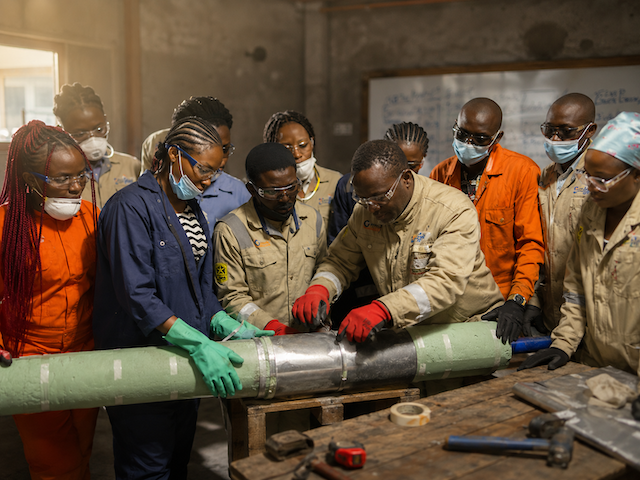
Introduction to Pipe Insulation
Pipe insulation is the process of applying insulation material around pipework, fittings, valves, flanges, vessels, supports, or equipment to control heat transfer, condensation, freezing, noise, and surface temperature.
Pipe insulation is used in many systems, including steam lines, hot water pipes, chilled water pipes, refrigeration lines, cryogenic systems, HVAC systems, oil and gas process lines, marine pipework, industrial plants, and building services.
A good pipe insulation system must do more than cover the pipe. It must be correctly selected, properly fitted, protected from damage, sealed where required, and maintained throughout its service life. Mechanical insulation design guidance from the National Insulation Association covers key objectives such as energy conservation, condensation control, personnel protection, process control, freeze protection, noise control, corrosion under insulation, maintainability, and material selection.
Principles of Heat Transfer
Heat transfer is the movement of heat from a warmer area to a cooler area. Pipe insulation works by reducing this movement.
There are three main methods of heat transfer:
| Method | Meaning | Example in Pipework |
|---|---|---|
| Conduction | Heat transfer through solid materials | Heat moving through a metal pipe wall |
| Convection | Heat transfer through moving air or fluid | Warm air moving around a hot pipe |
| Radiation | Heat transfer through infrared energy | Heat felt near a hot surface without touching it |
Insulation reduces heat transfer by slowing conduction, limiting air movement, and reducing heat loss or heat gain from the pipe surface.
Conduction
Conduction occurs when heat travels through a solid material. Metal pipes conduct heat very well, which is why hot pipes lose heat quickly and cold pipes gain heat from the surrounding environment.
Insulation materials usually have low thermal conductivity. This means they slow down the movement of heat.
For hot systems, insulation reduces heat loss. For cold systems, insulation reduces heat gain from the surrounding air.
Convection
Convection happens when heat is carried by moving air or fluid. Around a bare hot pipe, air touching the pipe becomes warm, rises, and is replaced by cooler air. This movement continues and increases heat loss.
Pipe insulation reduces convection by covering the pipe surface and reducing direct contact between the pipe and surrounding air.
Radiation
Radiation is heat transfer through energy waves. A hot pipe can radiate heat to nearby surfaces and people even without direct contact.
Insulation and cladding help reduce surface temperature and limit radiant heat exposure.
Why Pipe Insulation Is Needed
Pipe insulation may be installed for different reasons depending on the system.
| Purpose | Explanation |
|---|---|
| Energy saving | Reduces heat loss from hot pipes and heat gain into cold pipes |
| Condensation control | Prevents water droplets forming on cold surfaces |
| Personnel protection | Reduces burn risk from hot surfaces |
| Process control | Helps maintain required process temperature |
| Freeze protection | Slows freezing in cold environments |
| Acoustic control | Reduces noise from pipe systems |
| Equipment protection | Helps improve system reliability and efficiency |
| Corrosion risk reduction | Helps limit moisture exposure when properly designed and maintained |
Mechanical pipe insulation is used for thermal control, condensation control, freeze protection, acoustic dampening, and fire-rated assembly protection in HVAC, plumbing, process, and refrigeration systems.
Types of Pipe Insulation
Pipe insulation types are usually selected based on temperature, moisture risk, fire performance, strength, flexibility, chemical exposure, and project specification.
Common pipe insulation materials include:
| Material | Common Use |
|---|---|
| Mineral wool | Hot pipes, steam systems, HVAC, acoustic control |
| Glass wool | HVAC, building services, light hot/cold systems |
| Calcium silicate | High-temperature pipes and support areas |
| Cellular glass | Cold systems, chilled water, cryogenic and moisture-sensitive systems |
| Elastomeric foam | Chilled water, AC, refrigeration, condensation control |
| Polyurethane / PIR / phenolic foam | Cold systems, refrigeration, chilled water, building services |
| Ceramic fibre | Very high-temperature equipment and exhaust systems |
| Aerogel blanket | High-performance insulation where space is limited |
No single insulation material is best for every job. The correct material depends on the operating condition and specification.
Hot Insulation
Hot insulation is used on pipes and equipment carrying hot fluids, gases, or steam. Its main purpose is to reduce heat loss, save energy, protect workers from burns, and help maintain process temperature.
Hot insulation is commonly used on:
- Steam lines
- Hot water pipes
- Boiler pipework
- Condensate lines
- Thermal oil systems
- Exhaust systems
- High-temperature process lines
- Industrial vessels and equipment
Common hot insulation materials include mineral wool, calcium silicate, expanded perlite, ceramic fibre, and aerogel blanket, depending on temperature and application.
Benefits of Hot Insulation
Hot insulation helps to:
- Reduce energy waste.
- Lower fuel consumption.
- Maintain process temperature.
- Reduce surface temperature.
- Protect workers from burns.
- Improve system efficiency.
- Reduce heat build-up in work areas.
- Protect nearby materials from heat exposure.
Hot Insulation Installation Points
When installing hot insulation:
- Confirm the pipe operating temperature.
- Use insulation rated for the temperature.
- Fit insulation tightly with no major gaps.
- Stagger joints where required.
- Protect insulation with suitable cladding.
- Seal outdoor cladding against rainwater.
- Avoid compressing insulation unnecessarily.
- Provide removable covers where maintenance access is required.
- Keep insulation clear of items that require operation or inspection.
- Report damaged pipe coating or corrosion before covering.
Hot insulation must be protected from water. Wet insulation loses performance and can increase corrosion risk on metal pipework.
Cold Insulation
Cold insulation is used on pipes and equipment operating below ambient temperature. Its main purpose is to reduce heat gain, prevent condensation, protect system efficiency, and prevent moisture-related damage.
Cold insulation is commonly used on:
- Chilled water pipes
- Air-conditioning systems
- Refrigeration lines
- Cold storage systems
- Process cooling lines
- Cold vessels and tanks
Cold insulation requires careful vapour control. If warm moist air reaches the cold pipe surface, condensation can form inside the insulation system.
Condensation Control
Condensation happens when warm, moist air touches a cold surface and moisture turns into water droplets. On cold pipes, this can cause dripping, wet insulation, ceiling damage, mould, corrosion, and poor thermal performance.
For cold systems, preventing moisture vapour flow towards the cold surface is essential for controlling condensation and maintaining insulation performance.
A cold insulation system may require:
- Closed-cell insulation
- Vapour barrier
- Sealed joints
- Correct adhesive
- Proper mastic or coating
- Weatherproof cladding
- Sealed pipe supports
- Careful treatment around valves, flanges, and fittings
Cold Insulation Installation Points
When installing cold insulation:
- Keep insulation dry.
- Use correct insulation thickness.
- Seal all joints properly.
- Maintain a continuous vapour barrier.
- Avoid gaps around fittings.
- Use suitable adhesive for the insulation material.
- Protect exposed insulation from UV, impact, and water.
- Seal cladding joints where required.
- Avoid damaging the vapour barrier during installation.
- Repair any damaged seal immediately.
A small opening in the vapour barrier can allow moisture into the system and lead to long-term failure.
Cryogenic Insulation
Cryogenic insulation is used for very low-temperature systems. These systems may carry liquefied gases such as LNG, liquid nitrogen, liquid oxygen, or other extremely cold materials.
Cryogenic insulation is a specialised area because extremely low temperatures can create serious hazards, including rapid condensation, ice build-up, brittle material behaviour, thermal movement, and severe cold burns.
Cold and cryogenic insulation systems require careful design and suitable material selection to manage low temperatures and prevent moisture-related problems. The CINI manual includes insulation finishing details for hot, cold, very cold cryogenic, and acoustic applications.
Cryogenic Insulation Requirements
Cryogenic insulation may require:
- Special low-temperature insulation material
- Strong vapour barrier
- Multiple insulation layers
- Expansion and contraction allowance
- Special joint sealing
- Compatible cladding
- Careful support insulation
- Strict quality inspection
- Protection against moisture and ice formation
- Competent installation and supervision
Cryogenic work should only be carried out by trained personnel following project specifications and safety procedures.
Cryogenic Safety
Cryogenic systems can be dangerous. Workers must understand the risks before working near them.
Hazards include:
- Severe cold burns
- Frostbite
- Oxygen displacement in confined areas
- Brittle fracture of unsuitable materials
- Ice formation
- Pressure build-up
- Rapid expansion of gases
- Poor visibility from vapour clouds
Cryogenic insulation should not be guessed or improvised. It requires correct materials, correct sealing, correct installation sequence, and careful inspection.
Acoustic Insulation
Acoustic insulation is used to reduce noise from pipes, valves, compressors, pumps, ducts, vessels, and equipment.
Noise can come from:
- High-velocity flow
- Steam pressure reduction
- Pumps
- Compressors
- Vibration
- Valves
- Turbulence
- Mechanical equipment
- Thin metal cladding vibration
Acoustic insulation systems may combine sound-absorbing insulation, mass layers, cladding, spacers, and vibration-control details. Some industrial acoustic systems combine cellular glass for cold or cryogenic insulation performance with mineral wool for increased noise control.
Acoustic Insulation Installation Points
When installing acoustic insulation:
- Follow the acoustic specification.
- Use the correct insulation density and thickness.
- Ensure full coverage around the noise source.
- Avoid gaps and open joints.
- Seal penetrations properly.
- Control vibration where required.
- Install cladding securely.
- Avoid loose metal parts that can rattle.
- Keep access points removable where maintenance is needed.
- Do not compress acoustic insulation unnecessarily.
Even small gaps can reduce acoustic performance.
Pipe Support Insulation
Pipe support insulation is used where pipes rest on supports, hangers, shoes, clamps, or saddles. Supports can create heat-loss points, cold bridges, condensation points, or mechanical damage areas if not treated properly.
Insulated pipe supports are designed to reduce direct heat transfer between pipes and their supports. They also help support and protect pipelines while providing thermal insulation, vibration dampening, and sound insulation.
Why Pipe Support Insulation Matters
Pipe supports are critical because they carry the pipe load. If insulation is crushed at support points, the system can fail.
Poor support insulation can cause:
- Heat loss
- Condensation
- Ice formation
- Vapour barrier failure
- Corrosion under insulation
- Pipe movement problems
- Crushed insulation
- Cladding damage
- Water entry
- Poor appearance
Common Pipe Support Insulation Materials
Support areas may require stronger materials than ordinary pipe insulation.
Common materials include:
| Support Material | Common Use |
|---|---|
| Calcium silicate | High-temperature support areas |
| Cellular glass | Cold and moisture-sensitive supports |
| High-density PIR / PUR | Cold support applications |
| Hardwood blocks | Some traditional support systems, where specified |
| Pre-insulated pipe supports | Factory-made support insulation units |
| Load-bearing insulation blocks | Areas where compression strength is required |
The support insulation must carry the load without crushing and must match the thermal purpose of the system.
Pipe Support Installation Points
When dealing with pipe supports:
- Check the support type before installation.
- Use load-bearing insulation where required.
- Avoid crushing soft insulation under supports.
- Maintain vapour barrier continuity on cold systems.
- Seal around support penetrations.
- Protect against water entry.
- Fit cladding neatly around shoes, hangers, and saddles.
- Allow pipe movement where required.
- Do not block inspection points.
- Report damaged supports, corrosion, or abnormal pipe movement.
Pipe supports must not be treated as ordinary straight pipe sections. They require special care.
Insulation Thickness
Insulation thickness affects performance. Too little insulation may lead to heat loss, condensation, high surface temperature, freezing risk, or poor process control. Too much insulation may increase cost, weight, and space requirements without enough benefit.
Insulation thickness is selected based on:
- Operating temperature
- Ambient temperature
- Pipe size
- Material thermal conductivity
- Energy-saving requirement
- Condensation-control requirement
- Personnel protection requirement
- Process temperature requirement
- Fire or acoustic requirement
- Project specification
- Applicable standard
Mechanical insulation design tools often consider energy conservation, condensation control, personnel protection, process control, freeze protection, and economic thickness.
Vapour Barriers and Weather Protection
Vapour barriers and weather protection are essential parts of many insulation systems, especially cold insulation and outdoor installations.
A vapour barrier helps stop moisture vapour from reaching a cold surface. Weather protection helps stop rainwater, wash water, and outdoor moisture from entering the insulation.
Weather protection may include:
- Aluminium cladding
- Stainless steel cladding
- PVC cladding
- Weatherproof mastic
- Sealed overlaps
- Bands and fasteners
- Proper joint direction
- End sealing
- Removable covers with seals
Water entry into insulation is one of the major causes of insulation failure and corrosion under insulation.
Corrosion Under Insulation Awareness
Corrosion Under Insulation, or CUI, can happen when moisture enters the insulation system and remains in contact with the pipe surface. It is dangerous because the corrosion is hidden beneath insulation and may progress unnoticed.
HSE notes that CUI is mainly associated with steel components, and failures have occurred when localised corrosion progressed undetected beneath insulation.
Signs that may indicate CUI risk include:
- Rust stains
- Wet insulation
- Damaged cladding
- Failed sealant
- Open joints
- Missing bands
- Water dripping from insulation
- Bulging cladding
- Loose valve covers
- Damaged vapour barrier
Workers should report these signs immediately.
Real-Life Scenario
A team is insulating a chilled water pipe. The insulation is fitted correctly on most straight sections, but gaps are left around a pipe support. The cladding is installed quickly without sealing the support area.
After some time, condensation forms around the support and water begins to drip. The insulation becomes wet and the pipe surface may begin to corrode.
The correct approach is to treat the pipe support as a special detail. The insulation should remain continuous, the vapour barrier should be sealed, the support area should be properly protected, and the cladding should prevent moisture entry.
Common Pipe Insulation Mistakes
Avoid these mistakes:
- Using the wrong insulation material for the temperature.
- Installing wet insulation.
- Leaving gaps between insulation sections.
- Ignoring vapour barrier requirements on cold systems.
- Failing to seal joints properly.
- Compressing insulation too much.
- Leaving pipe supports untreated.
- Using ordinary soft insulation at load-bearing support points.
- Installing cladding without correct overlap.
- Leaving outdoor joints open to rain.
- Ignoring damaged cladding or rust stains.
- Covering corrosion without reporting it.
- Using hot insulation methods on cold systems.
- Blocking valves or maintenance access.
What a Pipe Insulator Should Never Do
A pipe insulator should never:
- Install insulation without checking service temperature.
- Cover wet insulation or wet pipe surfaces without reporting.
- Ignore signs of corrosion or water entry.
- Leave exposed gaps around elbows, tees, valves, flanges, or supports.
- Damage vapour barriers during installation.
- Use insulation material beyond its temperature limit.
- Crush insulation under pipe supports.
- Remove cladding and fail to replace or reseal it properly.
- Leave sharp cladding edges exposed.
- Treat cryogenic systems as ordinary cold insulation.
- Work near hot or cryogenic systems without proper authorisation and PPE.
Quick Recap
Pipe insulation controls heat transfer, condensation, surface temperature, noise, freezing, and process temperature. Heat moves by conduction, convection, and radiation, and insulation reduces this movement. Hot insulation reduces heat loss and burn risk. Cold insulation reduces heat gain and condensation. Cryogenic insulation protects very low-temperature systems and requires specialised materials and careful vapour sealing. Acoustic insulation reduces noise, while pipe support insulation prevents heat transfer, condensation, crushing, and support-related insulation failure. A good insulation system depends on correct material selection, accurate installation, vapour control, weatherproofing, support treatment, and regular inspection.