
Hazard Identification and Risk Assessment HIRA
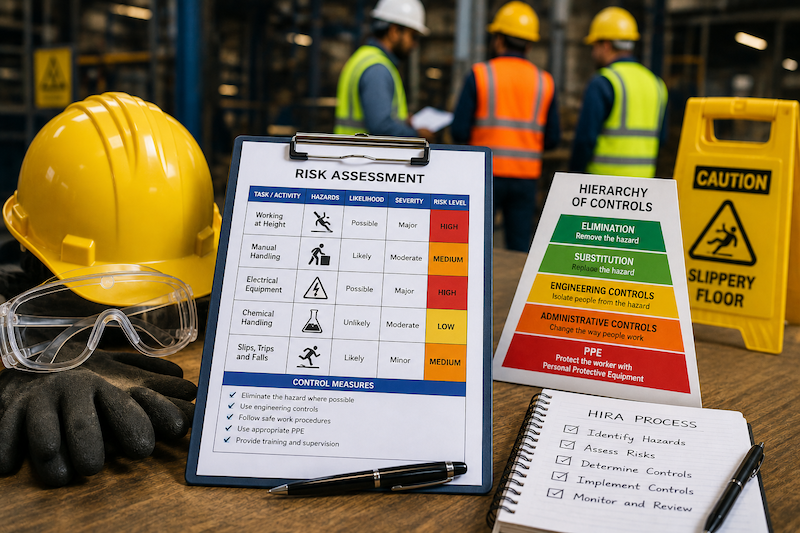
Hazard Identification and Risk Assessment, commonly known as HIRA, is one of the most important foundations of workplace safety. It helps workers and organisations identify things that can cause harm, understand how serious the harm could be, and decide what control measures should be used to prevent accidents, injuries, illness, damage, or environmental harm.
Every workplace has hazards. Some hazards are easy to see, such as a wet floor, exposed cable, sharp tool, open flame, or unguarded machine. Others may not be immediately visible, such as toxic fumes, poor ventilation, excessive noise, unsafe work pressure, poor posture, fatigue, or harmful chemicals.
HIRA helps workers think before starting a task. It encourages everyone to ask important safety questions such as: What can go wrong? Who can be harmed? How serious could it be? What can be done to prevent it?
A strong HIRA process helps organisations reduce accidents, improve safe work practices, comply with HSE requirements, and build a workplace culture where safety is planned before work begins.
Meaning of Hazard
A hazard is anything with the potential to cause harm.
A hazard can be an object, activity, condition, substance, behaviour, process, or environment that can injure people, damage equipment, cause illness, disrupt work, or harm the environment.
Examples of hazards include:
- Wet floors.
- Sharp tools.
- Exposed electrical wires.
- Unsafe ladders.
- Moving machines.
- Heavy loads.
- Chemicals.
- Dust and fumes.
- Fire sources.
- Noise.
- Poor lighting.
- Poor housekeeping.
- Unsafe behaviour.
- Working at height.
- Vehicle movement.
- Poor waste disposal.
A hazard does not need to have already caused an accident before it becomes important. Once something has the potential to cause harm, it should be identified and controlled.
Meaning of Risk
Risk is the chance that a hazard will actually cause harm, together with how serious the harm could be.
In simple terms:
Hazard is what can cause harm. Risk is the possibility that harm will happen and how serious it may be.
For example, an exposed electrical cable is a hazard. The risk is that someone may touch it and receive an electric shock, or it may cause a fire.
A wet floor is a hazard. The risk is that someone may slip, fall, and suffer an injury.
A chemical container without a label is a hazard. The risk is that someone may misuse it, inhale harmful vapour, suffer burns, or mix it with an incompatible substance.
Difference Between Hazard and Risk
Hazard and risk are connected, but they do not mean the same thing.
A hazard is the source of possible harm. Risk is the likelihood and seriousness of harm occurring from that hazard.
For example:
- Hazard: A ladder with a broken step.
- Risk: A worker may fall and suffer a fracture or head injury.
Another example:
- Hazard: Excessive noise from a machine.
- Risk: Workers may develop hearing problems over time.
Another example:
- Hazard: Poorly stored fuel.
- Risk: Fire, explosion, burns, property damage, or environmental pollution may occur.
Understanding the difference between hazard and risk helps workers know what to look for and how to control it properly.
Meaning of Hazard Identification
Hazard identification is the process of finding and recognising things that could cause harm in the workplace.
It involves carefully observing tasks, equipment, materials, work areas, behaviours, and environmental conditions to identify possible sources of danger.
Hazard identification should be done:
- Before starting a new task.
- Before using new equipment.
- Before working in a new location.
- When workplace conditions change.
- After an incident or near miss.
- During routine inspections.
- During risk assessment.
- During maintenance work.
- When introducing new chemicals, tools, or procedures.
- When workers report unsafe conditions.
Hazard identification should not be done only by safety officers. Every worker should be able to identify basic hazards and report them.
Meaning of Risk Assessment
Risk assessment is the process of evaluating hazards to understand how likely they are to cause harm and how serious the consequences could be.
A risk assessment helps determine:
- What hazards are present.
- Who may be harmed.
- How harm may occur.
- How likely the harm is to happen.
- How serious the harm could be.
- What controls are already in place.
- What additional controls are needed.
Risk assessment helps organisations make better safety decisions. It helps them focus attention on the most serious risks first.
Meaning of HIRA
HIRA stands for Hazard Identification and Risk Assessment.
It is a structured process used to identify hazards, assess the level of risk, and decide on suitable control measures.
The basic HIRA process involves:
- Identifying hazards.
- Assessing the risk.
- Controlling the risk.
- Communicating the controls.
- Monitoring and reviewing the controls.
HIRA should be part of daily workplace practice. Before work begins, workers should understand the hazards involved and the controls required.
Why HIRA is Important
HIRA is important because most workplace accidents can be prevented when hazards are identified early and risks are properly controlled.
HIRA helps to:
- Prevent injuries and illness.
- Reduce workplace accidents.
- Protect workers, visitors, contractors, and the public.
- Prevent damage to tools, equipment, and property.
- Prevent environmental pollution and waste.
- Improve planning before work begins.
- Support compliance with HSE laws and standards.
- Improve emergency preparedness.
- Reduce downtime and operational losses.
- Promote safe work behaviour.
- Help workers understand the dangers of their tasks.
- Encourage reporting of hazards and near misses.
- Build a proactive safety culture.
A workplace that does not identify hazards is likely to repeat unsafe practices until an accident occurs. HIRA helps prevent this by addressing danger before harm happens.
Types of Workplace Hazards
Workplace hazards can be grouped into different categories. Understanding these categories makes it easier to identify hazards in different work environments.
Physical Hazards
Physical hazards are environmental or energy-related hazards that can cause injury, illness, or discomfort.
Examples include:
- Noise.
- Vibration.
- Heat.
- Cold.
- Poor lighting.
- Radiation.
- Slippery floors.
- Falling objects.
- Moving vehicles.
- Working at height.
- Confined spaces.
- Pressure systems.
- Sharp edges.
- Poor ventilation.
Physical hazards are common in workshops, construction sites, factories, offices, kitchens, laboratories, warehouses, and field operations.
Possible effects of physical hazards include cuts, falls, burns, hearing loss, heat stress, cold stress, eye strain, fractures, crush injuries, and fatigue.
Chemical Hazards
Chemical hazards are substances that can harm the body or the environment when inhaled, swallowed, touched, injected, spilled, or improperly handled.
Examples include:
- Cleaning chemicals.
- Paints.
- Solvents.
- Acids.
- Fuels.
- Pesticides.
- Welding fumes.
- Dust.
- Gas cylinders.
- Laboratory chemicals.
- Corrosive substances.
- Flammable liquids.
- Toxic vapours.
Chemical exposure can happen through breathing, skin contact, eye contact, swallowing, or injection through cuts and punctures.
Possible effects include skin burns, eye irritation, breathing problems, poisoning, fire, explosion, long-term illness, and environmental pollution.
Chemical hazards should be controlled through proper labelling, safe storage, Safety Data Sheets, ventilation, PPE, training, spill control, and correct disposal.
Biological Hazards
Biological hazards come from living organisms or materials that may cause infection, disease, allergic reactions, or contamination.
Examples include:
- Bacteria.
- Viruses.
- Fungi.
- Mould.
- Blood and body fluids.
- Contaminated waste.
- Sewage.
- Animal bites.
- Insect bites.
- Medical waste.
- Contaminated food or water.
- Used needles or sharps.
Biological hazards are common in healthcare, laboratories, waste management, agriculture, food handling, cleaning services, schools, and emergency response activities.
Possible effects include infections, allergic reactions, fever, skin diseases, respiratory illness, and serious communicable diseases.
Controls include hygiene practices, handwashing, gloves, masks, safe waste disposal, vaccination where required, cleaning and disinfection, and proper handling of contaminated materials.
Ergonomic Hazards
Ergonomic hazards occur when work design, posture, tools, workstation layout, or repetitive movement places strain on the body.
Examples include:
- Poor sitting posture.
- Lifting heavy loads incorrectly.
- Repetitive hand movement.
- Long periods of standing.
- Long periods of sitting.
- Poor workstation arrangement.
- Bending or twisting while working.
- Carrying loads over long distances.
- Working with tools that cause strain.
- Reaching too far while working.
- Poor screen or chair positioning.
Possible effects include back pain, neck pain, shoulder pain, wrist pain, muscle strain, fatigue, joint problems, and long-term musculoskeletal disorders.
Ergonomic hazards are common in offices, workshops, warehouses, factories, hospitals, construction sites, and retail environments.
Controls include proper lifting methods, adjustable chairs, correct workstation setup, task rotation, mechanical aids, rest breaks, and good work design.
Mechanical Hazards
Mechanical hazards are associated with machines, tools, equipment, and moving parts.
Examples include:
- Unguarded rotating parts.
- Cutting blades.
- Crushing points.
- Pinch points.
- Moving belts.
- Grinding wheels.
- Press machines.
- Forklifts.
- Drilling machines.
- Lifting equipment.
- Sharp hand tools.
- Poorly maintained equipment.
Possible effects include cuts, amputations, crush injuries, fractures, entanglement, puncture wounds, eye injuries, and death.
Mechanical hazards should be controlled through machine guarding, lockout/tagout, safe operating procedures, training, maintenance, inspections, and correct PPE.
Electrical Hazards
Electrical hazards arise from contact with electricity or faulty electrical systems.
Examples include:
- Exposed wires.
- Overloaded sockets.
- Damaged plugs.
- Wet electrical equipment.
- Poor earthing.
- Faulty extension cables.
- Open electrical panels.
- Working near power lines.
- Using electrical tools in wet conditions.
- Unauthorised electrical repairs.
Possible effects include electric shock, burns, fire, explosion, cardiac arrest, and death.
Electrical hazards should be controlled by using qualified personnel, proper insulation, safe wiring, regular inspection, lockout/tagout, dry working conditions, and immediate reporting of damaged electrical equipment.
Fire and Explosion Hazards
Fire and explosion hazards occur when fuel, heat, oxygen, and ignition sources are present together.
Examples include:
- Flammable liquids.
- Gas leaks.
- Poor fuel storage.
- Sparks from welding or grinding.
- Open flames.
- Overloaded electrical sockets.
- Smoking in restricted areas.
- Poor housekeeping.
- Combustible dust.
- Hot surfaces.
- Faulty electrical equipment.
- Blocked fire exits.
Possible effects include burns, smoke inhalation, injury, death, property damage, business interruption, and environmental pollution.
Controls include fire prevention, proper storage of flammables, removal of ignition sources, fire extinguishers, emergency exits, housekeeping, hot work permits, alarms, and evacuation plans.
Environmental Hazards
Environmental hazards are workplace conditions or activities that can harm the natural environment or surrounding communities.
Examples include:
- Oil spills.
- Chemical spills.
- Poor waste disposal.
- Air pollution.
- Water pollution.
- Soil contamination.
- Noise pollution.
- Open burning of waste.
- Excessive energy use.
- Improper disposal of batteries or electronic waste.
- Leakage from fuel storage tanks.
Possible effects include contamination of land and water, harm to plants and animals, health problems in nearby communities, regulatory penalties, and reputational damage.
Controls include waste segregation, spill prevention, proper storage, approved disposal methods, environmental monitoring, pollution control, and sustainable workplace practices.
Psychosocial Hazards
Psychosocial hazards are workplace factors that can affect mental health, emotional wellbeing, behaviour, concentration, and performance.
Examples include:
- Excessive workload.
- Long working hours.
- Workplace bullying.
- Harassment.
- Poor communication.
- Lack of support.
- Violence or threats.
- Job insecurity.
- Fatigue.
- Stressful working conditions.
- Poor supervision.
- Conflict among workers.
Possible effects include stress, anxiety, fatigue, poor concentration, low morale, mistakes, unsafe behaviour, and reduced productivity.
Controls include fair workload planning, rest breaks, respectful communication, reporting systems, supportive supervision, anti-harassment policies, and wellness support.
Safety Hazards
Safety hazards are conditions or behaviours that can immediately cause accidents and injuries.
Examples include:
- Slips, trips, and falls.
- Poor housekeeping.
- Blocked walkways.
- Unsafe ladders.
- Missing guardrails.
- Falling objects.
- Improper stacking of materials.
- Unsafe use of tools.
- Vehicle movement.
- Poor traffic control.
- Lack of warning signs.
- Working without PPE.
Safety hazards are among the most common causes of workplace injuries. They should be identified and corrected quickly.
Hazard Identification Techniques
Hazard identification can be done using different methods. The best approach often combines observation, worker input, checklists, inspections, and review of past incidents.
Workplace Observation
Workplace observation involves looking carefully at the work area to identify anything that may cause harm.
Workers should observe:
- Floors and walkways.
- Tools and equipment.
- Electrical connections.
- Lighting and ventilation.
- Machine guards.
- PPE use.
- Waste disposal.
- Chemical storage.
- Fire exits.
- Housekeeping.
- Work behaviour.
- Vehicle movement.
- Emergency equipment.
Observation should be done before, during, and after work. Some hazards only appear while a task is being performed.
Task Observation
Task observation focuses on how a job is actually performed.
It helps identify hazards related to:
- Work steps.
- Body posture.
- Tools used.
- Materials handled.
- Energy sources.
- Manual handling.
- Communication.
- Team coordination.
- Shortcuts.
- PPE use.
- Environmental conditions.
Task observation is useful because written procedures may not always reflect what workers actually do in practice.
Workplace Inspections
Inspections are planned checks of the workplace to identify unsafe conditions and ensure that controls are working.
Inspections may cover:
- Fire extinguishers.
- First aid boxes.
- Tools and machines.
- Electrical systems.
- Ladders and scaffolds.
- PPE condition.
- Chemical storage.
- Waste areas.
- Walkways.
- Emergency exits.
- Vehicles.
- Housekeeping.
Regular inspections help find problems before they cause incidents.
Safety Checklists
A checklist is a structured list of items to check during inspection or before starting a task.
Checklists help workers avoid forgetting important safety requirements.
A simple checklist may include:
- Is the work area clean?
- Are tools in good condition?
- Is required PPE available?
- Are emergency exits clear?
- Are electrical cables safe?
- Are chemicals labelled?
- Are fire extinguishers accessible?
- Are workers trained for the task?
- Are waste bins available?
- Are warning signs displayed where needed?
Checklists are useful, but workers should not rely on them alone. They should still think critically and observe carefully.
Incident and Near-Miss Review
Past incidents and near misses provide valuable information about workplace hazards.
Reviewing incident records can help identify:
- Repeated hazards.
- Unsafe work practices.
- Equipment failures.
- Training gaps.
- Weak supervision.
- Poor procedures.
- Areas with frequent accidents.
- Controls that are not working.
A near miss should be taken seriously because it is a warning sign. It means something unsafe happened and could have caused harm.
Worker Feedback
Workers often understand task hazards better than anyone because they perform the work daily.
Worker feedback can help identify:
- Practical difficulties.
- Unsafe shortcuts.
- Equipment problems.
- PPE challenges.
- Poor work layout.
- Fatigue issues.
- Hidden hazards.
- Procedure gaps.
A good safety culture encourages workers to speak up about hazards without fear of punishment.
Safety Data Sheets
Safety Data Sheets, commonly called SDS, provide important information about hazardous chemicals.
An SDS usually includes:
- Chemical name.
- Hazards of the substance.
- Safe handling instructions.
- Required PPE.
- First aid measures.
- Firefighting measures.
- Spill response actions.
- Storage requirements.
- Exposure controls.
- Disposal guidance.
Workers who handle chemicals should understand the key information on the SDS before using the substance.
Equipment Manuals and Manufacturer Instructions
Equipment manuals provide safety instructions from the manufacturer.
They may include:
- Safe operating limits.
- Pre-use checks.
- Maintenance requirements.
- Warning signs.
- PPE requirements.
- Emergency shutdown instructions.
- Prohibited uses.
- Common faults.
- Inspection guidance.
Using equipment outside the manufacturer’s instructions can create serious hazards.
Job Safety Analysis
Job Safety Analysis, also called JSA, is a method of breaking a job into steps, identifying hazards in each step, and deciding control measures.
A JSA helps workers understand:
- The steps involved in the task.
- The hazards at each step.
- The risk linked to each hazard.
- The controls required before work begins.
For example, a JSA for using a ladder may consider:
- Selecting the correct ladder.
- Inspecting the ladder.
- Placing it on firm ground.
- Maintaining three points of contact.
- Avoiding overreaching.
- Keeping the area below clear.
- Storing the ladder safely after use.
JSA is especially useful for tasks that are new, complex, non-routine, or high risk.
Risk Assessment Process
Risk assessment is a step-by-step process used to understand and control workplace risks.
Identify the Task or Activity
The first step is to clearly define the task or activity being assessed.
Examples include:
- Using a grinding machine.
- Cleaning a chemical spill.
- Working on a ladder.
- Driving a forklift.
- Lifting heavy materials.
- Conducting welding work.
- Operating a generator.
- Cleaning an office.
- Handling waste.
- Working in a workshop.
A risk assessment should focus on a specific task or area so that hazards can be properly understood.
Identify the Hazards
The next step is to identify what could cause harm.
This includes looking at:
- People.
- Equipment.
- Materials.
- Environment.
- Work methods.
- Energy sources.
- Chemicals.
- Tools.
- Weather.
- Work pressure.
- Emergency situations.
Hazards should be identified carefully and honestly. Ignoring a hazard does not remove the danger.
Identify Who May Be Harmed
Risk assessment should consider everyone who may be affected by the hazard.
This may include:
- Employees.
- Contractors.
- Visitors.
- Customers.
- Cleaners.
- Security personnel.
- Drivers.
- Maintenance workers.
- Nearby workers.
- Members of the public.
- Surrounding communities.
Some people may be more vulnerable than others, such as new workers, pregnant workers, young workers, older workers, persons with disabilities, or workers without proper training.
Evaluate the Risk
Evaluating the risk means considering how likely the harm is to happen and how serious the consequence could be.
Two key questions are important:
- How likely is it that the hazard will cause harm?
- How severe could the harm be if it happens?
For example, a small amount of water on the floor in a low-traffic area may be a lower risk than oil spilled on a busy staircase. Both are hazards, but one may present a higher level of risk.
Decide on Control Measures
After evaluating the risk, suitable control measures must be chosen.
Control measures are actions taken to eliminate the hazard or reduce the risk.
Examples include:
- Removing the hazard completely.
- Replacing a dangerous substance with a safer one.
- Installing machine guards.
- Improving ventilation.
- Providing training.
- Using warning signs.
- Creating safe procedures.
- Wearing PPE.
- Restricting access.
- Providing supervision.
- Keeping emergency equipment nearby.
The best control measures are those that prevent harm before it can happen.
Record the Findings
Risk assessment findings should be recorded where required, especially for formal workplace tasks.
A risk assessment record may include:
- Task or activity assessed.
- Hazards identified.
- People who may be harmed.
- Existing controls.
- Risk level.
- Additional controls needed.
- Person responsible.
- Date for completion.
- Review date.
Good records help workers understand risk controls and help organisations track safety improvements.
Implement the Controls
A risk assessment is not useful if the controls are not applied.
Controls should be put in place before work starts.
This may involve:
- Fixing unsafe conditions.
- Providing PPE.
- Training workers.
- Barricading unsafe areas.
- Installing guards.
- Improving housekeeping.
- Providing supervision.
- Communicating procedures.
- Replacing unsafe tools.
- Stopping work until conditions are safe.
Implementation is where risk assessment becomes real safety action.
Monitor and Review
Risk assessment should not be a one-time activity. It should be reviewed when conditions change or when controls are no longer effective.
Review may be needed when:
- A new task is introduced.
- New equipment is used.
- New chemicals are introduced.
- Workplace layout changes.
- An incident occurs.
- A near miss is reported.
- Workers raise concerns.
- A control measure fails.
- Legal or company requirements change.
- Work is moved to a different location.
Monitoring ensures that controls remain effective and practical.
Understanding Likelihood and Severity
Risk assessment often uses likelihood and severity to determine the level of risk.
Likelihood
Likelihood means how possible it is for harm to happen.
Likelihood may be described as:
- Rare: Not expected to happen, but possible.
- Unlikely: Could happen, but not often.
- Possible: May happen sometimes.
- Likely: Expected to happen in many circumstances.
- Almost certain: Expected to happen frequently if not controlled.
Severity
Severity means how serious the harm could be.
Severity may be described as:
- Minor: Small injury or discomfort.
- Moderate: Injury requiring medical attention.
- Serious: Major injury, long-term illness, or significant damage.
- Major: Permanent disability, major loss, or severe environmental impact.
- Fatal: Death or multiple serious injuries.
Risk Level
Risk level is determined by combining likelihood and severity.
For example:
- Low likelihood and minor severity may result in low risk.
- High likelihood and serious severity may result in high risk.
- Low likelihood and fatal severity may still require strong controls because the consequence is severe.
High-risk activities require immediate attention and strong control measures.
Examples of Risk Assessment Thinking
A worker sees a damaged electrical cable near a wet area.
The hazard is the damaged cable and wet condition.
The risk is electric shock, burns, fire, or death.
People who may be harmed include workers, cleaners, visitors, and maintenance personnel.
Control measures may include isolating the power supply, preventing access to the area, reporting the fault, using a qualified electrician, and replacing the cable before work continues.
Another example is manual lifting of a heavy object.
The hazard is the heavy load.
The risk is back injury, muscle strain, dropped load, crushed foot, or fatigue.
Control measures may include using a trolley, asking for assistance, reducing the load size, using correct lifting technique, wearing safety footwear, and planning the route before lifting.
Risk Control Measures
Risk control measures are actions used to remove hazards or reduce risk to an acceptable level.
Good risk control should focus on preventing harm rather than only protecting people after exposure has already occurred.
The most effective risk controls remove the hazard completely. The least effective controls rely only on people remembering to behave safely all the time.
Hierarchy of Controls
The Hierarchy of Controls is a system used to choose the best way to control hazards. It ranks control measures from most effective to least effective.
The main levels are:
- Elimination.
- Substitution.
- Engineering controls.
- Administrative controls.
- Personal Protective Equipment.
The higher controls are more reliable because they remove or reduce the hazard at the source. The lower controls depend more on human behaviour.
Elimination
Elimination means removing the hazard completely.
This is the most effective control measure because if the hazard is removed, the risk no longer exists.
Examples include:
- Removing a damaged ladder from use.
- Cleaning up a spill immediately.
- Disposing of unnecessary chemicals safely.
- Removing trip hazards from walkways.
- Avoiding work at height by doing the task from ground level.
- Removing broken tools from the workplace.
- Stopping a task that is unsafe until it is redesigned.
Elimination should always be considered first.
Substitution
Substitution means replacing something dangerous with something safer.
Examples include:
- Using a less toxic chemical instead of a highly toxic one.
- Using water-based paint instead of solvent-based paint.
- Replacing a noisy machine with a quieter one.
- Using a lighter material instead of a heavy one.
- Replacing manual lifting with mechanical lifting.
- Using safer cleaning products.
Substitution reduces the level of danger, but the new option should also be assessed to ensure it does not introduce new hazards.
Engineering Controls
Engineering controls involve physical changes to the workplace, equipment, or process to reduce exposure to hazards.
Examples include:
- Installing machine guards.
- Providing local exhaust ventilation.
- Installing handrails and guardrails.
- Using barriers around hazardous areas.
- Installing emergency stop buttons.
- Providing soundproof enclosures for noisy machines.
- Using automatic shut-off systems.
- Using mechanical lifting aids.
- Installing non-slip flooring.
- Providing spill containment systems.
Engineering controls are strong because they reduce reliance on worker behaviour.
Administrative Controls
Administrative controls are rules, procedures, training, signs, schedules, and systems used to reduce risk.
Examples include:
- Safe work procedures.
- Training and supervision.
- Toolbox talks.
- Permit-to-work systems.
- Warning signs.
- Job rotation.
- Restricted access.
- Safety inspections.
- Maintenance schedules.
- Emergency plans.
- Work-rest schedules.
- Incident reporting procedures.
- Safety checklists.
Administrative controls are useful, but they depend on people following instructions correctly.
Personal Protective Equipment
Personal Protective Equipment, or PPE, is equipment worn to protect the worker from hazards.
Examples include:
- Safety helmets.
- Safety goggles.
- Face shields.
- Gloves.
- Safety boots.
- Earplugs.
- Earmuffs.
- Respirators.
- Coveralls.
- Reflective vests.
- Fall protection harnesses.
PPE is important, but it is considered the last line of defence because it does not remove the hazard. It only protects the worker if it is selected correctly, worn correctly, maintained properly, and used consistently.
Using More Than One Control
Many hazards require more than one control measure.
For example, welding work may require:
- Removing flammable materials from the area.
- Using welding screens.
- Providing ventilation.
- Wearing eye and face protection.
- Wearing gloves and flame-resistant clothing.
- Keeping a fire extinguisher nearby.
- Using a hot work permit where required.
- Training the welder.
- Inspecting equipment before use.
Using several controls together provides stronger protection.
Residual Risk
Residual risk is the level of risk that remains after control measures have been applied.
It is important to understand that some risk may remain even after controls are in place.
For example, after wearing gloves, goggles, and an apron while handling a chemical, there may still be some risk if the chemical spills or if PPE fails. That remaining risk is residual risk.
Residual risk should be low enough for the task to proceed safely. If the remaining risk is still too high, more controls are needed or the task should not continue.
Dynamic Risk Assessment
Dynamic risk assessment is the continuous process of checking for hazards while work is ongoing.
Workplace conditions can change quickly. A task that was safe in the morning may become unsafe later due to weather, equipment failure, poor visibility, fatigue, traffic movement, spills, or changes in work activity.
Dynamic risk assessment means workers should continue asking:
- Has anything changed?
- Is the work still safe?
- Are the controls still working?
- Are new hazards present?
- Do we need to stop and reassess?
This type of thinking is very important in field work, construction, emergency response, workshops, warehouses, and any changing work environment.
Common Mistakes in Hazard Identification and Risk Assessment
Hazards may be missed or risks may be poorly controlled when workers or organisations make common mistakes.
Examples include:
- Rushing into a task without checking the area.
- Assuming a familiar task is always safe.
- Ignoring small hazards.
- Failing to involve workers.
- Copying risk assessments without reviewing actual conditions.
- Focusing only on obvious hazards.
- Forgetting environmental hazards.
- Not considering visitors or contractors.
- Relying only on PPE.
- Failing to review controls after incidents.
- Not updating risk assessments when conditions change.
- Underestimating low-frequency but high-severity risks.
- Not reporting near misses.
A good HIRA process requires careful observation, honest reporting, practical controls, and continuous review.
Stop Work When Risk is Uncontrolled
Workers should not continue a task when the risk is uncontrolled or when required controls are missing.
Work should be stopped when:
- The task is not understood.
- The worker is not trained.
- Required PPE is not available.
- Equipment is damaged.
- A permit is required but not issued.
- The work environment changes.
- There is a fire, spill, gas leak, or electrical danger.
- Weather conditions make the task unsafe.
- A serious hazard is discovered.
- The control measures are not working.
- There is immediate danger to people or the environment.
Stopping unsafe work is a responsible action. It prevents injuries, protects coworkers, and supports a strong safety culture.
Practical Application of HIRA in Daily Work
HIRA should not be seen as paperwork only. It should guide daily decisions before and during work.
Before starting work, workers should ask:
- What task am I about to do?
- What can harm me or others?
- What can go wrong?
- Who may be affected?
- How serious could the harm be?
- What controls are already in place?
- What additional controls are needed?
- Do I have the right tools and PPE?
- Am I trained and authorised?
- Is the work area safe?
- What should I do in an emergency?
These simple questions can prevent many accidents.
HIRA in Different Workplace Settings
Office Environment
Common office hazards include:
- Loose cables.
- Poor posture.
- Overloaded sockets.
- Poor lighting.
- Blocked walkways.
- Slippery floors.
- Stress and fatigue.
- Poor ventilation.
- Fire hazards from electrical appliances.
Common controls include:
- Cable management.
- Good housekeeping.
- Correct workstation setup.
- Regular breaks.
- Safe electrical use.
- Clear walkways.
- Fire prevention.
- Reporting faults early.
Workshop Environment
Common workshop hazards include:
- Sharp tools.
- Hot surfaces.
- Welding fumes.
- Flying particles.
- Noise.
- Moving machines.
- Poor housekeeping.
- Chemical exposure.
- Electrical hazards.
- Manual handling.
Common controls include:
- Machine guarding.
- PPE.
- Training.
- Ventilation.
- Tool inspection.
- Safe storage.
- Fire prevention.
- Good housekeeping.
- Equipment maintenance.
Construction Environment
Common construction hazards include:
- Working at height.
- Falling objects.
- Excavations.
- Moving vehicles.
- Manual handling.
- Power tools.
- Dust.
- Noise.
- Poor access routes.
- Unstable surfaces.
Common controls include:
- Fall protection.
- Guardrails.
- Barricades.
- Traffic control.
- PPE.
- Safe lifting methods.
- Dust control.
- Equipment inspection.
- Permit systems.
- Site induction.
Healthcare and Laboratory Environment
Common hazards include:
- Biological exposure.
- Chemical exposure.
- Sharps injuries.
- Slips and falls.
- Manual handling of patients.
- Waste handling.
- Infection risks.
- Fire hazards.
Common controls include:
- Hand hygiene.
- Gloves and masks.
- Sharps containers.
- Safe waste disposal.
- Training.
- Cleaning and disinfection.
- Chemical labelling.
- First aid and emergency procedures.
Environmental Considerations in HIRA
HIRA should also consider environmental harm, not only injury to people.
Environmental hazards may include:
- Waste spills.
- Oil leaks.
- Chemical discharge.
- Air emissions.
- Noise pollution.
- Improper waste segregation.
- Poor storage of hazardous substances.
- Water contamination.
- Open burning.
- Excessive energy use.
Environmental controls may include:
- Spill kits.
- Bunded storage.
- Waste segregation.
- Approved disposal methods.
- Preventive maintenance.
- Pollution control.
- Proper labelling.
- Emergency response plans.
- Sustainable use of water and energy.
A good HIRA process protects both people and the environment.
Responsibilities in HIRA
Everyone has a role in hazard identification and risk assessment.
Management Responsibilities
Management is responsible for ensuring that risk assessment systems are in place and used properly.
This includes:
- Providing safe systems of work.
- Providing competent supervision.
- Ensuring workers are trained.
- Providing resources for risk control.
- Reviewing high-risk activities.
- Ensuring incidents are investigated.
- Supporting workers who report hazards.
- Ensuring legal and company requirements are followed.
Supervisor Responsibilities
Supervisors are responsible for ensuring that workers understand hazards and follow controls during daily work.
This includes:
- Checking work areas.
- Confirming workers are trained.
- Communicating task hazards.
- Ensuring PPE is used.
- Monitoring unsafe behaviour.
- Correcting unsafe conditions.
- Stopping unsafe work.
- Reporting and escalating serious risks.
Worker Responsibilities
Workers are responsible for applying HIRA thinking during their tasks.
This includes:
- Looking for hazards before starting work.
- Following safe procedures.
- Using PPE correctly.
- Reporting hazards and near misses.
- Avoiding unsafe shortcuts.
- Stopping work when unsafe.
- Taking care of themselves and others.
- Asking questions when unsure.
HIRA is strongest when management, supervisors, and workers all participate.
Key HSE Terms
Hazard
Anything with the potential to cause harm.
Risk
The chance that a hazard will cause harm and how serious the harm could be.
Hazard Identification
The process of finding and recognising things that may cause harm.
Risk Assessment
The process of evaluating hazards to understand the likelihood and severity of harm.
Control Measure
An action used to remove a hazard or reduce risk.
Likelihood
How possible it is that harm will occur.
Severity
How serious the harm could be if it occurs.
Risk Level
The overall level of risk based on likelihood and severity.
Hierarchy of Controls
A system for choosing the most effective control measures, starting with elimination and ending with PPE.
Elimination
Removing the hazard completely.
Substitution
Replacing something dangerous with something safer.
Engineering Control
A physical change to equipment, process, or workplace to reduce risk.
Administrative Control
A rule, procedure, training, sign, schedule, or system used to reduce risk.
PPE
Personal Protective Equipment worn to protect the worker from hazards.
Residual Risk
The risk that remains after controls have been applied.
Dynamic Risk Assessment
Continuous checking for hazards and changing risks while work is ongoing.
Summary
Hazard Identification and Risk Assessment is a key part of workplace safety. It helps workers identify what can cause harm, understand the level of risk, and apply suitable controls before accidents happen.
A hazard is anything with the potential to cause harm, while risk is the chance that harm will occur and how serious the outcome may be. Hazards can be physical, chemical, biological, ergonomic, mechanical, electrical, fire-related, environmental, psychosocial, or general safety hazards.
Hazard identification can be done through workplace observation, task observation, inspections, checklists, incident reviews, worker feedback, Safety Data Sheets, equipment manuals, and Job Safety Analysis.
Risk assessment involves identifying the task, identifying hazards, deciding who may be harmed, evaluating the risk, choosing controls, recording findings, implementing controls, and reviewing them regularly.
The Hierarchy of Controls helps workers choose the most effective risk controls. Elimination is the most effective control, followed by substitution, engineering controls, administrative controls, and PPE. PPE is important, but it should not be the first or only control where better options are available.
HIRA is not only a document or form. It is a practical safety mindset that should be applied before and during every task. When workers identify hazards early, control risks properly, and stop unsafe work when necessary, accidents reduce and the workplace becomes safer for everyone.