
Fire Safety
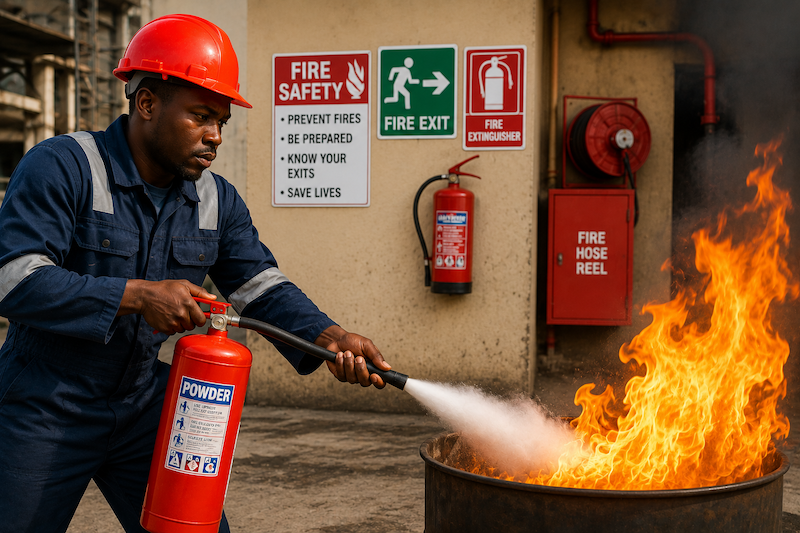
Fire safety is an important part of Health, Safety, and Environment because fire can cause serious injury, death, property damage, business interruption, environmental pollution, and community harm. Every workplace has some level of fire risk, whether it is an office, workshop, construction site, factory, kitchen, warehouse, school, hospital, laboratory, fuel station, market, farm, or field location.
Fire can start when heat, fuel, and oxygen come together under the right conditions. Many fire incidents are preventable when workers understand fire hazards, follow safe work procedures, store materials correctly, keep the workplace clean, and respond quickly during emergencies.
This module explains the causes of fire, classes of fire, fire prevention methods, types of fire extinguishers, basic fire extinguisher operation, and emergency evacuation procedures.
Meaning of Fire
Fire is a chemical reaction that produces heat, light, flames, and smoke when a fuel combines with oxygen in the presence of enough heat.
For fire to occur, three elements are usually required:
- Heat.
- Fuel.
- Oxygen.
These three elements are called the fire triangle.
If one of these elements is removed, the fire cannot start or continue burning.
The Fire Triangle
The fire triangle explains the three things needed for fire to exist.
Heat
Heat is the source of ignition that starts a fire. It raises the fuel to a temperature where it can burn.
Examples of heat sources include:
- Open flames.
- Sparks.
- Hot surfaces.
- Welding and grinding operations.
- Electrical faults.
- Overloaded sockets.
- Smoking materials.
- Cooking appliances.
- Friction.
- Lightning.
- Static electricity.
- Engines and generators.
Fuel
Fuel is anything that can burn.
Examples of fuel include:
- Paper.
- Wood.
- Cloth.
- Plastic.
- Petrol.
- Diesel.
- Gas.
- Paint.
- Solvents.
- Cooking oil.
- Packaging materials.
- Dust.
- Rubber.
- Chemicals.
- Waste materials.
Fuel may be solid, liquid, or gas.
Oxygen
Oxygen supports burning. Air contains oxygen, which is why most fires can continue burning in open environments.
In some workplaces, oxygen cylinders or oxidising chemicals can increase fire intensity and make fires more dangerous.
Fire Tetrahedron
The fire tetrahedron is an expanded version of the fire triangle. It includes four elements:
- Heat.
- Fuel.
- Oxygen.
- Chemical chain reaction.
The chemical chain reaction is the process that keeps fire burning after ignition. Some fire extinguishing methods work by interrupting this chain reaction.
Understanding the fire tetrahedron helps workers understand why different extinguishers work on different types of fire.
Common Causes of Workplace Fires
Workplace fires are often caused by unsafe conditions, unsafe acts, poor maintenance, or failure to follow procedures.
Common causes include:
- Faulty electrical wiring.
- Overloaded sockets and extension cables.
- Poor housekeeping.
- Improper storage of flammable materials.
- Welding or grinding near combustible materials.
- Smoking in restricted areas.
- Gas leaks.
- Fuel spills.
- Poor handling of chemicals.
- Unattended cooking appliances.
- Hot surfaces near flammable materials.
- Poor maintenance of machinery.
- Improper disposal of oily rags.
- Blocked ventilation around equipment.
- Use of damaged electrical appliances.
- Poor storage of waste.
- Lightning or natural causes.
- Arson or deliberate fire setting.
Most workplace fires can be prevented through proper planning, inspection, maintenance, training, and good housekeeping.
Electrical Causes of Fire
Electrical faults are one of the most common causes of workplace fires.
Electrical fires may result from:
- Overloaded sockets.
- Damaged cables.
- Exposed wires.
- Loose connections.
- Faulty plugs.
- Poor-quality extension cables.
- Use of electrical equipment in wet areas.
- Overheating appliances.
- Poor maintenance.
- Unauthorised electrical repairs.
- Running cables under carpets or heavy materials.
- Leaving appliances switched on unnecessarily.
Electrical fire prevention requires proper wiring, regular inspection, safe use of appliances, and prompt reporting of damaged electrical equipment.
Workers should never use equipment with exposed wires, burning smell, sparks, unusual heat, or damaged plugs.
Hot Work Fire Hazards
Hot work refers to activities that produce heat, sparks, flames, or hot surfaces.
Examples include:
- Welding.
- Cutting.
- Grinding.
- Soldering.
- Brazing.
- Heating with torch.
- Use of open flame.
- Some drilling and metalwork operations.
Hot work can easily ignite flammable materials nearby.
Fire prevention during hot work includes:
- Removing combustible materials from the area.
- Using fire blankets or welding screens.
- Checking for flammable vapours.
- Keeping fire extinguishers nearby.
- Using a hot work permit where required.
- Assigning a fire watch where necessary.
- Inspecting the area after work is completed.
- Avoiding hot work near fuel, chemicals, gas cylinders, or waste materials.
Hot work should never be carried out casually. It must be planned and controlled.
Flammable Materials
Flammable materials are substances that can catch fire easily.
Examples include:
- Petrol.
- Diesel.
- Kerosene.
- Gas.
- Paint.
- Thinner.
- Solvents.
- Alcohol-based cleaners.
- Aerosols.
- Adhesives.
- Cooking oil.
- Sawdust.
- Paper.
- Packaging materials.
- Waste cloth.
- Oily rags.
Flammable materials should be stored safely, away from ignition sources, direct sunlight, heat, and incompatible substances.
Containers should be properly closed and labelled. Spills should be cleaned immediately, and waste should be disposed of correctly.
Classes of Fire
Fires are classified based on the type of fuel involved. Knowing the class of fire helps workers choose the correct extinguisher and response method.
Using the wrong extinguisher can make a fire worse or create additional danger.
Class A Fire
Class A fires involve ordinary solid materials.
Examples include:
- Wood.
- Paper.
- Cloth.
- Rubber.
- Some plastics.
- Cardboard.
- Furniture.
- Packaging materials.
Class A fires commonly occur in offices, classrooms, warehouses, homes, workshops, and stores.
Suitable extinguishing methods may include water, foam, or dry powder, depending on the situation.
Class B Fire
Class B fires involve flammable liquids.
Examples include:
- Petrol.
- Diesel.
- Kerosene.
- Paint.
- Solvents.
- Thinner.
- Alcohol.
- Oil-based products.
Class B fires can spread quickly because flammable liquids can flow and produce vapours.
Suitable extinguishers may include foam, dry powder, or carbon dioxide, depending on the fire and environment.
Water should not be used directly on many flammable liquid fires because it can spread the burning liquid.
Class C Fire
Class C fires involve flammable gases.
Examples include:
- Liquefied Petroleum Gas, also known as LPG.
- Propane.
- Butane.
- Methane.
- Acetylene.
- Hydrogen.
- Natural gas.
Gas fires are very dangerous because of the risk of explosion. The main control is to shut off the gas supply if it is safe to do so.
Suitable extinguishers may include dry powder. However, if the gas supply is not stopped, the fire may continue or reignite.
Class D Fire
Class D fires involve combustible metals.
Examples include:
- Magnesium.
- Aluminium powder.
- Sodium.
- Potassium.
- Titanium.
- Lithium.
- Metal shavings or powders.
Class D fires require special extinguishing agents designed for metal fires.
Water should not be used on many metal fires because it may react violently and make the fire worse.
Class D fires are more common in specialised industrial, manufacturing, laboratory, or metal processing environments.
Class F Fire
Class F fires involve cooking oils and fats.
Examples include:
- Vegetable oil.
- Animal fat.
- Deep fryer oil.
- Grease.
- Cooking fat.
Class F fires are common in kitchens, restaurants, food processing areas, and catering facilities.
Suitable extinguishers include wet chemical extinguishers.
Water should not be used on hot oil fires because it can cause violent splashing and spread the fire.
Electrical Fires
Electrical fires are fires involving live electrical equipment.
Examples include:
- Electrical panels.
- Computers.
- Motors.
- Generators.
- Cables.
- Switchboards.
- Appliances.
- Extension sockets.
- Battery chargers.
- Power tools.
Electricity itself is not a fuel, but electrical equipment can ignite surrounding materials.
Suitable extinguishers may include carbon dioxide or dry powder. Water should not be used on live electrical fires because of the risk of electric shock.
The power supply should be isolated if it is safe and authorised to do so.
Fire Extinguishing Principles
Fire can be controlled by removing one or more elements of the fire triangle or tetrahedron.
The main methods are:
- Cooling.
- Smothering.
- Starving.
- Interrupting the chemical chain reaction.
Cooling
Cooling means reducing the temperature of the burning material below its ignition point.
Water is commonly used for cooling Class A fires involving materials such as wood, paper, and cloth.
Cooling removes heat from the fire.
Smothering
Smothering means removing or reducing oxygen around the fire.
Foam, fire blankets, and some extinguishing agents can smother fire by covering the burning material and separating it from oxygen.
Smothering is useful for some liquid fires and small cooking fires.
Starving
Starving means removing the fuel from the fire.
Examples include:
- Turning off a gas supply.
- Removing combustible materials from the area.
- Clearing waste.
- Closing fuel valves.
- Stopping a chemical feed.
- Removing nearby packaging or paper.
Without fuel, fire cannot continue.
Interrupting the Chain Reaction
Some extinguishers work by interrupting the chemical reaction that keeps fire burning.
Dry powder extinguishers are an example. They can be effective on several fire classes but may create visibility issues and leave residue.
Types of Fire Extinguishers
Different types of extinguishers are designed for different types of fires. Workers should know the common types and their basic uses.
Water Extinguisher
Water extinguishers are mainly used for Class A fires involving ordinary solid materials such as paper, wood, cloth, and cardboard.
They work by cooling the burning material.
Water extinguishers should not be used on:
- Live electrical equipment.
- Flammable liquid fires.
- Cooking oil fires.
- Metal fires.
Using water on the wrong fire can cause electric shock, spread the fire, or create a dangerous reaction.
Foam Extinguisher
Foam extinguishers are commonly used for Class A and Class B fires.
They work by cooling and smothering the fire. On flammable liquid fires, foam forms a blanket over the liquid surface and helps prevent vapour release.
Foam extinguishers may be suitable for:
- Wood.
- Paper.
- Cloth.
- Some plastics.
- Petrol.
- Diesel.
- Paint.
- Some flammable liquids.
Foam should not be used on live electrical fires unless clearly rated and approved for that purpose.
Dry Powder Extinguisher
Dry powder extinguishers are versatile and can be used on many types of fires, depending on the extinguisher rating.
They are commonly used for:
- Class A fires.
- Class B fires.
- Class C fires.
- Some electrical fires.
Dry powder works by interrupting the chemical chain reaction and separating the fuel from oxygen.
Dry powder extinguishers are often found in workshops, vehicles, fuel areas, industrial sites, and general workplaces.
However, dry powder can reduce visibility, create breathing discomfort, and leave residue that may damage sensitive equipment.
Carbon Dioxide Extinguisher
Carbon dioxide, also called CO₂, extinguishers are commonly used for electrical fires and some flammable liquid fires.
They work by displacing oxygen around the fire.
CO₂ extinguishers are useful for:
- Electrical equipment.
- Computers.
- Switchboards.
- Some flammable liquid fires.
CO₂ leaves no residue, which makes it useful around electrical and electronic equipment.
However, CO₂ has limited cooling effect, so reignition may occur if the fuel remains hot. CO₂ can also be dangerous in confined spaces because it displaces oxygen.
The discharge horn of a CO₂ extinguisher can become extremely cold and should not be held directly unless designed with a safe handle.
Wet Chemical Extinguisher
Wet chemical extinguishers are designed mainly for Class F fires involving cooking oils and fats.
They work by cooling the oil and creating a soapy layer over the surface to prevent reignition.
Wet chemical extinguishers are commonly found in:
- Kitchens.
- Restaurants.
- Canteens.
- Food processing areas.
- Catering facilities.
They may also have some use on Class A fires, depending on the rating.
Fire Blanket
A fire blanket is used to smother small fires by cutting off oxygen.
It may be used for:
- Small cooking fires.
- Small clothing fires.
- Small contained fires.
A fire blanket should be placed carefully over the fire to cover it completely. It should not be thrown loosely or waved around because this may spread flames.
Fire blankets are useful in kitchens, laboratories, workshops, and first aid/emergency areas.
Choosing the Correct Extinguisher
Choosing the correct extinguisher depends on the class of fire and the surrounding conditions.
General guidance includes:
- Class A fires: water, foam, or dry powder.
- Class B fires: foam, dry powder, or CO₂.
- Class C fires: dry powder, after controlling gas supply where safe.
- Class D fires: special metal fire extinguisher.
- Class F fires: wet chemical extinguisher.
- Electrical fires: CO₂ or dry powder, with power isolated where safe.
Workers should always check extinguisher labels and workplace instructions.
The wrong extinguisher can increase danger.
Fire Extinguisher Labels and Colour Coding
Fire extinguishers usually have labels showing:
- Type of extinguisher.
- Fire class rating.
- Operating instructions.
- Inspection status.
- Manufacturer details.
- Pressure condition.
- Safety warnings.
Workers should not guess the extinguisher type. The label should be checked before use if there is time and it is safe.
Some countries use colour bands or labels to identify extinguisher types. Since colour coding may vary by location and standard, workers should follow the specific system used in their workplace.
Basic Fire Extinguisher Operation
A common method for using a fire extinguisher is called PASS.
PASS means:
- Pull.
- Aim.
- Squeeze.
- Sweep.
Pull
Pull the safety pin or remove the safety seal to unlock the extinguisher.
This prepares the extinguisher for discharge.
Aim
Aim the nozzle or hose at the base of the fire, not at the flames.
The base is where the fuel is burning. Attacking the flames only may not extinguish the fire properly.
Squeeze
Squeeze the handle or lever to release the extinguishing agent.
Keep a firm grip and be prepared for pressure from the discharge.
Sweep
Sweep the nozzle from side to side across the base of the fire until the fire is out.
Continue watching the area because the fire may reignite.
When to Use a Fire Extinguisher
A fire extinguisher should only be used when it is safe to do so.
It may be reasonable to use an extinguisher when:
- The fire is small and at an early stage.
- The correct extinguisher is available.
- The person knows how to use it.
- There is a clear escape route behind the person.
- The alarm has been raised.
- Emergency response has been activated.
- The area is not filled with smoke.
- The fire is not spreading quickly.
- The person is not alone in a dangerous area.
- There is no risk of explosion or toxic exposure.
Personal safety is more important than property. If there is doubt, evacuate and raise the alarm.
When Not to Fight a Fire
Workers should not attempt to fight a fire when:
- The fire is large or spreading quickly.
- The correct extinguisher is not available.
- The person is not trained or confident.
- Smoke is heavy.
- The escape route is blocked.
- The fire involves dangerous chemicals or gas cylinders.
- There is risk of explosion.
- The fire is above shoulder height or out of control.
- The person feels unsafe.
- The alarm has not been raised.
- The fire is in a confined space.
- More than one extinguisher may be needed.
- The environment is becoming too hot or difficult to breathe in.
If a fire cannot be controlled immediately, leave the area and alert others.
Fire Prevention
Fire prevention means taking action to stop fires from starting.
Fire prevention is better than firefighting. Once a fire starts, it can spread quickly and become difficult to control.
Fire prevention depends on:
- Good housekeeping.
- Safe electrical practices.
- Proper storage of flammable materials.
- Control of ignition sources.
- Safe hot work procedures.
- Proper waste management.
- Regular inspections.
- Fire safety training.
- Emergency preparedness.
- Maintenance of equipment.
- Clear evacuation routes.
- Correct use of fire equipment.
Good Housekeeping for Fire Prevention
Poor housekeeping can increase fire risk.
Good housekeeping includes:
- Removing waste regularly.
- Keeping walkways clear.
- Avoiding accumulation of paper, cardboard, cloth, sawdust, and packaging materials.
- Storing tools and materials properly.
- Keeping fire exits clear.
- Cleaning spills immediately.
- Keeping electrical areas free from combustible materials.
- Properly disposing of oily rags.
- Keeping storage areas organised.
- Avoiding blocked ventilation around equipment.
A clean workplace reduces fuel available for fire.
Safe Storage of Flammable Materials
Flammable materials must be stored properly to prevent fire and explosion.
Safe storage practices include:
- Store flammable liquids in approved containers.
- Keep containers closed when not in use.
- Label containers clearly.
- Store away from heat and ignition sources.
- Keep incompatible chemicals apart.
- Use designated storage areas.
- Avoid storing excess quantities at the workplace.
- Clean spills immediately.
- Keep flammable cabinets closed.
- Keep gas cylinders upright and secured.
- Keep fuel away from electrical equipment.
- Do not store flammable materials near exits or walkways.
Improper storage can turn a small incident into a major emergency.
Safe Electrical Practices
Safe electrical practices help prevent electrical fires.
Workers should:
- Avoid overloading sockets.
- Avoid using damaged cables.
- Report exposed wires immediately.
- Keep electrical equipment dry.
- Use only approved extension cables.
- Switch off appliances when not in use.
- Avoid running cables through water or across walkways.
- Do not repair electrical faults unless authorised.
- Avoid placing combustible materials near electrical panels.
- Ensure electrical panels are accessible.
- Report burning smells, sparks, or overheating equipment.
Electrical faults should be handled by competent persons.
Smoking Control
Smoking can cause fires when cigarettes, matches, or lighters come into contact with flammable materials.
Smoking control includes:
- Smoking only in designated areas.
- Never smoking near fuel, gas cylinders, chemicals, waste storage, or flammable materials.
- Proper disposal of cigarette ends.
- Obeying no-smoking signs.
- Avoiding smoking during refuelling.
- Avoiding smoking in storage areas, workshops, laboratories, and production areas.
A small cigarette end can start a major fire when it contacts the wrong material.
Gas Cylinder Fire Safety
Gas cylinders can create serious fire and explosion hazards.
Safe practices include:
- Store cylinders upright and secured.
- Keep cylinders away from heat and flames.
- Separate full and empty cylinders where required.
- Keep oxygen cylinders away from fuel gases and oils.
- Check hoses and connections for damage.
- Close valves when not in use.
- Do not drag or roll cylinders.
- Use proper cylinder trolleys.
- Keep valve caps in place when moving cylinders.
- Report leaks immediately.
- Do not use damaged cylinders.
- Keep cylinders in well-ventilated areas.
If a gas leak is suspected, avoid ignition sources, evacuate the area, and report immediately.
Fire Detection and Alarm Systems
Fire detection and alarm systems are used to warn people early when fire or smoke is detected.
Common systems include:
- Smoke detectors.
- Heat detectors.
- Manual call points.
- Fire alarm bells.
- Sirens.
- Flashing alarm lights.
- Control panels.
- Public address systems.
Workers should understand the sound of the fire alarm and know what action to take when it activates.
Fire alarms should never be ignored.
Emergency Evacuation Procedures
Emergency evacuation is the organised movement of people away from danger to a safe location.
During fire or serious emergency, workers must evacuate quickly and calmly.
A good evacuation procedure includes:
- Raising the alarm.
- Stopping work safely where possible.
- Leaving through the nearest safe exit.
- Avoiding lifts or elevators during fire.
- Following escape route signs.
- Helping visitors or persons needing assistance where safe.
- Going directly to the assembly point.
- Not returning for personal belongings.
- Reporting to the responsible person at the assembly point.
- Waiting for further instructions.
- Not re-entering the building until officially declared safe.
The purpose of evacuation is to protect life.
Escape Routes and Emergency Exits
Escape routes are designated paths used to leave a building or work area during an emergency.
Emergency exits must be:
- Clearly marked.
- Unlocked when the building is occupied.
- Free from obstruction.
- Easy to open.
- Well-lit where required.
- Known to workers.
- Wide enough for safe evacuation.
- Protected from fire and smoke where possible.
Workers should know at least two escape routes from their work area in case one route is blocked.
Assembly Points
An assembly point is a safe location where people gather after evacuation.
At the assembly point:
- Workers should remain calm.
- Attendance or roll call may be taken.
- Missing persons should be reported.
- Injuries should be reported.
- Workers should wait for instructions.
- No one should return to the building unless authorised.
Assembly points should be far enough from the building to protect people from smoke, fire, explosion, falling materials, and emergency vehicles.
Fire Wardens and Emergency Teams
Some workplaces appoint fire wardens or emergency response teams to support evacuation and fire safety.
Their duties may include:
- Helping raise the alarm.
- Guiding people to exits.
- Checking assigned areas where safe.
- Assisting visitors.
- Reporting missing persons.
- Supporting evacuation drills.
- Checking fire equipment.
- Communicating with emergency services.
- Preventing re-entry until authorised.
Workers should follow instructions from fire wardens during an emergency.
Smoke Hazards
Smoke is one of the most dangerous parts of a fire. Many fire deaths are caused by smoke inhalation rather than burns.
Smoke may contain:
- Toxic gases.
- Hot particles.
- Carbon monoxide.
- Irritating chemicals.
- Reduced oxygen.
- Poor visibility.
Smoke can cause:
- Breathing difficulty.
- Confusion.
- Dizziness.
- Eye irritation.
- Loss of consciousness.
- Death.
During evacuation, avoid smoke-filled areas. If smoke is present, stay low where air may be clearer and move quickly to a safe exit.
Fire Doors
Fire doors are designed to slow the spread of fire and smoke.
Fire doors should:
- Be kept closed unless held open by approved automatic devices.
- Not be wedged open.
- Not be blocked.
- Close properly.
- Have no major damage.
- Be clearly identified where required.
Leaving fire doors open can allow fire and smoke to spread faster.
Fire Safety Signs
Fire safety signs provide important information during emergencies.
Common fire safety signs include:
- Fire exit.
- Fire extinguisher location.
- Fire alarm call point.
- Fire hose reel.
- Assembly point.
- No smoking.
- Emergency route.
- Fire door keep shut.
Workers should understand and obey fire safety signs.
Fire Drills
Fire drills are practice evacuations used to test emergency procedures and prepare workers for real emergencies.
Fire drills help workers learn:
- How to respond to alarms.
- Where exits are located.
- Where the assembly point is.
- How long evacuation may take.
- Whether escape routes are clear.
- Whether workers understand their roles.
- Whether emergency systems are effective.
Fire drills should be taken seriously. A relaxed attitude during drills can lead to poor response during real emergencies.
Emergency Communication
Clear communication is essential during fire emergencies.
Emergency communication may include:
- Shouting a warning.
- Activating the fire alarm.
- Calling emergency services.
- Notifying supervisors.
- Using radios or phones.
- Public address announcements.
- Reporting missing persons.
- Giving location details.
- Sharing information about hazards.
When reporting a fire, provide clear information such as:
- Exact location.
- Type of fire, if known.
- People injured or trapped.
- Hazards present, such as gas cylinders or chemicals.
- Whether evacuation has started.
- Your name and contact details if required.
Fire Safety in Offices
Office fire hazards may include:
- Overloaded sockets.
- Paper storage.
- Faulty appliances.
- Loose cables.
- Blocked exits.
- Improper use of extension leads.
- Poor storage of cleaning chemicals.
- Unattended kitchen equipment.
- Electrical equipment left on overnight.
Office fire prevention includes:
- Switching off equipment when not in use.
- Keeping exits clear.
- Reporting electrical faults.
- Avoiding socket overload.
- Keeping paper away from heat sources.
- Maintaining good housekeeping.
- Knowing evacuation routes.
- Participating in fire drills.
Fire Safety in Workshops
Workshop fire hazards may include:
- Welding sparks.
- Grinding sparks.
- Flammable liquids.
- Oily rags.
- Dust accumulation.
- Hot surfaces.
- Gas cylinders.
- Electrical equipment.
- Poor housekeeping.
- Fuel storage.
Workshop fire prevention includes:
- Keeping flammables away from hot work.
- Using hot work permits where required.
- Keeping fire extinguishers accessible.
- Removing waste regularly.
- Storing gas cylinders safely.
- Inspecting tools and machines.
- Maintaining good ventilation.
- Cleaning spills immediately.
- Ensuring workers understand emergency procedures.
Fire Safety in Kitchens and Canteens
Kitchen fire hazards may include:
- Cooking oil.
- Gas cylinders.
- Open flames.
- Hot surfaces.
- Electrical appliances.
- Grease buildup.
- Unattended cooking.
- Poor ventilation.
Kitchen fire prevention includes:
- Never leaving cooking unattended.
- Keeping flammable materials away from heat.
- Cleaning grease from surfaces and extractors.
- Using wet chemical extinguishers where required.
- Keeping fire blankets accessible.
- Turning off gas when not in use.
- Reporting gas leaks immediately.
- Avoiding water on hot oil fires.
- Keeping exits clear.
Fire Safety in Storage Areas
Storage areas can increase fire risk when materials are poorly arranged.
Fire prevention in storage areas includes:
- Avoid storing materials near electrical panels.
- Keep aisles clear.
- Do not block fire extinguishers.
- Store flammable materials separately.
- Avoid excessive storage of combustible materials.
- Keep chemicals properly labelled.
- Segregate incompatible materials.
- Remove waste regularly.
- Maintain ventilation.
- Keep ignition sources away.
Poor storage can allow fire to spread quickly.
Fire Safety During Refuelling
Refuelling activities can be dangerous because fuel vapours can ignite easily.
Safe refuelling practices include:
- Switch off engines before refuelling.
- Do not smoke.
- Avoid open flames.
- Avoid using mobile phones if prohibited by site rules.
- Prevent spills.
- Use approved containers.
- Clean spills immediately.
- Keep fire extinguishers nearby.
- Avoid overfilling.
- Store fuel containers safely.
- Report leaks or fuel odour.
Fuel vapours may travel and ignite from a distant source of heat or spark.
Environmental Impact of Fire
Fire can harm the environment as well as people and property.
Environmental impacts may include:
- Air pollution from smoke.
- Water pollution from firefighting runoff.
- Soil contamination from chemicals.
- Release of toxic fumes.
- Damage to vegetation.
- Harm to animals.
- Waste generation.
- Oil and chemical spread.
- Damage to nearby communities.
Fire prevention is also environmental protection.
Actions to Take When Fire is Discovered
When a fire is discovered, the first priority is life safety.
General actions include:
- Raise the alarm immediately.
- Warn people nearby.
- Call emergency services or notify the responsible person.
- Evacuate if the fire is not immediately controllable.
- Use the correct extinguisher only if trained and safe to do so.
- Keep an escape route behind you.
- Close doors behind you where safe to slow fire spread.
- Do not use lifts during fire.
- Go to the assembly point.
- Report missing or injured persons.
- Do not re-enter the building until authorised.
A quick and calm response can save lives.
Actions to Avoid During Fire
During fire emergencies, avoid dangerous actions such as:
- Delaying evacuation to collect personal items.
- Opening hot doors.
- Using lifts.
- Running or pushing others.
- Re-entering the building.
- Fighting a large fire.
- Using the wrong extinguisher.
- Hiding in rooms or toilets.
- Ignoring alarms.
- Blocking emergency responders.
- Spreading rumours or panic.
- Returning to switch off equipment unless safe and instructed.
Wrong actions during fire can increase danger.
Personal Responsibility in Fire Safety
Every worker has a role in fire prevention and emergency response.
Workers should:
- Know the fire hazards in their work area.
- Follow fire safety rules.
- Keep the workplace clean.
- Report electrical faults.
- Store flammable materials correctly.
- Avoid blocking exits and fire equipment.
- Obey no-smoking rules.
- Participate in fire drills.
- Know the location of fire extinguishers.
- Know the escape routes.
- Know the assembly point.
- Raise the alarm immediately during fire.
- Never take unnecessary risks.
Fire safety is everyone’s responsibility.
Key HSE Terms
Fire
A chemical reaction that produces heat, light, flames, and smoke when fuel combines with oxygen in the presence of heat.
Fire Triangle
The three elements needed for fire: heat, fuel, and oxygen.
Fire Tetrahedron
The four elements needed for fire: heat, fuel, oxygen, and chemical chain reaction.
Fuel
Anything that can burn.
Ignition Source
Anything that can provide enough heat to start a fire.
Flammable
A material that can catch fire easily.
Combustible
A material that can burn, though it may not ignite as easily as highly flammable materials.
Extinguisher
A portable device used to put out small fires.
Evacuation
The safe movement of people away from danger to a safe location.
Assembly Point
A safe place where people gather after evacuation.
Fire Alarm
A system used to warn people of fire or emergency.
Fire Drill
A practice exercise used to prepare people for emergency evacuation.
Fire Warden
A trained person who supports fire prevention and emergency evacuation.
PASS
A basic fire extinguisher method: Pull, Aim, Squeeze, and Sweep.
Hot Work
Work that produces heat, sparks, flames, or hot surfaces.
Summary
Fire safety is essential in every workplace because fire can cause injury, death, property damage, environmental harm, and business interruption. Fire occurs when heat, fuel, and oxygen come together. Removing any of these elements can prevent or extinguish fire.
Workplace fires can be caused by faulty electrical systems, poor housekeeping, flammable materials, hot work, smoking, gas leaks, fuel spills, cooking equipment, and poor maintenance. Fire prevention focuses on controlling ignition sources, storing materials safely, keeping the workplace clean, maintaining equipment, and following safe procedures.
Fires are classified according to the type of fuel involved. Class A fires involve ordinary solids, Class B fires involve flammable liquids, Class C fires involve flammable gases, Class D fires involve combustible metals, and Class F fires involve cooking oils and fats. Electrical fires require special care because of the risk of electric shock.
Different extinguishers are used for different fires, including water, foam, dry powder, carbon dioxide, and wet chemical extinguishers. The PASS method provides a simple guide for using a fire extinguisher: Pull, Aim, Squeeze, and Sweep. However, workers should only attempt to fight a fire when it is small, they are trained, the correct extinguisher is available, and they have a safe escape route.
Emergency evacuation is the priority during fire. Workers should raise the alarm, leave through safe exits, avoid lifts, go to the assembly point, report missing or injured persons, and never re-enter until authorised.
Fire safety is everyone’s responsibility. A safe workplace depends on prevention, awareness, good housekeeping, proper storage, emergency preparedness, and responsible behaviour.