
Manual Handling and Ergonomics
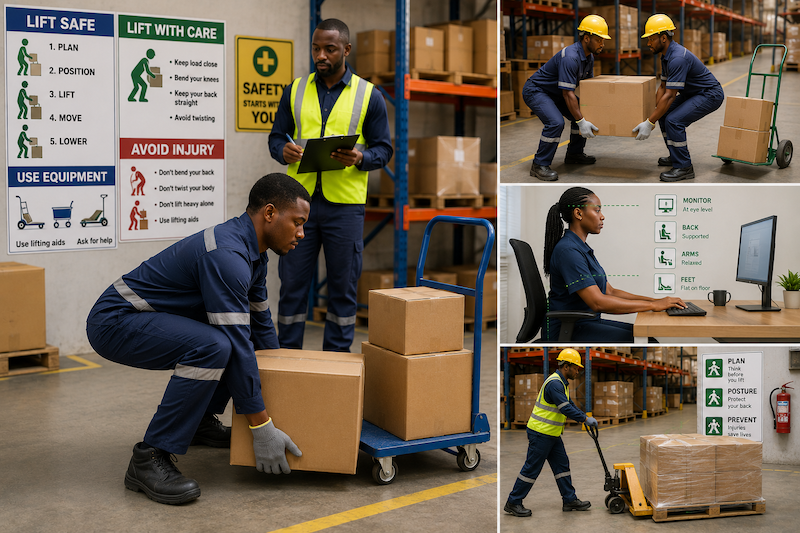
Manual handling and ergonomics are important parts of workplace health and safety because many workplace injuries happen when people lift, carry, push, pull, hold, bend, twist, or work in poor body positions. These injuries may happen suddenly, such as a back strain while lifting a heavy object, or gradually over time, such as neck pain from poor sitting posture or wrist pain from repetitive work.
Manual handling means using the body to move or support a load. Ergonomics means designing work, tools, equipment, and workstations to fit the worker and reduce strain on the body.
This module explains safe lifting and carrying techniques, how to prevent musculoskeletal injuries, how to apply ergonomics in the workplace, and how workers can protect themselves during physical and repetitive tasks.
Meaning of Manual Handling
Manual handling is any activity that requires a person to lift, lower, push, pull, carry, hold, move, or support a load using bodily force.
A load may be:
- A box.
- A bag.
- A tool.
- A machine part.
- A container.
- A gas cylinder.
- A patient or person.
- A bucket.
- A piece of furniture.
- Building materials.
- Waste materials.
- Office files or equipment.
- Raw materials or finished products.
Manual handling does not only mean lifting heavy objects. It also includes pushing carts, pulling equipment, carrying tools, holding materials in position, or moving objects from one place to another.
Meaning of Ergonomics
Ergonomics is the science of designing work to fit the worker.
It focuses on arranging tasks, tools, equipment, furniture, and the work environment in a way that reduces physical strain, discomfort, fatigue, and injury.
In simple terms, ergonomics means making work easier, safer, and more comfortable for the human body.
Ergonomics applies to:
- Offices.
- Workshops.
- Factories.
- Warehouses.
- Construction sites.
- Hospitals.
- Schools.
- Laboratories.
- Farms.
- Kitchens.
- Driving and transport work.
- Computer-based work.
- Manual labour tasks.
Good ergonomics helps workers maintain better posture, reduce unnecessary movement, avoid overexertion, and work more efficiently.
Why Manual Handling and Ergonomics Matter
Manual handling and poor ergonomics can lead to serious injuries, pain, reduced productivity, absenteeism, and long-term health problems.
They are important because they help to:
- Prevent back injuries.
- Reduce muscle strain.
- Prevent neck and shoulder pain.
- Reduce wrist and hand injuries.
- Prevent slips, trips, and falls during carrying.
- Reduce fatigue.
- Improve comfort.
- Improve productivity.
- Reduce workplace errors.
- Improve worker wellbeing.
- Prevent long-term musculoskeletal disorders.
- Make work safer and more efficient.
A worker who understands safe manual handling and ergonomics is less likely to suffer preventable injuries.
Musculoskeletal Disorders
Musculoskeletal disorders, often called MSDs, are injuries or conditions that affect the muscles, bones, joints, tendons, ligaments, nerves, and other supporting structures of the body.
They commonly affect:
- Back.
- Neck.
- Shoulders.
- Arms.
- Elbows.
- Wrists.
- Hands.
- Hips.
- Knees.
- Ankles.
- Feet.
MSDs may happen suddenly after one unsafe movement, or they may develop slowly from repeated strain over time.
Common examples include:
- Lower back pain.
- Muscle strain.
- Neck pain.
- Shoulder injury.
- Wrist pain.
- Tendon injury.
- Knee strain.
- Hernia.
- Repetitive strain injury.
- Joint pain.
- Nerve compression.
MSDs can affect a worker’s ability to move, lift, sit, stand, sleep, or perform daily tasks.
Common Causes of Manual Handling Injuries
Manual handling injuries may occur when a task places too much stress on the body.
Common causes include:
- Lifting heavy loads.
- Lifting awkwardly shaped loads.
- Bending the back while lifting.
- Twisting while carrying a load.
- Carrying loads over long distances.
- Lifting above shoulder height.
- Carrying loads that block vision.
- Pulling or pushing with too much force.
- Working in cramped spaces.
- Repetitive lifting.
- Poor grip on the load.
- Sudden movement.
- Lack of rest.
- Fatigue.
- Poor housekeeping.
- Slippery or uneven floors.
- Lack of mechanical aids.
- Poor training.
- Rushing the task.
- Team lifting without coordination.
Many manual handling injuries can be prevented by planning the task before moving the load.
Common Causes of Ergonomic Problems
Ergonomic problems occur when the work does not fit the worker’s body or natural movement.
Common causes include:
- Poor sitting posture.
- Poor chair height.
- Poor desk setup.
- Computer screen placed too high or too low.
- Repetitive hand movement.
- Long periods of standing.
- Long periods of sitting.
- Working with arms raised.
- Bending the neck for long periods.
- Poor lighting.
- Tools that are too heavy or badly designed.
- Work surfaces that are too high or too low.
- Reaching too far.
- Holding one position for too long.
- Lack of rest breaks.
- Poor task layout.
- Awkward body positions.
- Excessive force.
- Vibration from tools or machines.
Good ergonomic design reduces stress on the body and helps workers perform tasks more safely.
Parts of the Body Commonly Affected
Manual handling and poor ergonomics can affect many parts of the body.
Back
The back is one of the most commonly injured parts of the body during manual handling.
Back injuries may happen when workers:
- Bend from the waist while lifting.
- Lift loads that are too heavy.
- Twist while carrying.
- Lift suddenly.
- Carry loads far from the body.
- Work in awkward positions.
- Repeat lifting many times.
Lower back injuries can be painful and may take a long time to heal.
Neck
Neck pain may result from poor posture, looking down for long periods, poorly positioned screens, carrying loads on one side, or working above shoulder level.
Common causes include:
- Looking down at a phone or document for long periods.
- Computer screen positioned too low.
- Driving for long periods.
- Awkward sleeping or resting posture after fatigue.
- Holding tools or equipment in a fixed position.
Shoulders
Shoulder injuries may occur when workers lift, reach, pull, push, or work with arms raised.
Common causes include:
- Lifting above shoulder height.
- Carrying heavy loads on one shoulder.
- Reaching too far.
- Pulling heavy objects.
- Repetitive overhead work.
- Poor tool handling.
Arms, Wrists, and Hands
Arm, wrist, and hand problems may result from repetitive work, poor tool grip, vibration, forceful movement, or awkward wrist posture.
Common causes include:
- Typing for long periods without proper setup.
- Using vibrating tools.
- Repeated gripping.
- Cutting, twisting, or squeezing repeatedly.
- Working with bent wrists.
- Using tools with poor handles.
Legs, Knees, and Feet
Leg, knee, and foot pain may result from long standing, poor footwear, uneven surfaces, lifting from the floor, kneeling, climbing, and carrying heavy loads.
Common causes include:
- Standing on hard surfaces for long periods.
- Repeated climbing.
- Squatting or kneeling frequently.
- Carrying loads over uneven ground.
- Wearing unsuitable footwear.
- Poor floor conditions.
Risk Factors in Manual Handling
Manual handling risk can be understood by considering the task, the load, the work environment, and the individual worker.
The Task
The task may create risk when it involves:
- Heavy lifting.
- Repetitive movement.
- Twisting.
- Bending.
- Reaching.
- Carrying over long distances.
- Pushing or pulling.
- Sudden movement.
- Holding a load for a long time.
- Working above shoulder height.
- Working below knee level.
Tasks should be planned to reduce unnecessary strain.
The Load
The load may create risk when it is:
- Too heavy.
- Too large.
- Awkwardly shaped.
- Difficult to grip.
- Unstable.
- Sharp.
- Hot.
- Cold.
- Wet.
- Slippery.
- Fragile.
- Hazardous.
- Blocking the worker’s view.
Even a light load can be risky if it is awkward, difficult to hold, or carried in an unsafe posture.
The Environment
The work environment may create risk when there is:
- Poor lighting.
- Slippery floors.
- Uneven ground.
- Narrow walkways.
- Clutter.
- Stairs.
- Obstacles.
- Poor ventilation.
- Extreme heat.
- Poor access.
- Lack of space.
- Poor storage arrangement.
- Long travel distance.
- Poor housekeeping.
A safe environment makes manual handling easier and reduces injury risk.
The Individual Worker
Individual factors may affect manual handling risk.
These include:
- Physical strength.
- Fitness level.
- Height and body size.
- Age.
- Experience.
- Training.
- Fatigue.
- Health condition.
- Pregnancy.
- Previous injury.
- Stress level.
- Proper footwear and clothing.
Workers should not be forced to lift loads beyond their ability. When a task feels unsafe, help or mechanical aid should be requested.
Planning Before Lifting
Safe manual handling begins before the load is lifted.
Before lifting, consider:
- What is the weight of the load?
- Is the load stable?
- Can I grip it properly?
- Is the path clear?
- Where am I taking it?
- Is the destination ready?
- Do I need help?
- Do I need a trolley or lifting aid?
- Is the floor dry and even?
- Am I wearing suitable footwear?
- Can I see where I am going?
- Is there enough space to move safely?
- Can the load be divided into smaller parts?
A few seconds of planning can prevent serious injury.
Safe Lifting Technique
Safe lifting technique helps reduce strain on the back, shoulders, arms, and legs.
The basic steps include:
- Stand close to the load.
- Place feet apart for balance.
- Bend the knees, not the back.
- Keep the natural curve of the back.
- Grip the load firmly.
- Keep the load close to the body.
- Lift smoothly using the legs.
- Avoid twisting while lifting.
- Turn with the feet, not the waist.
- Keep the head up and look forward.
- Move steadily.
- Lower the load carefully.
The aim is to let the stronger leg muscles do more of the work instead of placing too much pressure on the back.
Correct Body Position During Lifting
Good body position helps protect the spine and muscles.
When lifting:
- Keep the back straight but not stiff.
- Keep shoulders level.
- Keep the load close to the body.
- Keep elbows close where possible.
- Avoid bending forward from the waist.
- Avoid twisting the spine.
- Avoid jerky movement.
- Avoid lifting with outstretched arms.
- Avoid lifting while off balance.
A load held far from the body places more strain on the back and shoulders.
Lifting from the Floor
Lifting from the floor can be risky because it often requires bending.
To lift from the floor more safely:
- Stand close to the load.
- Position feet around the load where possible.
- Bend the knees.
- Keep the back in a neutral position.
- Grip the load firmly.
- Lift slowly and smoothly.
- Keep the load close to the body.
- Avoid twisting.
- Use the legs to rise.
Where possible, avoid storing heavy items on the floor. Heavy items should be stored between knee and waist height.
Lifting from Height
Lifting from above shoulder height can strain the shoulders, neck, and back.
To reduce risk:
- Avoid lifting heavy items above shoulder height.
- Use steps or platforms where safe.
- Bring the load closer before lifting.
- Use assistance if needed.
- Store heavy items at waist height.
- Avoid overreaching.
- Keep movements controlled.
Heavy or frequently used items should not be stored on high shelves.
Carrying Loads Safely
Carrying a load safely requires balance, visibility, and control.
When carrying:
- Keep the load close to the body.
- Carry at waist height where possible.
- Keep the path clear.
- Avoid carrying loads that block vision.
- Walk slowly and steadily.
- Avoid sudden turns.
- Avoid twisting the body.
- Use both hands where possible.
- Avoid carrying too much at once.
- Take rest breaks for long distances.
- Use a trolley or mechanical aid where needed.
If a load blocks your view, ask for assistance or use a suitable handling aid.
Lowering Loads Safely
Lowering a load can also cause injury if done poorly.
To lower a load safely:
- Keep the load close to the body.
- Bend the knees.
- Keep the back neutral.
- Lower slowly.
- Avoid dropping the load.
- Keep fingers away from pinch points.
- Make sure the destination is stable.
- Avoid twisting while placing the load down.
Many hand and finger injuries happen when loads are placed down carelessly.
Pushing and Pulling
Pushing and pulling are forms of manual handling.
Pushing is usually safer than pulling because it allows better body control and visibility.
When pushing or pulling:
- Use both hands.
- Keep the back straight.
- Keep elbows close.
- Avoid twisting.
- Push rather than pull where possible.
- Use body weight to assist movement.
- Keep the load under control.
- Ensure wheels or rollers are working.
- Check the floor condition.
- Avoid slopes where possible.
- Do not overload trolleys.
- Keep the path clear.
If excessive force is needed, stop and check the cause. The wheels may be damaged, the load may be too heavy, or the surface may be unsuitable.
Team Lifting
Team lifting is used when one person cannot safely handle a load alone.
Team lifting requires good coordination.
Important rules include:
- Choose workers of similar height where possible.
- Agree on the route before lifting.
- Decide who will lead the lift.
- Use clear commands.
- Lift at the same time.
- Move at the same pace.
- Avoid sudden movement.
- Communicate during the task.
- Lower the load together.
- Stop if anyone loses grip or balance.
Team lifting can be dangerous if workers do not communicate properly.
Using Mechanical Aids
Mechanical aids reduce manual effort and help prevent injury.
Examples include:
- Trolleys.
- Hand trucks.
- Pallet jacks.
- Forklifts.
- Hoists.
- Cranes.
- Conveyor belts.
- Wheelbarrows.
- Lifting tables.
- Dollies.
- Rollers.
- Adjustable platforms.
Mechanical aids should be used when loads are too heavy, too awkward, too frequent, or too far to carry manually.
Mechanical aids must be suitable, inspected, maintained, and operated by trained persons where required.
Safe Use of Trolleys and Hand Trucks
Trolleys and hand trucks can reduce lifting and carrying, but they must be used safely.
Safe practices include:
- Check the trolley before use.
- Ensure wheels are in good condition.
- Do not overload the trolley.
- Secure unstable loads.
- Keep the load balanced.
- Push rather than pull where possible.
- Keep vision clear.
- Move slowly around corners.
- Avoid steep slopes where possible.
- Keep hands away from pinch points.
- Park the trolley safely after use.
A poorly loaded trolley can tip over and cause injury.
Manual Handling in Offices
Manual handling also occurs in offices.
Examples include:
- Carrying files.
- Moving chairs.
- Lifting boxes of paper.
- Moving computers.
- Carrying water dispensers.
- Rearranging furniture.
- Lifting office equipment.
- Carrying event materials.
Office workers should not assume that office tasks are risk-free.
Safe practices include:
- Avoid lifting heavy boxes alone.
- Use trolleys for files and supplies.
- Store heavy items at waist height.
- Keep walkways clear.
- Avoid carrying items on stairs if vision is blocked.
- Ask for help when moving furniture.
- Use proper lifting technique.
Manual Handling in Workshops and Warehouses
Workshops and warehouses often involve frequent lifting, carrying, pushing, and pulling.
Common hazards include:
- Heavy materials.
- Sharp edges.
- Poor stacking.
- Repetitive lifting.
- Forklift movement.
- Slippery floors.
- Awkward loads.
- High shelves.
- Poor lighting.
- Narrow aisles.
Safe practices include:
- Use lifting aids.
- Plan storage layout.
- Keep heavy items at waist height.
- Wear gloves where needed.
- Wear safety footwear.
- Keep aisles clear.
- Avoid overloading shelves.
- Use team lifting for awkward loads.
- Inspect pallets and containers.
- Avoid rushing.
Manual Handling in Construction
Construction work may involve heavy and awkward materials.
Common materials include:
- Blocks.
- Cement bags.
- Timber.
- Pipes.
- Steel rods.
- Tools.
- Roofing sheets.
- Buckets.
- Scaffolding parts.
- Equipment.
Safe practices include:
- Use mechanical aids where possible.
- Avoid carrying heavy loads over uneven ground.
- Keep access routes clear.
- Store materials close to the work area.
- Use team lifting for long or awkward materials.
- Wear gloves and safety boots.
- Avoid lifting above shoulder height.
- Plan deliveries and storage.
- Reduce carrying distances.
Manual handling injuries on construction sites are often linked to poor planning and poor housekeeping.
Manual Handling in Healthcare and Care Work
Healthcare and care work may involve moving or supporting people.
This can create high risk because people are not fixed loads; they may move unexpectedly or require support.
Safe practices include:
- Use patient handling aids where available.
- Follow care handling procedures.
- Ask for assistance when needed.
- Avoid twisting while supporting a person.
- Keep the person close where safe.
- Communicate clearly with the person being assisted.
- Avoid sudden movement.
- Use correct body posture.
- Report handling difficulties.
- Do not manually lift people where mechanical aids are required.
Healthcare workers should receive specific training for patient handling.
Ergonomics in the Workplace
Ergonomics helps prevent injuries by improving the way work is designed and performed.
Good ergonomics considers:
- Posture.
- Workstation height.
- Tool design.
- Repetition.
- Force.
- Reach distance.
- Lighting.
- Work pace.
- Rest breaks.
- Vibration.
- Temperature.
- Work layout.
- Movement.
The goal is to reduce strain and make work safer, more comfortable, and more efficient.
Neutral Posture
Neutral posture is a comfortable body position that places minimal strain on muscles and joints.
In neutral posture:
- The head is upright.
- Shoulders are relaxed.
- Back maintains its natural curve.
- Elbows are close to the body.
- Wrists are straight.
- Hips and knees are supported.
- Feet are stable.
- The body is not twisted or overstretched.
Workers should avoid holding awkward postures for long periods.
Office Ergonomics
Office ergonomics focuses on arranging the workstation to reduce discomfort and injury.
A good office workstation should support:
- Proper sitting posture.
- Correct screen height.
- Comfortable keyboard and mouse position.
- Good lighting.
- Proper chair support.
- Enough leg room.
- Clear desk layout.
- Regular movement.
Poor office ergonomics can lead to neck pain, back pain, eye strain, wrist pain, headaches, and fatigue.
Chair Setup
A good chair setup supports the back and allows comfortable working posture.
Chair setup should allow:
- Feet flat on the floor or footrest.
- Knees at about hip level.
- Lower back supported.
- Shoulders relaxed.
- Elbows close to the body.
- Seat height adjusted to desk height.
- Enough space behind the knees.
- Stable sitting position.
Workers should avoid sitting on the edge of the chair for long periods or slouching forward.
Desk and Keyboard Setup
The desk and keyboard should allow relaxed arm and wrist position.
Good setup includes:
- Keyboard directly in front of the worker.
- Mouse close to the keyboard.
- Wrists straight while typing.
- Elbows close to the body.
- Shoulders relaxed.
- Frequently used items within easy reach.
- Avoiding clutter under the desk.
- Avoiding long reaches.
Poor keyboard and mouse position can cause wrist, arm, shoulder, and neck strain.
Screen Setup
The computer screen should be positioned to reduce neck and eye strain.
Good screen setup includes:
- Screen directly in front of the worker.
- Top of the screen around eye level or slightly below.
- Screen about an arm’s length away.
- Text large enough to read comfortably.
- Screen free from glare.
- Brightness adjusted to the environment.
- Documents placed close to the screen where needed.
Looking down, sideways, or upward for long periods can cause neck and shoulder discomfort.
Laptop Ergonomics
Laptops are useful but can create poor posture when used for long periods.
Common problems include:
- Looking down at the screen.
- Rounded shoulders.
- Bent wrists.
- Poor neck posture.
- Small keyboard.
- Limited screen adjustment.
For long-term laptop use, it is better to use:
- Laptop stand.
- External keyboard.
- External mouse.
- Proper chair and desk.
- Good lighting.
This helps improve posture and reduce strain.
Standing Workstations
Standing workstations can reduce some sitting-related problems, but standing for too long can also cause discomfort.
Safe standing work includes:
- Adjust work surface to elbow height where possible.
- Keep frequently used items close.
- Use anti-fatigue mats where suitable.
- Wear comfortable footwear.
- Shift weight between feet.
- Use footrests where available.
- Alternate sitting and standing.
- Take movement breaks.
The best posture is usually the next posture. Workers should avoid staying in one position for too long.
Tool Ergonomics
Tools should be selected and used in a way that reduces strain.
Good tools should:
- Fit the hand comfortably.
- Be suitable for the task.
- Be in good condition.
- Reduce excessive force.
- Reduce vibration where possible.
- Allow neutral wrist posture.
- Have suitable handles.
- Not be too heavy.
- Be easy to grip.
Poorly designed or damaged tools can increase injury risk.
Repetitive Work
Repetitive work involves performing the same motion repeatedly.
Examples include:
- Typing.
- Packing.
- Cutting.
- Sorting.
- Assembly work.
- Cleaning.
- Data entry.
- Using hand tools repeatedly.
- Scanning items.
- Stitching or sewing.
Repetitive work can cause strain over time, especially when combined with force, speed, poor posture, or lack of rest.
Controls include:
- Task rotation.
- Micro-breaks.
- Better tool design.
- Reduced force.
- Adjustable workstations.
- Proper training.
- Stretching and movement.
- Mechanical assistance where possible.
Vibration Hazards
Vibration from tools or machines can affect the hands, arms, and whole body.
Examples include:
- Grinders.
- Drills.
- Jackhammers.
- Compactors.
- Chainsaws.
- Impact tools.
- Heavy vehicles.
- Forklifts.
- Tractors.
Vibration exposure can cause numbness, tingling, pain, reduced grip strength, and circulation problems.
Controls include:
- Use low-vibration tools.
- Maintain tools properly.
- Limit exposure time.
- Use suitable gloves where appropriate.
- Take breaks.
- Avoid gripping tools too tightly.
- Report symptoms early.
Work Above Shoulder Height
Work above shoulder height increases strain on the neck, shoulders, and arms.
Examples include:
- Painting ceilings.
- Fixing lights.
- Installing overhead materials.
- Reaching high shelves.
- Working on pipes or cables overhead.
Controls include:
- Use platforms or adjustable equipment.
- Bring work to a lower height where possible.
- Use extension tools.
- Take breaks.
- Avoid holding arms raised for long periods.
- Use team support for heavy overhead tasks.
Work Below Knee Level
Work below knee level may require bending, kneeling, or squatting.
Examples include:
- Floor cleaning.
- Low-level repairs.
- Lifting from the ground.
- Packing low shelves.
- Tiling.
- Working under equipment.
Controls include:
- Raise the work where possible.
- Use kneeling pads.
- Use stools or low platforms.
- Take breaks.
- Avoid twisting while bent.
- Store heavy items higher.
- Use long-handled tools.
Slips, Trips, and Falls During Manual Handling
Manual handling can increase the risk of slips, trips, and falls because the worker may have reduced balance or blocked vision.
Common causes include:
- Wet floors.
- Uneven ground.
- Loose cables.
- Cluttered walkways.
- Poor lighting.
- Carrying too much.
- Carrying objects that block vision.
- Rushing.
- Poor footwear.
- Stairs and steps.
Controls include:
- Keep walkways clear.
- Clean spills immediately.
- Use suitable footwear.
- Avoid carrying loads that block vision.
- Use trolleys.
- Improve lighting.
- Mark uneven surfaces.
- Plan the route before carrying.
Storage and Material Arrangement
Good storage reduces manual handling risk.
Safe storage practices include:
- Store heavy items between knee and waist height.
- Store frequently used items within easy reach.
- Avoid overloading shelves.
- Keep items stable.
- Avoid storing heavy items overhead.
- Keep aisles clear.
- Label storage areas.
- Use proper containers.
- Keep sharp items protected.
- Store materials close to the work area where possible.
- Avoid stacking materials too high.
Poor storage can lead to lifting injuries, falling objects, and blocked walkways.
Work Pace and Fatigue
Fatigue increases the risk of manual handling and ergonomic injuries.
Fatigue may be caused by:
- Long working hours.
- Heavy workload.
- Repetitive tasks.
- Poor sleep.
- Heat stress.
- Lack of breaks.
- Poor nutrition or hydration.
- Stress.
- Long standing or sitting.
- High physical effort.
Fatigue can reduce strength, concentration, coordination, and judgement.
Workers should take rest breaks where required, drink water, report fatigue, and avoid rushing physically demanding tasks.
Warning Signs of Manual Handling and Ergonomic Injury
Workers should pay attention to early signs of injury.
Warning signs include:
- Pain.
- Stiffness.
- Numbness.
- Tingling.
- Swelling.
- Weakness.
- Reduced grip strength.
- Burning sensation.
- Muscle tightness.
- Back discomfort.
- Neck or shoulder pain.
- Fatigue that does not improve with rest.
Early reporting can prevent minor discomfort from becoming a serious injury.
Preventing Musculoskeletal Injuries
Musculoskeletal injuries can be prevented through safe work planning, good posture, suitable equipment, and early reporting.
Prevention measures include:
- Avoid unnecessary lifting.
- Use mechanical aids.
- Reduce load weight.
- Keep loads close to the body.
- Avoid twisting.
- Use team lifting when needed.
- Improve workstation setup.
- Take regular breaks.
- Rotate repetitive tasks.
- Keep tools in good condition.
- Use correct PPE.
- Report pain early.
- Maintain good housekeeping.
- Use proper storage.
- Plan work before starting.
- Ask for help when needed.
Prevention is better than treatment.
Personal Protective Equipment for Manual Handling
PPE can support manual handling safety, but it does not replace safe technique.
PPE may include:
- Safety gloves for grip and hand protection.
- Safety boots for foot protection.
- High-visibility clothing in vehicle areas.
- Knee pads for kneeling tasks.
- Back support only where approved and not as a substitute for safe lifting.
- Protective clothing for sharp, hot, cold, or contaminated loads.
PPE should be selected based on the hazard and task.
Common Unsafe Manual Handling Practices
Unsafe practices include:
- Lifting with a bent back.
- Twisting while carrying.
- Carrying too much at once.
- Lifting loads that are too heavy.
- Carrying loads that block vision.
- Pulling instead of pushing unnecessarily.
- Lifting suddenly or quickly.
- Throwing loads.
- Working in poor posture.
- Ignoring pain.
- Not asking for help.
- Not using available mechanical aids.
- Carrying loads over cluttered walkways.
- Wearing unsuitable footwear.
- Rushing manual tasks.
These behaviours increase the risk of injury and should be avoided.
Personal Responsibility in Manual Handling and Ergonomics
Every worker has a responsibility to protect their body during work.
Workers should:
- Think before lifting.
- Know their physical limits.
- Ask for help when needed.
- Use mechanical aids.
- Use proper lifting technique.
- Keep the work area tidy.
- Report unsafe conditions.
- Report early signs of discomfort.
- Avoid rushing.
- Follow safe work procedures.
- Adjust workstations properly.
- Take breaks where required.
- Use suitable PPE.
- Avoid unsafe shortcuts.
A worker’s body is one of their most important tools. It should be protected.
Key HSE Terms
Manual Handling
Any activity that involves lifting, lowering, pushing, pulling, carrying, holding, moving, or supporting a load by bodily force.
Ergonomics
The design of work, tools, equipment, and workstations to fit the worker and reduce strain.
Musculoskeletal Disorder
An injury or condition affecting muscles, bones, joints, tendons, ligaments, nerves, or supporting body structures.
Load
Any object, person, animal, tool, material, or item being moved or supported.
Neutral Posture
A body position that places minimal strain on muscles, joints, and the spine.
Repetitive Strain Injury
An injury caused by repeated movement, force, or poor posture over time.
Mechanical Aid
Equipment used to reduce manual effort when moving or lifting loads.
Team Lifting
A lifting method where two or more people move a load together.
Overexertion
Using excessive physical force beyond the body’s safe capacity.
Awkward Posture
A body position that places strain on muscles, joints, or the spine.
Force
The physical effort needed to lift, push, pull, hold, or move a load.
Fatigue
Physical or mental tiredness that reduces strength, concentration, and safe performance.
Vibration
Rapid movement from tools or machines that can affect the hands, arms, or whole body.
Summary
Manual handling and ergonomics are essential for preventing workplace injuries, especially injuries affecting the back, neck, shoulders, arms, wrists, hands, legs, knees, and feet. Manual handling includes lifting, carrying, pushing, pulling, holding, moving, or supporting loads, while ergonomics focuses on designing work to fit the worker.
Manual handling injuries can result from heavy loads, awkward postures, twisting, repetitive movement, poor grip, long carrying distances, poor housekeeping, lack of mechanical aids, and rushing. Ergonomic problems can result from poor workstation setup, repetitive work, long sitting or standing, poor tool design, vibration, and working in awkward positions.
Safe manual handling begins with planning. Workers should check the load, route, environment, distance, destination, and available assistance before lifting. Proper lifting involves standing close to the load, bending the knees, keeping the back neutral, gripping firmly, keeping the load close, lifting smoothly with the legs, and avoiding twisting.
Ergonomics helps reduce strain by improving posture, workstation setup, tool design, work layout, rest breaks, and task rotation. In offices, proper chair height, screen position, keyboard placement, and regular movement are important. In workshops, warehouses, construction, healthcare, and other workplaces, good planning and mechanical aids can reduce physical strain.
Musculoskeletal injuries can be prevented when workers use safe techniques, avoid unsafe shortcuts, report pain early, keep work areas organised, use the right equipment, and ask for help when needed. Good manual handling and ergonomics protect the body, improve productivity, and support long-term health.