
Emergency Response
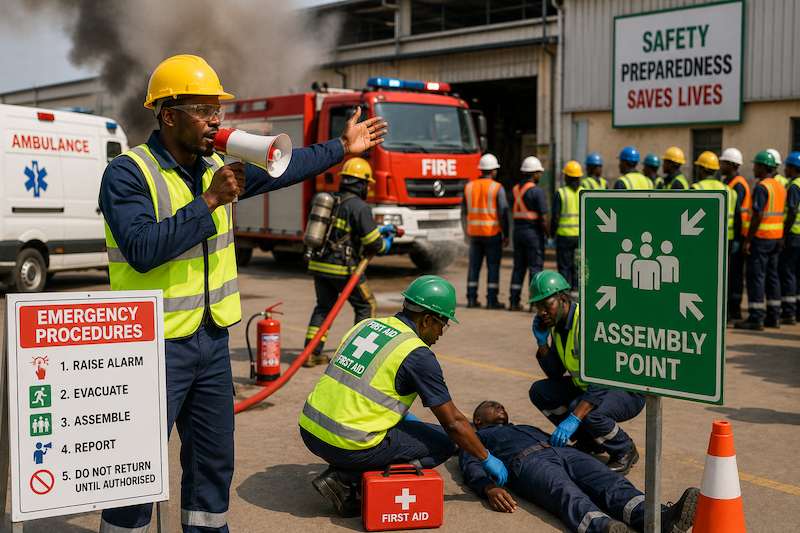
Emergency response is the organised action taken when a sudden, dangerous, or unexpected situation occurs in the workplace. Emergencies can happen at any time and may involve fire, injury, chemical spill, gas leak, explosion, electrical incident, building collapse, flood, violence, security threat, road accident, medical emergency, or environmental release.
The purpose of emergency response is to protect life, reduce injury, control damage, prevent panic, protect the environment, and restore safety as quickly as possible. A good emergency response system helps workers know what to do, where to go, who to contact, and how to act when something goes wrong.
Emergency response is not only for safety officers or emergency teams. Every worker must understand basic emergency procedures, alarms, evacuation routes, assembly points, emergency communication, and personal responsibilities during emergencies.
This module explains emergency preparedness, evacuation procedures, emergency communication, assembly points, emergency drills, and safe behaviour during workplace emergencies.
Meaning of Emergency
An emergency is a serious, unexpected, and often dangerous situation that requires immediate action.
An emergency may threaten:
- Life.
- Health.
- Property.
- Equipment.
- Operations.
- The environment.
- The surrounding community.
Examples of workplace emergencies include:
- Fire outbreak.
- Explosion.
- Serious injury.
- Sudden illness.
- Chemical spill.
- Gas leak.
- Electrical shock.
- Flood.
- Building collapse.
- Vehicle accident.
- Confined space incident.
- Violence or security threat.
- Environmental pollution.
- Natural disaster.
- Equipment failure that creates danger.
Emergencies require quick, calm, and organised response.
Meaning of Emergency Response
Emergency response means the actions taken to manage an emergency and reduce its impact.
Emergency response may include:
- Raising the alarm.
- Warning people nearby.
- Calling emergency services.
- Evacuating the area.
- Providing first aid.
- Isolating energy sources.
- Controlling a spill.
- Fighting a small fire where safe and trained.
- Rescuing trapped persons by trained responders.
- Securing the area.
- Accounting for people at assembly points.
- Communicating with workers and authorities.
- Preventing further harm.
The first priority in every emergency is the protection of life.
Meaning of Emergency Preparedness
Emergency preparedness means planning and getting ready before an emergency happens.
Preparedness includes having:
- Emergency plans.
- Trained workers.
- Clear evacuation routes.
- Functional alarms.
- Assembly points.
- Emergency contact numbers.
- First aid facilities.
- Fire extinguishers.
- Spill response materials.
- Communication systems.
- Emergency lighting.
- Trained emergency response teams.
- Regular drills.
- Clear responsibilities.
A workplace that prepares well is more likely to respond effectively when an emergency occurs.
Why Emergency Preparedness is Important
Emergency preparedness is important because emergencies can develop quickly and cause serious harm if people do not know what to do.
Preparedness helps to:
- Save lives.
- Reduce injuries.
- Prevent panic.
- Improve response time.
- Protect visitors and contractors.
- Reduce property damage.
- Protect the environment.
- Support quick evacuation.
- Improve communication.
- Help workers respond confidently.
- Reduce confusion.
- Improve coordination with emergency services.
- Support legal and HSE compliance.
- Improve recovery after an incident.
Without proper preparation, even a small incident can become a major emergency.
Common Types of Workplace Emergencies
Workplace emergencies vary depending on the type of work, location, materials, equipment, and environment.
Fire Emergency
A fire emergency occurs when there is uncontrolled burning that may threaten people, property, equipment, or the environment.
Possible causes include:
- Electrical faults.
- Welding sparks.
- Gas leaks.
- Smoking.
- Flammable liquids.
- Poor housekeeping.
- Cooking equipment.
- Overheated machines.
- Poor storage of combustible materials.
Fire emergencies require immediate alarm activation, evacuation, and use of fire equipment only where safe and trained.
Medical Emergency
A medical emergency occurs when a person suffers sudden illness, injury, or life-threatening health condition.
Examples include:
- Severe bleeding.
- Burns.
- Fractures.
- Electric shock.
- Heart attack.
- Stroke.
- Fainting.
- Seizure.
- Breathing difficulty.
- Heat exhaustion.
- Poisoning.
- Severe allergic reaction.
- Loss of consciousness.
Medical emergencies require quick reporting, first aid support, and medical assistance.
Chemical Spill Emergency
A chemical spill emergency occurs when a chemical leaks, spills, or is released in a way that may harm people, property, or the environment.
Chemical spills may involve:
- Acids.
- Solvents.
- Fuels.
- Cleaning chemicals.
- Paints.
- Laboratory chemicals.
- Pesticides.
- Corrosive substances.
- Toxic liquids.
- Unknown substances.
Chemical spill response depends on the type of chemical, quantity spilled, exposure risk, ventilation, and available spill control materials.
Workers should not touch unknown chemicals or attempt cleanup without proper training and PPE.
Gas Leak Emergency
A gas leak emergency occurs when flammable, toxic, or oxygen-displacing gas escapes from a cylinder, pipe, valve, hose, or equipment.
Gas leaks may create risks of:
- Fire.
- Explosion.
- Poisoning.
- Suffocation.
- Dizziness.
- Breathing difficulty.
- Environmental harm.
If a gas leak is suspected, ignition sources should be avoided, people should leave the area, and the leak should be reported immediately.
Explosion Emergency
An explosion is a sudden release of energy that can cause fire, pressure waves, flying debris, structural damage, injury, and death.
Possible causes include:
- Gas leak ignition.
- Chemical reaction.
- Pressure vessel failure.
- Dust explosion.
- Fuel vapour ignition.
- Poorly stored flammable materials.
- Electrical sparks in hazardous atmospheres.
After an explosion, workers should move away from danger, avoid damaged structures, report injuries, and follow emergency instructions.
Electrical Emergency
An electrical emergency may involve electric shock, electrical burns, arc flash, fire, or contact with live electrical parts.
Electrical emergencies may result from:
- Exposed wires.
- Damaged equipment.
- Wet electrical areas.
- Faulty panels.
- Contact with overhead power lines.
- Overloaded circuits.
- Poor isolation during maintenance.
Workers should not touch a person who is still in contact with electricity. The power source should be isolated only if safe and authorised.
Environmental Emergency
An environmental emergency occurs when workplace activities cause or may cause serious harm to air, water, land, animals, plants, or surrounding communities.
Examples include:
- Oil spill.
- Chemical release.
- Wastewater discharge.
- Air emission release.
- Fuel leakage.
- Contaminated runoff.
- Firewater pollution.
- Hazardous waste release.
Environmental emergencies should be reported immediately so that proper containment and response actions can be taken.
Natural Disaster Emergency
Natural disasters can affect workplaces and create dangerous conditions.
Examples include:
- Flood.
- Storm.
- Lightning.
- Earthquake.
- Extreme heat.
- Landslide.
- Strong wind.
- Severe rainfall.
Preparedness may include weather monitoring, evacuation planning, emergency supplies, safe shelter, communication systems, and business continuity planning.
Security Emergency
A security emergency involves threats to people, property, or workplace operations.
Examples include:
- Violence.
- Armed threat.
- Theft.
- Civil unrest.
- Workplace conflict.
- Suspicious package.
- Unauthorised entry.
- Kidnapping threat.
- Bomb threat.
Workers should follow workplace security procedures, avoid confrontation where unsafe, report threats immediately, and follow instructions from authorised personnel.
Emergency Response Priorities
During any emergency, the response should follow clear priorities.
The basic priorities are:
- Protect life.
- Raise the alarm.
- Move away from danger.
- Help others only if it is safe.
- Call for assistance.
- Control the emergency only if trained and safe.
- Prevent the situation from getting worse.
- Protect the environment where possible.
- Follow instructions from emergency personnel.
- Do not re-enter unsafe areas.
Property and equipment can be replaced. Human life cannot.
Personal Safety During Emergencies
Personal safety is the most important concern during emergencies.
Workers should:
- Stay calm.
- Stop work safely where possible.
- Move away from immediate danger.
- Raise the alarm.
- Warn others nearby.
- Avoid unnecessary risks.
- Follow evacuation routes.
- Do not collect personal belongings.
- Do not use lifts during fire emergencies.
- Do not run or push others.
- Do not return to the danger area.
- Report to the assembly point.
- Follow instructions from emergency responders.
A calm and disciplined response can save lives.
Emergency Action Plan
An emergency action plan is a written or communicated plan that explains what people should do during emergencies.
A good emergency action plan usually includes:
- Possible emergency situations.
- Alarm systems.
- Evacuation procedures.
- Emergency contacts.
- Roles and responsibilities.
- Assembly points.
- First aid arrangements.
- Fire response procedures.
- Spill response procedures.
- Communication methods.
- Rescue arrangements.
- Shutdown procedures.
- Support for visitors and persons needing assistance.
- Procedures for accounting for people.
- Re-entry procedures after emergency.
Workers should understand the emergency action plan for their workplace.
Emergency Roles and Responsibilities
Different people may have different responsibilities during emergencies.
Management Responsibilities
Management is responsible for ensuring that emergency systems are planned, provided, maintained, and communicated.
This includes:
- Providing emergency plans.
- Providing alarms and communication systems.
- Providing emergency equipment.
- Ensuring workers receive emergency training.
- Providing first aid arrangements.
- Ensuring evacuation routes are clear.
- Appointing emergency response personnel where required.
- Conducting emergency drills.
- Reviewing emergency plans after drills or incidents.
- Ensuring visitors and contractors understand emergency arrangements.
Supervisor Responsibilities
Supervisors support emergency response by guiding workers and ensuring procedures are followed.
Supervisor responsibilities may include:
- Ensuring workers know emergency procedures.
- Stopping work during emergencies.
- Directing workers to safe exits.
- Reporting missing persons.
- Reporting hazards to emergency teams.
- Ensuring emergency access is not blocked.
- Supporting headcount at assembly points.
- Communicating instructions clearly.
- Preventing unauthorised re-entry.
Worker Responsibilities
Workers must understand and follow emergency procedures.
Worker responsibilities include:
- Knowing the alarm sound.
- Knowing escape routes.
- Knowing assembly points.
- Reporting emergencies quickly.
- Following evacuation instructions.
- Helping others only when safe.
- Avoiding panic.
- Not blocking emergency routes.
- Not interfering with emergency equipment.
- Attending drills.
- Reporting unsafe emergency arrangements.
- Waiting for official clearance before returning.
Emergency response is effective when everyone understands their role.
Emergency Alarms
Emergency alarms warn people that there is danger and action is required.
Alarms may include:
- Sirens.
- Bells.
- Horns.
- Flashing lights.
- Public address announcements.
- Whistles.
- Radio messages.
- Phone alerts.
- Verbal warnings.
Workers must know:
- What the alarm sounds like.
- What the alarm means.
- What action to take.
- Where to go.
- Who to report to.
- What to do if the alarm fails.
An emergency alarm should never be ignored, even if it is believed to be a drill.
Raising the Alarm
Raising the alarm means warning people and activating the emergency response system.
The alarm should be raised when there is:
- Fire.
- Smoke.
- Explosion.
- Serious injury.
- Chemical spill.
- Gas leak.
- Electrical danger.
- Structural collapse.
- Security threat.
- Environmental release.
- Any situation that may endanger people.
Ways to raise the alarm may include:
- Pressing a manual call point.
- Shouting a clear warning.
- Calling a supervisor.
- Calling emergency services.
- Using a radio.
- Calling the emergency number provided by the workplace.
- Informing the security post or control room.
Early alarm saves time and lives.
Emergency Communication
Emergency communication is the sharing of clear and accurate information during an emergency.
Good emergency communication helps people understand:
- What happened.
- Where it happened.
- Who is affected.
- What action is required.
- Which areas are unsafe.
- Where to evacuate.
- When it is safe to return.
Emergency communication should be:
- Clear.
- Calm.
- Short.
- Accurate.
- Timely.
- Directed to the right people.
Confusing or false information can create panic and poor decisions.
Information to Give When Reporting an Emergency
When reporting an emergency, provide important details clearly.
Useful information includes:
- Your name.
- Exact location of the emergency.
- Type of emergency.
- Number of people injured or trapped.
- Type of hazard involved.
- Whether fire, smoke, gas, chemical, or electricity is present.
- Actions already taken.
- Assistance needed.
- Best access route for responders.
- Your contact details if required.
For example: “There is a fire in the generator room near the rear gate. One person may be injured. Smoke is spreading. The alarm has been raised and workers are evacuating.”
Emergency Contact Numbers
Emergency contact numbers should be visible and known to workers.
They may include:
- Workplace emergency number.
- Security post.
- Site clinic or first aid team.
- Fire service.
- Ambulance or medical emergency number.
- Police or security agency.
- Environmental emergency contact.
- Utility provider.
- Supervisor or manager.
- Facility manager.
- Emergency response coordinator.
Workers should know the emergency numbers used in their location and workplace.
Evacuation
Evacuation is the organised movement of people away from a dangerous area to a safe location.
Evacuation may be required during:
- Fire.
- Explosion risk.
- Gas leak.
- Chemical release.
- Structural failure.
- Security threat.
- Flood.
- Smoke spread.
- Electrical danger.
- Severe weather.
- Bomb threat.
- Any situation where staying is unsafe.
Evacuation protects life by moving people away from danger.
Evacuation Procedure
During evacuation, workers should:
- Stop work safely where possible.
- Switch off equipment only if safe and instructed.
- Leave immediately by the nearest safe route.
- Follow emergency exit signs.
- Walk quickly but do not run.
- Do not push or shout unnecessarily.
- Do not stop to collect personal belongings.
- Do not use lifts during fire emergencies.
- Close doors behind you where safe to slow fire and smoke spread.
- Assist visitors or persons needing help if safe.
- Go directly to the assembly point.
- Report to the person taking headcount.
- Remain at the assembly point.
- Wait for further instructions.
Evacuation must be calm, fast, and orderly.
Evacuation Routes
Evacuation routes are safe paths used to leave a building or work area during emergencies.
Evacuation routes should be:
- Clearly marked.
- Free from obstruction.
- Well-lit where required.
- Wide enough for safe movement.
- Known to workers.
- Protected from hazards where possible.
- Connected to safe exits.
- Maintained at all times.
Workers should know more than one evacuation route because one route may be blocked during an emergency.
Emergency Exits
Emergency exits are doors or pathways used to leave a building or work area during emergencies.
Emergency exits must:
- Be easy to identify.
- Remain unlocked when people are present.
- Open easily.
- Be free from obstruction.
- Lead to a safe area.
- Be clearly marked.
- Not be used for storage.
- Not be blocked by materials, vehicles, or waste.
Blocking an emergency exit can trap people during an emergency.
Assembly Points
An assembly point is a safe location where people gather after evacuation.
Assembly points are important because they help the organisation confirm who is safe and who may be missing.
A good assembly point should be:
- Away from the danger area.
- Away from smoke, fire, or chemical release.
- Away from traffic routes if possible.
- Easy to identify.
- Large enough for workers and visitors.
- Accessible for emergency response coordination.
- Known to all workers.
- Safe from falling objects or secondary hazards.
Workers should go directly to the assembly point and remain there until further instruction.
Behaviour at the Assembly Point
At the assembly point, workers should:
- Stay calm.
- Remain in the assigned area.
- Report to the person taking headcount.
- Do not leave without permission.
- Report missing coworkers.
- Report injuries or persons needing assistance.
- Keep access clear for emergency vehicles.
- Avoid spreading rumours.
- Listen for instructions.
- Do not return to the workplace until authorised.
Leaving the assembly point without permission can cause confusion and unnecessary rescue attempts.
Headcount and Accountability
Headcount is the process of checking whether all workers, visitors, and contractors are accounted for after evacuation.
Headcount helps identify:
- People who are safe.
- People who may be missing.
- People who may be injured.
- Visitors or contractors who may not know the site.
- Persons who may still be inside the danger area.
Accurate attendance records, visitor logs, contractor lists, and department registers help improve accountability.
Assisting Visitors and Contractors
Visitors and contractors may not be familiar with workplace emergency procedures.
They may need help understanding:
- Alarm sounds.
- Exit routes.
- Assembly points.
- Restricted areas.
- Emergency contacts.
- Site rules.
- PPE requirements.
Workers should guide visitors only if it is safe. Visitors should not be left alone in hazardous or unfamiliar areas during emergencies.
Persons Requiring Assistance
Some people may need assistance during evacuation.
This may include:
- Persons with disabilities.
- Injured persons.
- Pregnant workers.
- Elderly visitors.
- New workers.
- Persons unfamiliar with the site.
- Persons affected by panic.
- Persons with breathing difficulty.
- Persons with temporary mobility limitations.
Workplaces should have arrangements to support people who may need assistance. Assistance should be given safely and without putting more people in danger.
Fire Emergency Response
When fire is discovered:
- Raise the alarm immediately.
- Warn people nearby.
- Call emergency services or the responsible person.
- Evacuate through a safe route.
- Use a fire extinguisher only if trained and safe.
- Keep an escape route behind you.
- Close doors behind you where safe.
- Do not use lifts.
- Go to the assembly point.
- Report missing or injured persons.
- Do not re-enter until authorised.
Fighting fire is not compulsory for every worker. Evacuation is the priority when safety is uncertain.
Medical Emergency Response
When a medical emergency occurs:
- Stay calm.
- Call for help immediately.
- Do not move the injured person unless there is immediate danger.
- Provide first aid only within your level of training.
- Keep the person comfortable.
- Control bleeding where trained and safe.
- Keep crowds away.
- Provide clear information to responders.
- Report the incident.
- Arrange medical evacuation where necessary.
First aid should be provided quickly, but only in a way that does not create additional danger.
Chemical Spill Response
When a chemical spill occurs:
- Move away from the spill if unsafe.
- Warn others nearby.
- Avoid touching or inhaling the substance.
- Raise the alarm.
- Identify the chemical only if safe.
- Use the Safety Data Sheet where available.
- Wear proper PPE before any response.
- Stop the source only if trained and safe.
- Prevent the spill from entering drains where safe.
- Use spill kits only if trained.
- Report the spill immediately.
- Evacuate if fumes, fire risk, or exposure risk is present.
Unknown chemicals should always be treated as hazardous.
Gas Leak Response
When a gas leak is suspected:
- Do not switch electrical equipment on or off.
- Do not use open flames.
- Do not smoke.
- Avoid using phones near the leak if ignition risk exists.
- Leave the area immediately.
- Warn others.
- Raise the alarm.
- Shut off the gas supply only if trained and safe.
- Ventilate the area only if safe and instructed.
- Report to the responsible person.
- Do not re-enter until declared safe.
Gas leaks can lead to fire, explosion, poisoning, or suffocation.
Electrical Emergency Response
During an electrical emergency:
- Do not touch anyone who is still in contact with electricity.
- Switch off or isolate the power only if safe and authorised.
- Call for emergency help.
- Keep people away from the area.
- Use non-conductive materials only if trained and necessary.
- Provide first aid only after the electrical source is controlled.
- Report the incident.
- Treat electrical burns and shocks as serious, even when the person appears fine.
Electricity can kill quickly, and secondary injuries can occur when a shocked person falls.
Environmental Emergency Response
During an environmental emergency:
- Report the incident immediately.
- Stop the source only if safe.
- Prevent spread where trained and safe.
- Protect drains and waterways where possible.
- Use spill response equipment if trained.
- Keep people away from contaminated areas.
- Avoid direct contact with the substance.
- Follow environmental reporting procedures.
- Dispose of contaminated materials properly.
- Record the incident as required.
Fast response can reduce pollution and environmental damage.
Security Emergency Response
During a security emergency:
- Stay calm.
- Move away from danger if possible.
- Alert security or management.
- Follow lockdown, evacuation, or shelter instructions.
- Do not confront violent persons unless trained and authorised.
- Keep communication clear and discreet where necessary.
- Protect yourself first.
- Help others only when safe.
- Report suspicious persons, packages, or behaviour.
- Wait for official instructions.
Security emergencies require careful judgement and respect for workplace procedures.
Shelter-in-Place
Shelter-in-place means staying indoors or in a safe internal area instead of evacuating.
It may be used during:
- External chemical release.
- Severe weather.
- Security threat.
- Violence outside the building.
- Dangerous outdoor conditions.
- Civil unrest.
- Nearby fire or smoke where evacuation route is unsafe.
During shelter-in-place:
- Move to the designated safe area.
- Close doors and windows where required.
- Stay away from glass.
- Turn off ventilation only if instructed.
- Keep communication devices available.
- Remain calm.
- Wait for official instructions.
- Do not leave until told it is safe.
Not every emergency requires evacuation. Some situations are safer indoors.
Lockdown
Lockdown is a security procedure used when there is a threat inside or near the workplace.
During lockdown:
- Move away from danger.
- Enter a secure room if available.
- Lock or block doors where safe.
- Stay quiet.
- Silence phones.
- Stay away from windows.
- Do not open doors for unknown persons.
- Follow security instructions.
- Wait for official clearance.
Lockdown procedures should be known in workplaces where security threats are possible.
Emergency Equipment
Emergency equipment supports response during emergencies.
Examples include:
- Fire extinguishers.
- Fire hose reels.
- Fire blankets.
- First aid boxes.
- Stretchers.
- Eyewash stations.
- Emergency showers.
- Spill kits.
- Rescue equipment.
- Emergency lighting.
- Alarm systems.
- Communication radios.
- Personal protective equipment.
- Breathing apparatus for trained responders.
- Barricade tape.
- Emergency shutdown switches.
Emergency equipment must be accessible, visible, inspected, and used only for its intended purpose.
First Aid Facilities
First aid facilities help provide immediate care before professional medical help arrives.
They may include:
- First aid box.
- First aid room.
- Trained first aiders.
- Stretchers.
- Emergency eye wash.
- Burn dressing.
- Gloves.
- Bandages.
- Emergency contact numbers.
Workers should know where first aid facilities are located and how to contact a first aider.
Spill Kits
Spill kits are used to control and clean up spills.
A spill kit may contain:
- Absorbent pads.
- Absorbent socks.
- Neutralising materials, depending on the substance.
- Disposal bags.
- Gloves.
- Goggles.
- Warning signs.
- Drain covers.
- Instructions.
Spill kits should only be used by workers who know how to use them and have suitable PPE.
Emergency Lighting
Emergency lighting helps people see evacuation routes when normal lighting fails.
Emergency lighting is important in:
- Stairways.
- Corridors.
- Exit routes.
- Large buildings.
- Warehouses.
- Workshops.
- Basements.
- Areas with night operations.
Poor visibility during emergency can lead to panic, trips, delays, and injury.
Emergency Shutdown
Some workplaces have emergency shutdown systems used to stop equipment, power, gas, fuel, or processes during emergencies.
Emergency shutdown may apply to:
- Machines.
- Generators.
- Fuel systems.
- Gas systems.
- Electrical systems.
- Production lines.
- Pumps.
- Boilers.
- Chemical processes.
Only trained and authorised persons should operate emergency shutdown systems unless the procedure clearly states otherwise.
Emergency Drills
Emergency drills are practice exercises used to test emergency procedures and prepare workers for real emergencies.
Drills may include:
- Fire drills.
- Evacuation drills.
- Spill response drills.
- Medical emergency drills.
- Rescue drills.
- Security drills.
- Lockdown drills.
- Shelter-in-place drills.
Drills help workers become familiar with emergency actions before a real emergency occurs.
Importance of Emergency Drills
Emergency drills are important because they help to:
- Test emergency plans.
- Improve worker confidence.
- Identify blocked exits.
- Test alarm systems.
- Check evacuation time.
- Test assembly point arrangements.
- Improve communication.
- Identify training gaps.
- Improve headcount procedures.
- Test emergency equipment.
- Improve coordination.
- Reduce panic during real emergencies.
Drills should be taken seriously because real emergencies may happen without warning.
Behaviour During Emergency Drills
During a drill, workers should behave as if it is a real emergency.
Workers should:
- Respond immediately to the alarm.
- Follow evacuation routes.
- Avoid delay.
- Avoid joking or ignoring the drill.
- Go to the assembly point.
- Participate in headcount.
- Report any problems noticed.
- Wait for instructions before returning.
A poor attitude during drills can lead to poor response during real emergencies.
After an Emergency
After an emergency, workers should not return to the workplace until authorised.
Post-emergency actions may include:
- Headcount confirmation.
- Medical treatment.
- Incident reporting.
- Area inspection.
- Hazard control.
- Environmental cleanup.
- Equipment checks.
- Investigation.
- Communication with workers.
- Corrective actions.
- Review of emergency response.
Returning too early can expose workers to hidden dangers such as smoke, chemicals, unstable structures, electrical hazards, or reignition.
Re-Entry After Emergency
Re-entry means going back into the affected area after evacuation or emergency response.
Re-entry should only happen when:
- The area has been inspected.
- Hazards have been controlled.
- Emergency responders or authorised persons declare it safe.
- Damaged systems are isolated.
- Air quality is safe where relevant.
- Fire risk has been controlled.
- Structural stability is confirmed where necessary.
- Spill or contamination has been managed.
- Instructions have been given.
Workers should never re-enter because they assume the emergency is over.
Incident Reporting After Emergency
Every emergency should be reported and recorded according to workplace procedures.
Reports help the organisation understand:
- What happened.
- Where it happened.
- Who was involved.
- What injuries or damage occurred.
- What emergency actions were taken.
- What worked well.
- What failed.
- What corrective actions are needed.
Incident reporting helps prevent recurrence.
Learning from Emergencies
After an emergency or drill, the workplace should learn from what happened.
Important questions include:
- Was the alarm heard by everyone?
- Did workers evacuate quickly?
- Were exits clear?
- Did people know the assembly point?
- Was headcount effective?
- Were visitors accounted for?
- Was communication clear?
- Was emergency equipment available?
- Were emergency contacts reachable?
- Were there any delays?
- Were there any unsafe behaviours?
- What should be improved?
Learning from emergencies improves future response.
Common Mistakes During Emergencies
Common mistakes include:
- Ignoring alarms.
- Delaying evacuation.
- Returning for personal belongings.
- Running or pushing others.
- Using lifts during fire.
- Fighting fire without training.
- Using the wrong extinguisher.
- Touching electrical casualties before power isolation.
- Cleaning chemical spills without PPE.
- Leaving the assembly point without permission.
- Re-entering the building too early.
- Giving false information.
- Blocking emergency access.
- Failing to report missing persons.
- Panicking or spreading rumours.
Avoiding these mistakes can save lives.
Personal Emergency Preparedness
Workers should be personally prepared for emergencies.
This includes knowing:
- The alarm sound.
- At least two exit routes.
- Assembly point location.
- Emergency contact numbers.
- Location of fire extinguishers.
- Location of first aid box.
- Location of eyewash or emergency shower where relevant.
- Who the first aiders are.
- How to report emergencies.
- What to do for fire, injury, spill, and gas leak.
- What actions are not allowed.
- How to assist visitors safely.
Prepared workers respond faster and more calmly.
Emergency Response in Different Workplaces
Office Environment
Office emergencies may include fire, medical emergencies, electrical faults, security threats, or evacuation due to building hazards.
Office workers should:
- Know exit routes.
- Keep walkways clear.
- Avoid blocking doors.
- Report electrical faults.
- Keep emergency numbers visible.
- Know the assembly point.
- Avoid using lifts during fire.
- Participate in drills.
- Help visitors evacuate safely.
Workshop Environment
Workshop emergencies may include fire, injury, electrical shock, chemical spill, equipment failure, or gas leak.
Workshop workers should:
- Know shutdown procedures.
- Keep fire extinguishers accessible.
- Store chemicals properly.
- Report sparks, smoke, leaks, and damaged equipment.
- Keep exits clear.
- Use PPE during response only if trained.
- Follow hot work emergency procedures.
- Avoid cleaning unknown spills without guidance.
Construction Environment
Construction emergencies may include falls, collapse, fire, vehicle incidents, falling objects, electrical contact, excavation collapse, or severe weather.
Construction workers should:
- Know site evacuation routes.
- Know muster or assembly points.
- Report unstable structures.
- Keep access routes clear.
- Stay away from lifting operations during emergencies.
- Follow instructions from supervisors.
- Avoid entering restricted areas.
- Report missing persons immediately.
Laboratory Environment
Laboratory emergencies may include chemical spills, fire, exposure, glass injury, gas leak, biological contamination, or equipment failure.
Laboratory workers should:
- Know chemical spill procedures.
- Know the location of Safety Data Sheets.
- Use eyewash or emergency shower when required.
- Report exposures immediately.
- Avoid touching unknown substances.
- Dispose of contaminated materials properly.
- Evacuate if fumes or fire risk is present.
Warehouse Environment
Warehouse emergencies may include fire, forklift accidents, falling materials, chemical spills, collapse of stacked materials, or medical emergencies.
Warehouse workers should:
- Keep aisles clear.
- Follow pedestrian routes.
- Report unstable stacks.
- Avoid emergency routes blocked by stock.
- Know fire extinguisher locations.
- Keep away from moving equipment during evacuation.
- Report missing workers or visitors.
Emergency Response and Environmental Protection
Emergency response should also consider environmental protection.
During emergencies, environmental harm may result from:
- Chemical spills.
- Oil leaks.
- Firewater runoff.
- Smoke emissions.
- Waste release.
- Damaged containers.
- Fuel leakage.
- Contaminated soil.
- Contaminated drains.
- Improper cleanup.
Environmental protection actions may include:
- Blocking drains where safe.
- Using spill kits.
- Containing leaking materials.
- Reporting releases quickly.
- Preventing waste from spreading.
- Proper disposal of contaminated materials.
- Not washing chemicals into drains.
- Following environmental emergency procedures.
Protecting the environment is part of responsible emergency response.
Emergency Response and Mental Wellbeing
Emergencies can affect mental wellbeing as well as physical safety.
After a serious emergency, people may experience:
- Fear.
- Shock.
- Confusion.
- Anxiety.
- Stress.
- Difficulty sleeping.
- Guilt.
- Sadness.
- Reduced concentration.
- Physical tension.
Workers should seek support if they are affected by an emergency. Organisations should encourage respectful communication and support after serious incidents.
Building a Strong Emergency Response Culture
A strong emergency response culture exists when workers are prepared, alert, and willing to act responsibly during emergencies.
This includes:
- Taking drills seriously.
- Reporting hazards early.
- Keeping exits clear.
- Knowing emergency procedures.
- Respecting alarms.
- Supporting coworkers safely.
- Avoiding panic.
- Maintaining emergency equipment access.
- Learning from incidents.
- Following instructions.
- Never assuming emergencies cannot happen.
Emergency response culture is built before emergencies occur.
Key HSE Terms
Emergency
A serious, unexpected, and dangerous situation that requires immediate action.
Emergency Response
The actions taken to control an emergency, protect life, reduce harm, and restore safety.
Emergency Preparedness
Planning, training, and arranging resources before an emergency occurs.
Evacuation
The organised movement of people away from danger to a safe location.
Assembly Point
A designated safe place where people gather after evacuation.
Alarm
A warning system used to alert people of an emergency.
Emergency Action Plan
A plan that explains what to do during different emergency situations.
Headcount
The process of checking whether all persons are accounted for after evacuation.
Shelter-in-Place
Staying in a safe indoor area during certain emergencies instead of evacuating.
Lockdown
A security procedure used to protect people from a threat inside or near the workplace.
Spill Kit
Materials used to control and clean up spills safely.
First Aider
A trained person who provides immediate basic care to an injured or ill person.
Fire Warden
A trained person who supports fire safety, evacuation, and emergency coordination.
Re-Entry
Returning to an area after an emergency once it has been declared safe.
Emergency Drill
A practice exercise used to test emergency procedures and prepare people for real emergencies.
Summary
Emergency response is the organised action taken when a serious and unexpected situation threatens people, property, operations, or the environment. Emergencies may include fire, medical incidents, chemical spills, gas leaks, explosions, electrical incidents, environmental releases, natural disasters, and security threats.
Emergency preparedness means planning before an emergency happens. It includes emergency plans, alarms, evacuation routes, assembly points, emergency contacts, first aid facilities, emergency equipment, trained personnel, communication systems, and regular drills.
During emergencies, the first priority is to protect life. Workers should raise the alarm, move away from danger, warn others, evacuate when required, go to the assembly point, participate in headcount, and follow instructions from authorised persons. Workers should not delay evacuation, return for personal belongings, use lifts during fire, fight fires without training, touch electrical casualties before isolation, or clean chemical spills without proper training and PPE.
Evacuation procedures help people move safely from danger to a safe location. Assembly points help account for workers, visitors, and contractors. Emergency communication ensures that correct information reaches the right people at the right time.
Emergency drills are important because they test emergency plans and help workers practise what to do before a real emergency occurs. Drills should be taken seriously because real emergencies can happen without warning.
A strong emergency response culture is built when workers know the procedures, respect alarms, report hazards early, keep exits clear, support others safely, and remain calm during emergencies. Proper emergency response saves lives, reduces harm, protects the environment, and supports a safer workplace.