
Workplace First Aid
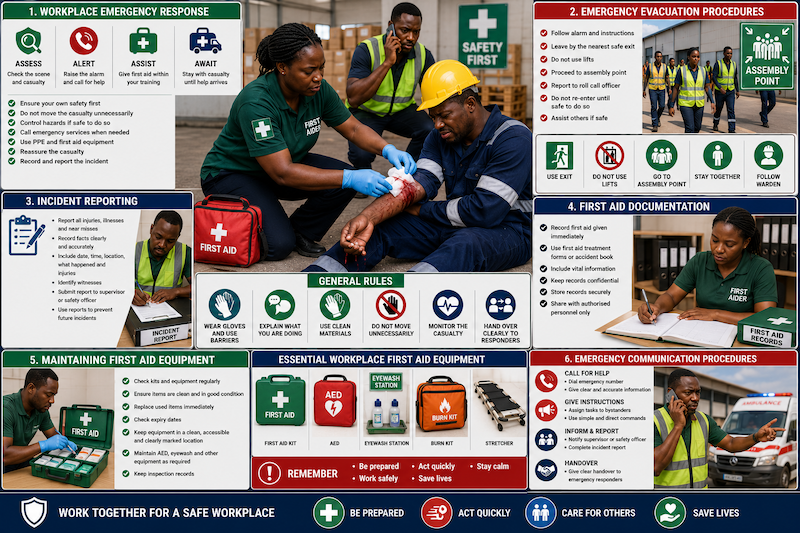
Introduction to Workplace First Aid
Workplace first aid is the organised system a workplace uses to respond when someone is injured or becomes suddenly ill at work. It includes trained first aiders, first aid kits, emergency procedures, evacuation plans, incident reporting, documentation, communication systems, and regular inspection of first aid equipment.
Workplace first aid is not only about treating wounds. It is about preparing before emergencies happen, responding quickly when they happen, recording what happened, and learning from incidents so they do not repeat.
Every workplace is different. An office, construction site, school, factory, workshop, market, warehouse, hospital, farm, laboratory, transport company, and oil and gas facility will not have the same level of risk. Workplace first aid arrangements should match the hazards, number of workers, location, work activities, and access to emergency medical help. OSHA notes that workplace medical and first aid supplies and personnel should be appropriate to the hazards and circumstances of each workplace.
Why Workplace First Aid Is Important
Workplace first aid helps to:
- Save lives during emergencies.
- Reduce the severity of injuries.
- Provide immediate care before medical help arrives.
- Improve confidence among workers.
- Reduce panic during incidents.
- Support legal and organisational compliance.
- Improve emergency preparedness.
- Protect visitors, contractors, customers, and staff.
- Support incident investigation and prevention.
- Maintain safer workplace culture.
A workplace that has trained people, clear procedures, and available equipment can respond faster and more effectively than a workplace that is unprepared.
Workplace First Aid Responsibilities
Workplace first aid involves shared responsibility.
| Person / Group | Responsibility |
|---|---|
| Employer / Management | Provide suitable first aid arrangements, trained personnel, equipment, and procedures |
| First aider | Give immediate care within training level and report incidents properly |
| Appointed person | Take charge of first aid arrangements where required, maintain kits, call emergency help, and keep records |
| Supervisors | Ensure workers follow procedures and report incidents |
| Workers | Report hazards, injuries, illnesses, and unsafe conditions |
| HSE / Safety team | Support risk assessment, training, drills, and compliance |
| Security / Reception | Help direct emergency responders to the scene |
| Emergency responders | Take over medical care when they arrive |
The British Red Cross describes an appointed person as someone who may act as the first point of contact for first aid provision, ensure first aid kits are stocked, keep accident records, and call emergency services when needed.
First Aid Needs Assessment
A workplace should assess its first aid needs. This means checking what first aid arrangements are suitable for that specific workplace.
A first aid needs assessment should consider:
- Type of work being done.
- Workplace hazards.
- Number of workers.
- Number of visitors or customers.
- Size and layout of the workplace.
- Distance from hospital or emergency services.
- Past accident and illness records.
- Shift patterns.
- Lone workers.
- Remote work areas.
- High-risk equipment or substances.
- Vulnerable workers.
- Contractors and temporary workers.
- Availability of trained first aiders.
- Need for AEDs, stretchers, eyewash, burn kits, or trauma supplies.
The HSE explains that identifying the likely nature of accidents and injuries helps employers decide the type, quantity, and location of first aid equipment, facilities, and personnel needed.
Common Workplace Emergencies
Workplace first aid should prepare for common emergencies such as:
- Cuts and wounds.
- Severe bleeding.
- Burns and scalds.
- Fractures and sprains.
- Falls from height.
- Slips and trips.
- Electric shock.
- Chemical exposure.
- Eye injuries.
- Choking.
- Heart attack.
- Stroke.
- Asthma attack.
- Seizures.
- Fainting.
- Heat exhaustion or heat stroke.
- Hypothermia.
- Poisoning.
- Crush injuries.
- Road or transport incidents.
- Unconsciousness.
- Cardiac arrest.
The workplace emergency plan should reflect the types of emergencies that are most likely to happen in that environment.
Workplace Emergency Response
Workplace emergency response is the organised action taken when an incident occurs.
A good workplace emergency response should include:
- Recognise the emergency.
- Stop work if necessary.
- Check scene safety.
- Raise the alarm.
- Call internal emergency team or first aider.
- Call emergency services when needed.
- Give first aid within training level.
- Control hazards if safe.
- Evacuate if required.
- Preserve the scene where appropriate.
- Record and report the incident.
- Review the response after the emergency.
The goal is to protect life first, then prevent the situation from getting worse.
Emergency Response Roles
During a workplace emergency, confusion can occur if roles are not clear.
Common roles include:
| Role | Function |
|---|---|
| First aider | Gives immediate first aid care |
| Incident lead / supervisor | Coordinates workplace response |
| Caller | Contacts emergency services |
| Guide | Meets emergency responders and directs them to the scene |
| Crowd controller | Keeps people away from the casualty and danger area |
| Evacuation warden | Helps with evacuation |
| Recorder | Notes times, actions, and key details |
| Equipment runner | Brings first aid kit, AED, stretcher, or spill kit |
| Security | Controls access and assists emergency responders |
In small workplaces, one person may handle more than one role. In larger workplaces, roles should be assigned clearly.
The Workplace Emergency Action Sequence
Use this simple sequence:
Assess – Alert – Assist – Await – Aftercare
| Step | Meaning |
|---|---|
| Assess | Check danger, casualty condition, and scene safety |
| Alert | Raise alarm and call help |
| Assist | Give first aid within your training |
| Await | Stay with casualty until medical help arrives |
| Aftercare | Report, document, restock, and review |
This sequence helps workers remember what to do during an emergency.
Raising the Alarm
When an emergency happens, raise the alarm quickly.
This may involve:
- Calling the workplace emergency number.
- Calling emergency services.
- Pressing an alarm button.
- Informing a supervisor.
- Contacting security.
- Shouting for help.
- Sending someone to bring the first aid kit or AED.
- Activating evacuation alarm if required.
Do not assume someone else has called for help. Confirm that help has been called.
Calling Emergency Services
When calling emergency services, speak clearly and provide accurate information.
Give:
- Your name.
- Workplace name.
- Exact address and location.
- Nearest landmark or access gate.
- Type of emergency.
- Number of casualties.
- Casualty’s condition.
- First aid already given.
- Hazards at the scene.
- Best route for responders.
- Contact number.
Stay on the line until the call handler tells you to hang up.
Giving Clear Instructions to Bystanders
In an emergency, people may freeze, panic, crowd around, or wait for someone else to act. A first aider should give direct instructions.
Examples:
- “You in the blue shirt, call emergency services now.”
- “Please bring the first aid kit from reception.”
- “You, guide the ambulance from the gate.”
- “Please move people back and give us space.”
- “Switch off the machine if it is safe.”
- “Bring the AED.”
- “Write down the time CPR started.”
Specific instructions work better than general shouting.
Scene Safety in the Workplace
Before giving first aid, check for workplace hazards.
Examples:
- Moving machinery.
- Electrical equipment.
- Chemical spills.
- Fire.
- Smoke.
- Falling objects.
- Unstable structures.
- Wet floors.
- Broken glass.
- Traffic or forklifts.
- Violence or crowd risk.
- Confined spaces.
- Gas leaks.
- Sharp materials.
- Hot surfaces.
If the scene is unsafe, do not rush in. Call for trained emergency response and wait until the hazard is controlled.
Workplace First Aid and PPE
First aiders should use appropriate PPE when giving care.
Useful PPE includes:
- Disposable gloves.
- Face shield or pocket mask.
- Eye protection.
- Apron where body fluids may splash.
- Hand sanitiser.
- Waste disposal bags.
- Mask where infection risk exists.
- High-visibility vest in traffic or industrial areas.
PPE protects both the first aider and the casualty.
Workplace Emergency Evacuation Procedures
Evacuation is the organised movement of people from a dangerous area to a safe place.
Evacuation may be needed because of:
- Fire.
- Explosion risk.
- Chemical release.
- Gas leak.
- Structural collapse.
- Flooding.
- Violence or security threat.
- Major equipment failure.
- Natural disaster.
- Serious electrical hazard.
- Smoke or toxic fumes.
A workplace should have a clear evacuation plan that workers understand before an emergency happens.
Evacuation Alarm
Workers should know:
- What the alarm sounds like.
- What the alarm means.
- What to do when the alarm sounds.
- Where exits are located.
- Where the assembly point is.
- Who the evacuation wardens are.
- What to do if a route is blocked.
- Whether lifts should be avoided.
- How to assist visitors or vulnerable persons.
Workers should never ignore an evacuation alarm.
Evacuation Steps
When evacuation is required:
- Stop work safely if possible.
- Leave by the nearest safe exit.
- Do not run.
- Do not return for personal belongings.
- Assist visitors or vulnerable persons if safe.
- Close doors behind you where appropriate.
- Move to the assembly point.
- Report to the roll-call person.
- Do not re-enter until authorised.
- Report missing or injured persons immediately.
A workplace evacuation must be calm, orderly, and controlled.
Assembly Point
An assembly point is a safe location where people gather after evacuation.
A good assembly point should be:
- Away from the hazard.
- Clearly marked.
- Easy to reach.
- Large enough for workers and visitors.
- Away from emergency vehicle routes.
- Known to all workers.
- Safe from traffic, smoke, falling objects, or secondary hazards.
Roll call should be taken where possible to identify missing persons.
Assisting Injured People During Evacuation
If someone is injured during an evacuation:
- Do not move them unnecessarily if they have serious injury.
- Call first aiders and emergency responders.
- Move them only if there is immediate danger.
- Use safe lifting or carrying methods where trained.
- Keep airway and breathing as the priority.
- Use evacuation chairs or stretchers if available and trained.
- Inform emergency responders of the casualty’s location.
Do not risk many people to move one casualty unless the danger is immediate and movement is necessary.
Evacuation of People With Disabilities or Special Needs
Workplaces should plan how to support people who may need help during evacuation.
This may include:
- People with mobility challenges.
- Pregnant workers.
- Elderly persons.
- Visitors unfamiliar with the building.
- People with visual or hearing impairment.
- People with temporary injuries.
- People with medical conditions.
- Children, where applicable.
A Personal Emergency Evacuation Plan may be needed for workers who require special support.
Workplace Incident Reporting
Incident reporting is the process of recording and communicating what happened during an injury, illness, near miss, unsafe condition, or emergency.
Incident reporting helps the workplace to:
- Provide proper follow-up care.
- Meet legal or organisational requirements.
- Investigate the cause.
- Prevent recurrence.
- Track safety trends.
- Improve training.
- Improve emergency procedures.
- Maintain accurate records.
HSE guidance states that under health and safety law, certain injuries, incidents, and cases of work-related disease must be reported and recorded.
What Should Be Reported?
Workplace reporting should include:
- Injuries.
- Sudden illness at work.
- Near misses.
- Unsafe conditions.
- Fire or explosion.
- Chemical spills.
- Electric shock.
- Falls.
- Equipment-related injuries.
- Violence or assault.
- First aid treatment given.
- Ambulance callout.
- Hospital referral.
- Occupational illness.
- Dangerous occurrences.
- Damage to first aid equipment.
- Missing or expired first aid supplies.
Even minor incidents can reveal serious hazards.
Near Miss Reporting
A near miss is an event that could have caused injury or damage but did not.
Examples:
- A tool falls from height but misses workers.
- A worker slips but does not fall.
- A chemical container leaks but no one is exposed.
- A cable creates a trip hazard.
- A forklift nearly hits a pedestrian.
- A machine guard is found removed.
- A first aid kit is empty during inspection.
Near misses should be reported because they are warnings. Reporting them helps prevent future injuries.
Incident Reporting Procedure
A simple workplace incident reporting process may include:
- Make the area safe.
- Give first aid.
- Notify supervisor or responsible person.
- Call emergency services if needed.
- Preserve the scene where required.
- Record details as soon as possible.
- Identify witnesses.
- Complete incident form.
- Submit report to responsible department.
- Investigate cause.
- Take corrective action.
- Review and close the report.
Reports should be factual, honest, and clear.
Information to Record in an Incident Report
An incident report may include:
| Information | Details |
|---|---|
| Date and time | When the incident happened |
| Location | Exact place of incident |
| Casualty details | Name, role, department, contact where appropriate |
| Incident description | What happened |
| Injury or illness | Type and location of injury |
| First aid given | Treatment provided |
| First aider name | Person who gave care |
| Witnesses | Names and statements where needed |
| Equipment involved | Machine, tool, vehicle, chemical, etc. |
| Emergency services | Whether they were called |
| Hospital referral | Whether casualty was sent for medical care |
| Immediate cause | What directly caused the incident |
| Corrective action | What was done to prevent recurrence |
| Reporter name | Person completing report |
Avoid blaming language. Record facts.
First Aid Documentation
First aid documentation is the record of first aid care given to a casualty.
It may include:
- First aid treatment form.
- Accident book entry.
- Incident report.
- AED use report.
- CPR record.
- Referral note.
- First aid kit inspection sheet.
- Training attendance record.
- Equipment maintenance checklist.
- Evacuation drill report.
Documentation protects the casualty, the first aider, and the organisation.
What to Record After First Aid Treatment
Record:
- Casualty’s name.
- Date and time of incident.
- Location.
- What happened.
- Signs and symptoms.
- First aid care given.
- Time first aid started.
- Time emergency services were called.
- Changes in condition.
- Name of first aider.
- Whether casualty returned to work, went home, or was sent for medical care.
- Witness details where required.
- Any equipment used.
Records should be completed as soon as possible after the incident while details are fresh.
Confidentiality in First Aid Records
First aid records may contain personal and health information.
Handle records carefully:
- Do not share casualty details casually.
- Store forms securely.
- Share information only with authorised persons.
- Give medical responders relevant health details.
- Follow workplace privacy policy.
- Do not post incident photos or details on social media.
- Keep records factual and respectful.
Privacy matters even after an emergency.
Handover Documentation
When a casualty is handed over to emergency responders, the first aider should share:
- What happened.
- Time of incident.
- Condition when found.
- First aid given.
- Changes in condition.
- Known medical history.
- Medication or allergies if known.
- Time emergency services were called.
- Any hazards at the scene.
If the workplace uses a first aid treatment form, a copy may be provided according to workplace procedure.
Workplace Emergency Communication
Good communication prevents confusion during workplace emergencies.
A workplace should have:
- Posted emergency numbers.
- Internal emergency contact numbers.
- Clear reporting chain.
- Emergency alarm system.
- Public address system where needed.
- Radios or phones for response teams.
- First aider contact list.
- Location maps.
- Visitor sign-in records.
- Emergency responder access plan.
The HSE states that information about first aid arrangements should be displayed in appropriate places, including names and locations of first aiders where relevant.
Emergency Contact Information
Emergency contact information should be easy to find.
It may include:
- Local emergency number.
- Workplace emergency number.
- Security desk.
- First aiders.
- Fire wardens.
- HSE officer.
- Site clinic.
- Nearest hospital.
- Ambulance service.
- Poison information service where available.
- Management emergency contact.
- Maintenance emergency contact.
Emergency numbers should be displayed near phones, first aid stations, noticeboards, workshops, reception, and high-risk areas.
Maintaining Workplace First Aid Equipment
First aid equipment must be available, clean, complete, accessible, and ready for use.
Workplace equipment may include:
- First aid kits.
- AED.
- Burn kit.
- Eye wash station.
- Stretcher.
- Blanket.
- Gloves.
- Pocket mask or face shield.
- Trauma dressings.
- Splints.
- Cold packs.
- Scissors.
- Waste bags.
- First aid room supplies.
- Emergency shower.
- Spill response kit, where relevant.
A first aid kit that is empty, locked away, hidden, or expired is not useful in an emergency.
First Aid Kit Maintenance
First aid kits should be checked regularly.
Check:
- Kit is in the correct location.
- Kit is clearly marked.
- Kit is accessible.
- Seal is intact where used.
- Items are clean and dry.
- Packaging is not damaged.
- Sterile items are not expired.
- Used items have been replaced.
- Gloves are available.
- Dressings are stocked.
- Burn dressings are stocked where needed.
- Scissors and pins are present where required.
- No unauthorised medicine is inside unless workplace policy allows.
- Kit contents match workplace risks.
OSHA guidance notes that employers with unique or changing first aid needs may need to enhance first aid kits, and that workplaces should assess their needs periodically and add appropriate supplies.
First Aid Kit Inspection Checklist
| Check | Yes / No |
|---|---|
| Kit is visible and accessible | |
| First aid sign is present | |
| Kit is clean and dry | |
| Gloves are available | |
| Sterile dressings are available | |
| Bandages are available | |
| Plasters are available | |
| Burn dressings are available where needed | |
| Eye pads are available | |
| Scissors are available | |
| Face shield or pocket mask is available | |
| No expired sterile items | |
| Used items replaced | |
| Inspection date recorded | |
| Responsible person signed |
AED Maintenance
If the workplace has an AED, it must be checked regularly.
AED checks include:
- AED is visible and accessible.
- Battery status is okay.
- Pads are sealed and not expired.
- Paediatric pads are available where needed.
- Device shows ready status.
- Cabinet or case is clean.
- Alarm or cabinet access works where fitted.
- Scissors, razor, towel, and gloves are available.
- AED location is known to workers.
- Inspection record is updated.
An AED can save lives, but only if it is accessible and ready.
Eyewash and Emergency Shower Maintenance
Workplaces with chemical or dust exposure may need eyewash or emergency shower facilities.
Checks include:
- Eyewash is accessible.
- Path is not blocked.
- Water flows properly.
- Water is clean.
- Unit is inspected as required.
- Bottled eyewash is not expired.
- Workers know the location.
- Signs are visible.
- Drainage is safe where relevant.
Chemical eye injuries need immediate flushing, so eyewash stations must never be blocked.
First Aid Room
Some workplaces may require a first aid room depending on size, risk, and access to medical facilities.
A first aid room may include:
- Couch or treatment bed.
- Sink and clean water.
- First aid supplies.
- Chair.
- Waste bin.
- Examination gloves.
- Blankets.
- Accident record forms.
- Emergency contacts.
- Good lighting and ventilation.
- Clear signage.
- Easy access for stretcher or wheelchair.
- Privacy.
First aid rooms should be clean, accessible, and clearly identified. HSE guidance notes that first aid rooms should display notice information such as names and locations of first aiders where appropriate.
Restocking First Aid Supplies
After any first aid treatment:
- Replace used gloves.
- Replace dressings and bandages.
- Replace used burn supplies.
- Replace face shields or masks.
- Clean reusable equipment if applicable.
- Dispose of contaminated waste properly.
- Record what was used.
- Report low stock.
- Seal kit if required.
- Update inspection sheet.
Restocking should happen immediately after use, not weeks later.
First Aid Equipment Locations
First aid equipment should be located where it can be reached quickly.
Good locations include:
- Reception.
- Workshop.
- Warehouse.
- Kitchen.
- Laboratory.
- Security post.
- Control room.
- Construction site office.
- Company vehicles.
- Remote work areas.
- High-risk areas.
- First aid room.
Equipment should be visible, labelled, and not locked away from workers who may need it.
First Aid Signage
Signs help workers find first aid help quickly.
Useful signs include:
- First aid kit location.
- AED location.
- First aid room.
- Eyewash station.
- Emergency shower.
- Emergency exit.
- Assembly point.
- Fire point.
- Emergency phone.
- First aider contact list.
Signs should be clear, visible, and maintained.
Training and Refresher Practice
Workplace first aid is stronger when workers practise regularly.
Training may include:
- Basic first aid awareness.
- CPR and AED.
- Bleeding control.
- Burns management.
- Choking response.
- Evacuation drills.
- Emergency communication.
- Incident reporting.
- Use of workplace first aid equipment.
- Hazard-specific first aid, such as chemical exposure or heat illness.
The Nigerian Red Cross notes that workplace first aid training can be customised to workplace settings and likely emergencies, with trained team members identified as first responders.
Emergency Drills
Drills help workers practise what to do before a real emergency.
Drills may include:
- Fire evacuation.
- Medical emergency response.
- AED retrieval.
- Chemical spill response.
- Injury response in workshop.
- Transport accident response.
- Confined space rescue simulation, for trained teams only.
- Heat illness response.
- Security emergency.
After a drill, the team should review what worked and what needs improvement.
Reviewing Workplace First Aid Arrangements
Workplace first aid arrangements should be reviewed regularly.
Review after:
- An incident.
- A near miss.
- A change in work process.
- New equipment installation.
- Workplace expansion.
- New chemicals introduced.
- Change in workforce number.
- Change in shift pattern.
- Change in emergency service access.
- First aid kit inspection findings.
- Evacuation drill results.
- Staff turnover.
First aid plans should remain practical and current.
Workplace First Aid for Remote or Field Work
Remote or field workers may need additional planning.
Consider:
- Travel time to hospital.
- Poor network coverage.
- Vehicle first aid kit.
- Communication device.
- Trained first aider.
- Emergency contact plan.
- Location sharing.
- Weather conditions.
- Snakebite or animal bite risk where relevant.
- Heat exposure.
- Road accident risk.
- Work alone procedure.
A field team should never assume that help will arrive quickly.
Workplace First Aid for Vehicles
Company vehicles may need first aid supplies, especially for transport, logistics, field service, construction, and remote work.
Vehicle first aid arrangements may include:
- Compact first aid kit.
- Emergency contact card.
- Reflective triangle.
- High-visibility vest.
- Torch.
- Gloves.
- Accident report form.
- Fire extinguisher where required.
- Drinking water for heat exposure.
- Communication device.
Vehicle kits should also be inspected and restocked.
Managing Blood and Body Fluid Spills
Workplace first aid may involve blood or body fluids.
Safe handling includes:
- Wear gloves.
- Keep people away from the area.
- Use absorbent material.
- Clean with approved disinfectant.
- Dispose of contaminated waste safely.
- Wash hands.
- Report exposure incidents.
- Replace contaminated first aid supplies.
Do not clean blood spills with bare hands.
Waste Disposal After First Aid
After first aid treatment, dispose of waste safely.
Waste may include:
- Used gloves.
- Blood-stained dressings.
- Used bandages.
- Face shields.
- Disposable masks.
- Cleaning materials.
- Broken glass or sharp objects, where present.
Use workplace procedure for clinical or contaminated waste. Do not leave contaminated materials in open areas.
Post-Incident Review
After a workplace first aid incident, the organisation should review what happened.
Questions to ask:
- Was the emergency recognised quickly?
- Was the first aider called promptly?
- Was the first aid kit accessible?
- Was equipment complete?
- Were emergency services called when needed?
- Did responders find the location easily?
- Was the evacuation effective?
- Was documentation completed?
- Were there delays?
- What caused the incident?
- What can prevent recurrence?
The goal is learning, not blame.
Practical Scenario: Workplace Injury
A warehouse worker cuts his hand deeply while handling sharp material. Blood is flowing heavily.
The workplace first aider puts on gloves, applies firm direct pressure with a sterile dressing, and asks a coworker to call the supervisor and bring the first aid kit. Another worker is sent to guide emergency responders from the gate.
The first aider keeps pressure on the wound, checks the casualty’s condition, and records the time of the incident. After responders arrive, the first aider explains what happened, what care was given, and whether the casualty’s condition changed.
After the incident, the used supplies are replaced, the treatment is documented, and the workplace investigates why the sharp material caused injury.
Practical Scenario: Workplace Evacuation
A chemical smell is noticed near a storage area. A worker complains of dizziness and eye irritation.
The supervisor raises the alarm and evacuates the area. Workers move to the assembly point. The first aider helps the affected worker to fresh air, avoids entering the contaminated area, and calls emergency help. The chemical area is secured until trained responders assess it.
After the incident, the workplace records the event, checks chemical storage procedures, and reviews emergency communication.
The key lesson is that first aid must work together with evacuation, hazard control, reporting, and prevention.
Common Workplace First Aid Mistakes
Avoid these mistakes:
- Having a first aid kit but no trained person.
- Keeping first aid kits locked away or hidden.
- Not replacing used supplies.
- Ignoring expired sterile items.
- Failing to display first aider contact information.
- Not calling emergency services early enough.
- Moving injured casualties unnecessarily.
- Failing to report near misses.
- Writing incomplete incident reports.
- Leaving contaminated waste after treatment.
- Not reviewing incidents after they happen.
- Assuming evacuation routes are known without drills.
- Not planning for visitors, contractors, or remote workers.
What a Workplace First Aider Should Never Do
A workplace first aider should never:
- Put themselves in danger.
- Give care beyond their training.
- Ignore workplace emergency procedures.
- Delay calling emergency services for serious cases.
- Leave first aid equipment empty after use.
- Hide incidents from management or safety personnel.
- Share casualty medical information casually.
- Move a seriously injured casualty unless necessary.
- Forget to document first aid care.
- Fail to hand over clearly to medical responders.
- Ignore hazards that caused the incident.
- Treat evacuation alarms as unimportant.
Practical Skills to Demonstrate
Learners should practise:
- Locating workplace first aid equipment.
- Checking first aid kit contents.
- Making a simulated emergency call.
- Giving clear instructions to bystanders.
- Responding to a workplace injury scenario.
- Completing a first aid treatment record.
- Completing a simple incident report.
- Demonstrating evacuation response.
- Directing emergency responders to the scene.
- Restocking a first aid kit after use.
- Performing a post-incident review discussion.
Workplace First Aid Checklist
| Check | Completed |
|---|---|
| First aid kit visible and accessible | |
| First aid kit stocked | |
| Expired items removed | |
| AED checked, if available | |
| Emergency numbers displayed | |
| First aider names displayed | |
| Evacuation routes clear | |
| Assembly point known | |
| Incident report forms available | |
| Workers know how to call for help | |
| Used items replaced after treatment | |
| First aid records stored properly | |
| Drills conducted regularly | |
| Arrangements reviewed after incidents |
Quick Recap
Workplace first aid is the organised system for responding to injuries and sudden illness at work. It includes trained first aiders, emergency communication, first aid kits, AEDs, evacuation procedures, incident reporting, documentation, equipment maintenance, and regular drills. A good workplace first aid system is based on the actual risks of the workplace. During an emergency, workers should raise the alarm, call for help, give safe first aid, evacuate if required, and hand over clearly to responders. After the incident, the workplace should document what happened, replace used supplies, investigate causes, and improve procedures. Workplace first aid is not only about treatment; it is about preparation, response, reporting, and prevention.